
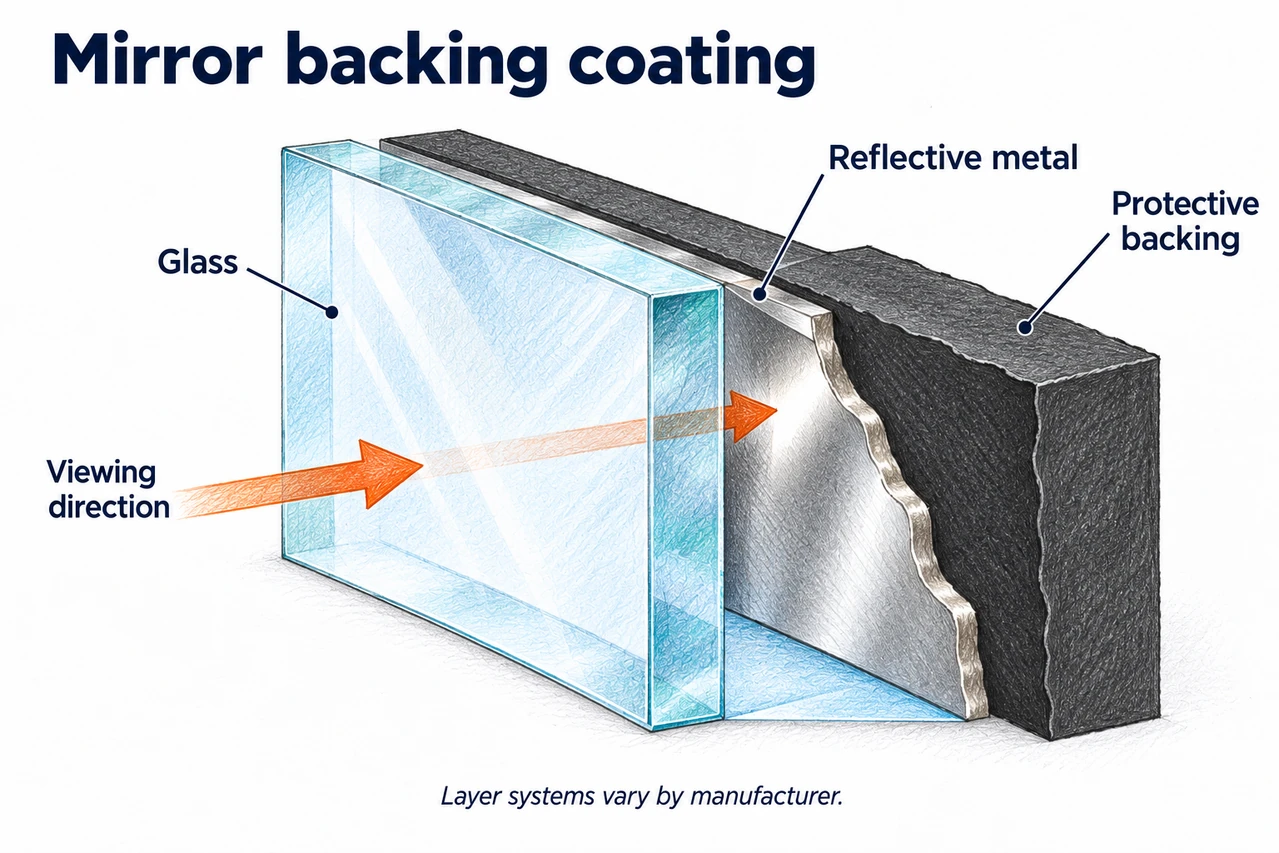
Mirror backing coating
The reflective metal layer and protective coating system applied to the rear surface of a conventional silvered flat glass mirror.
The reflective metal layer and protective coating system applied to the rear surface of a conventional silvered flat glass mirror.
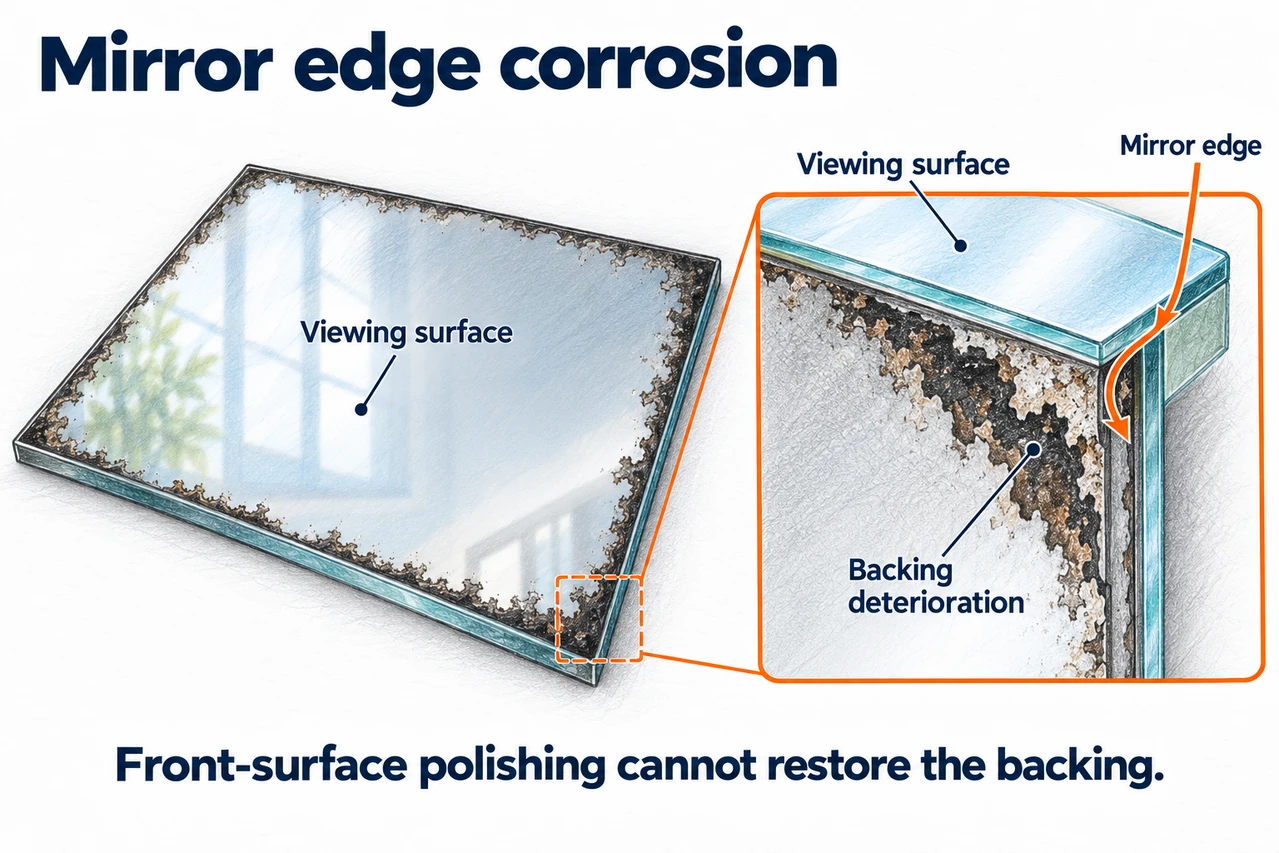
Deterioration of a mirror’s reflective or protective coating beginning at or near an edge, often visible as darkening, spotting, loss of reflectance, or creeping damage.
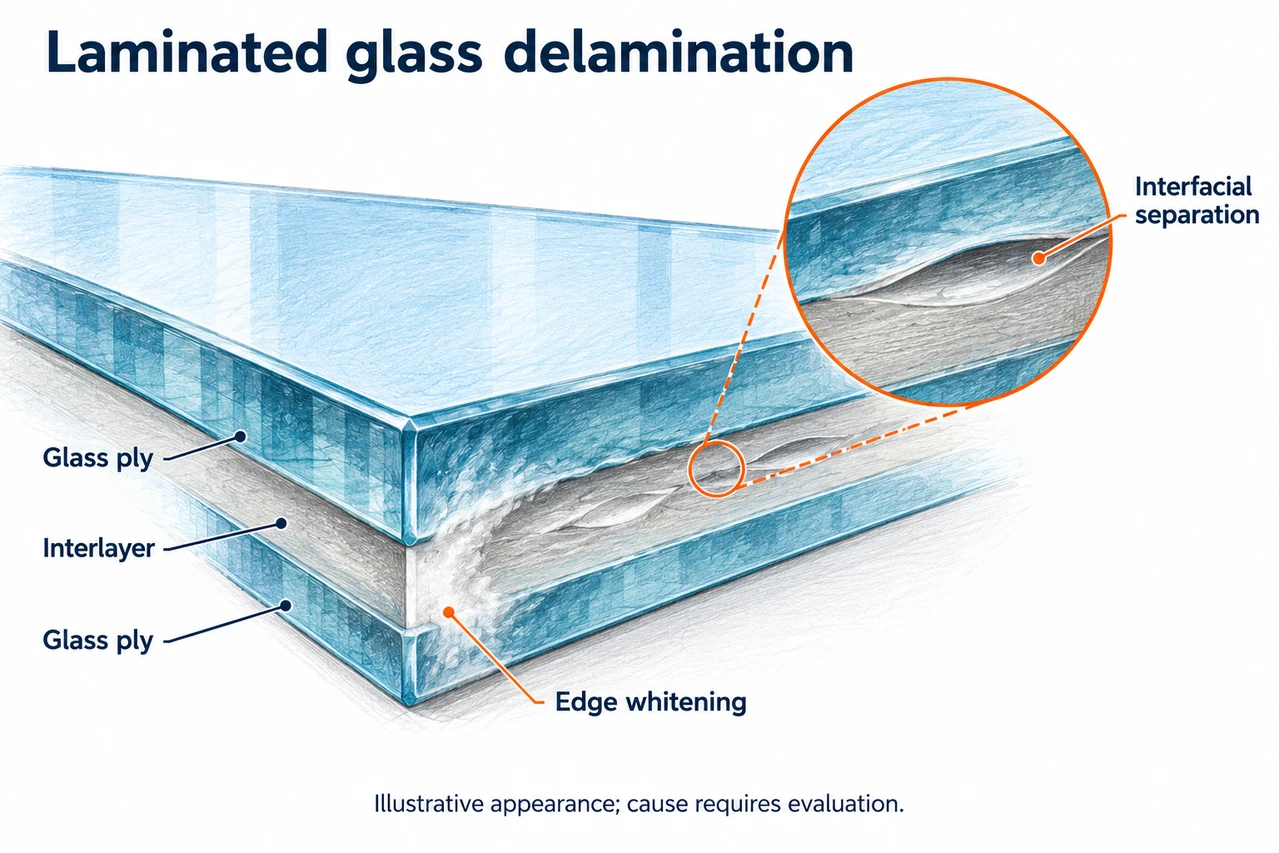
A visible or functional loss of adhesion or cohesion within a laminated-glass construction, often appearing as separation, bubbles, clouding, whitening, or edge growth.
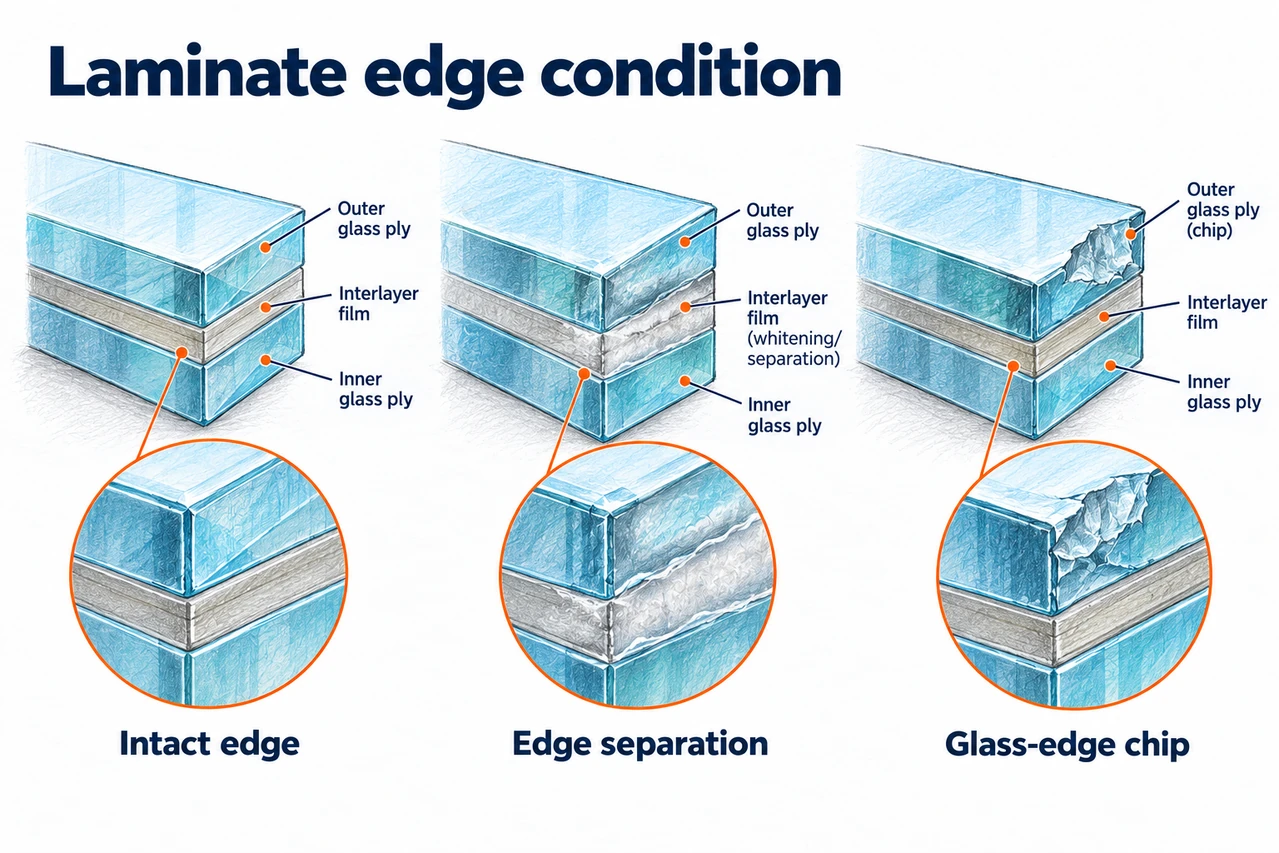
The documented state of the exposed or concealed perimeter of laminated glass, including adhesion, moisture effects, contamination, chips, cracks, sealants, gaskets, tapes, and interlayer exposure.
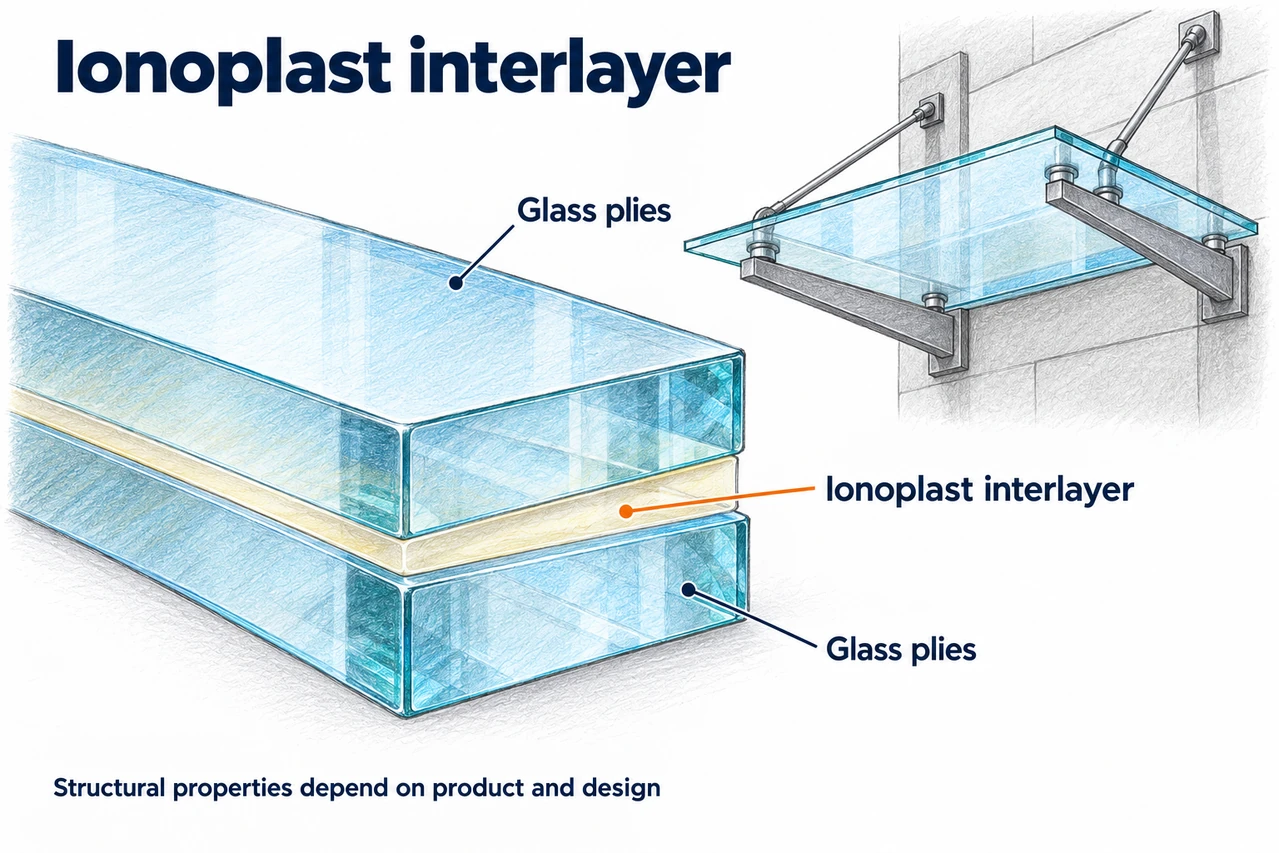
An ionomer-based structural interlayer used in selected laminated glass constructions where its specified stiffness, strength, clarity, edge stability, or post-breakage behavior is required.
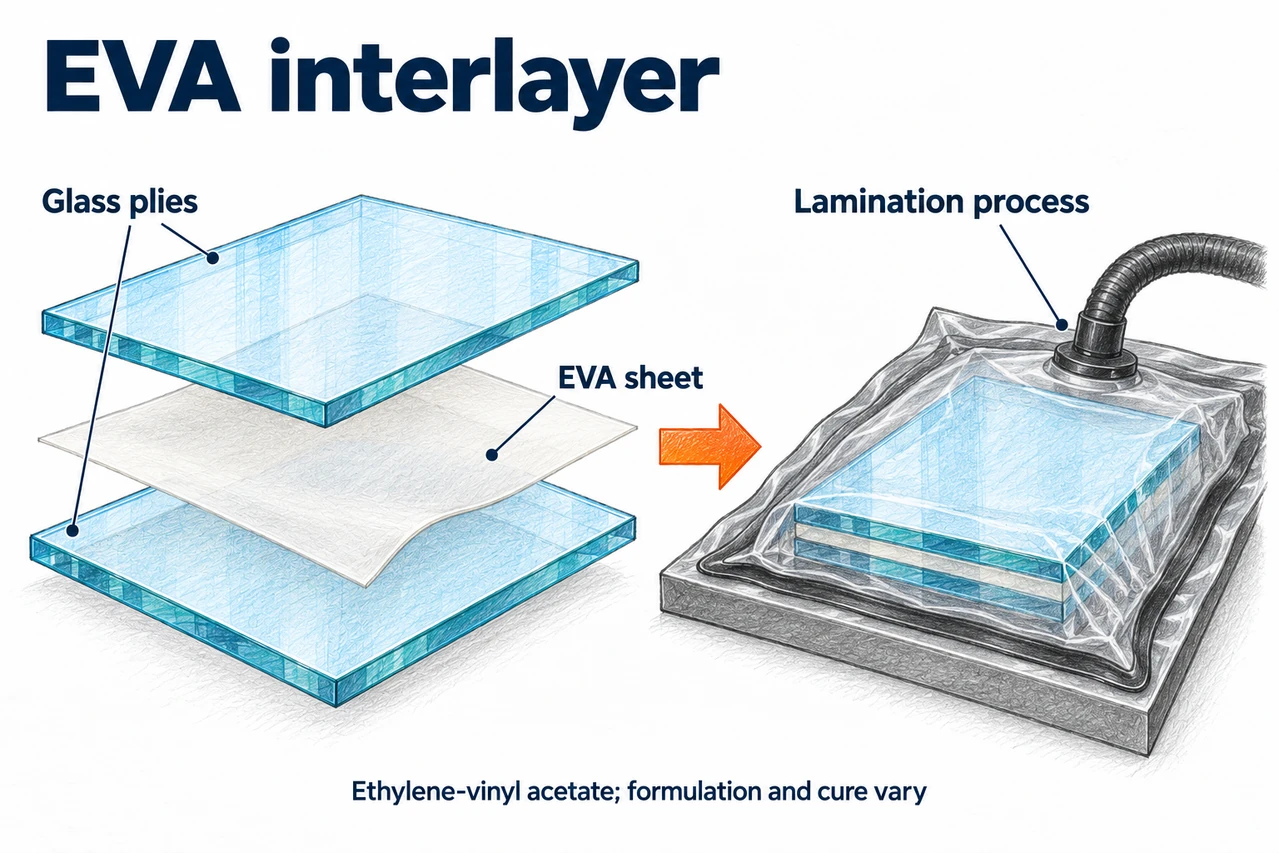
An ethylene-vinyl acetate-based interlayer formulated for selected laminated-glass products and fabrication processes.
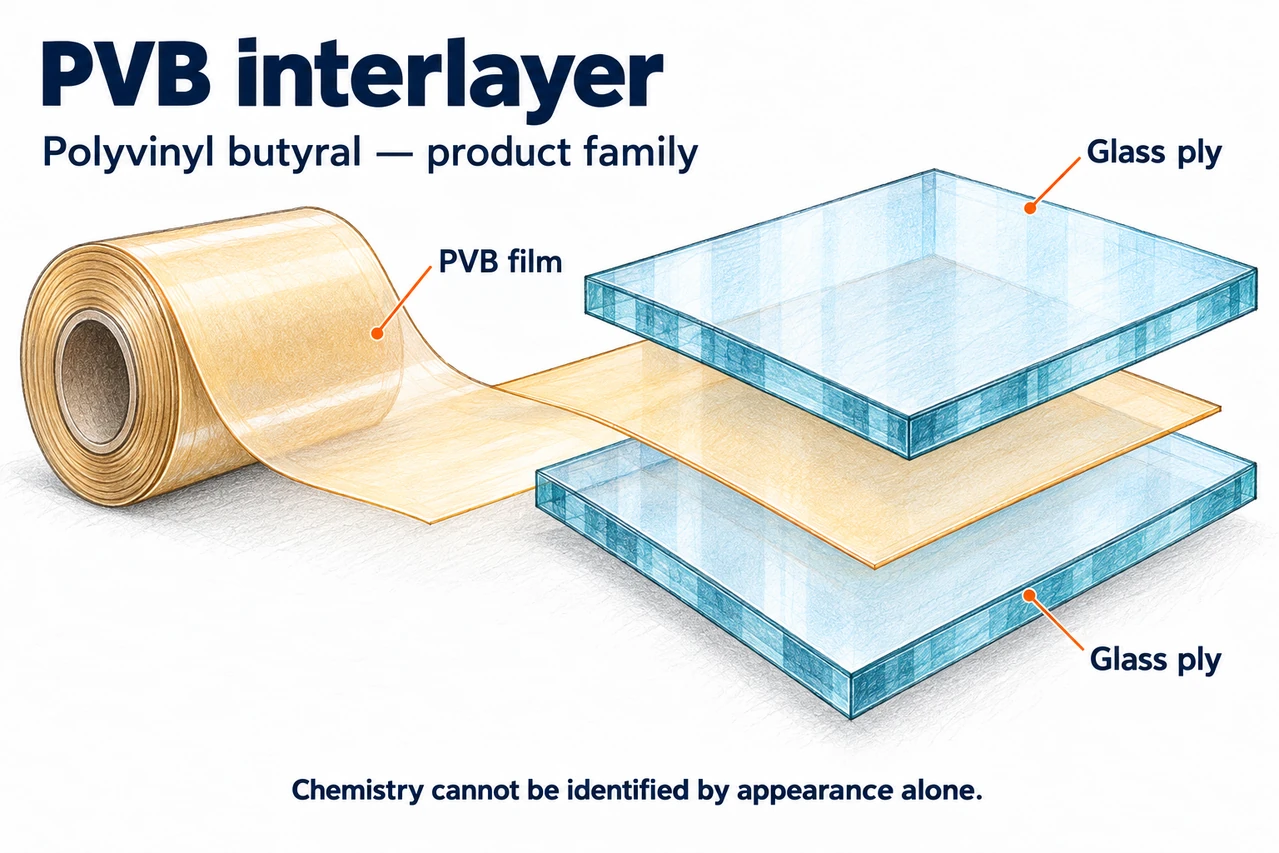
A polyvinyl butyral-based film formulated for bonding glass plies in laminated safety and other architectural glazing products.
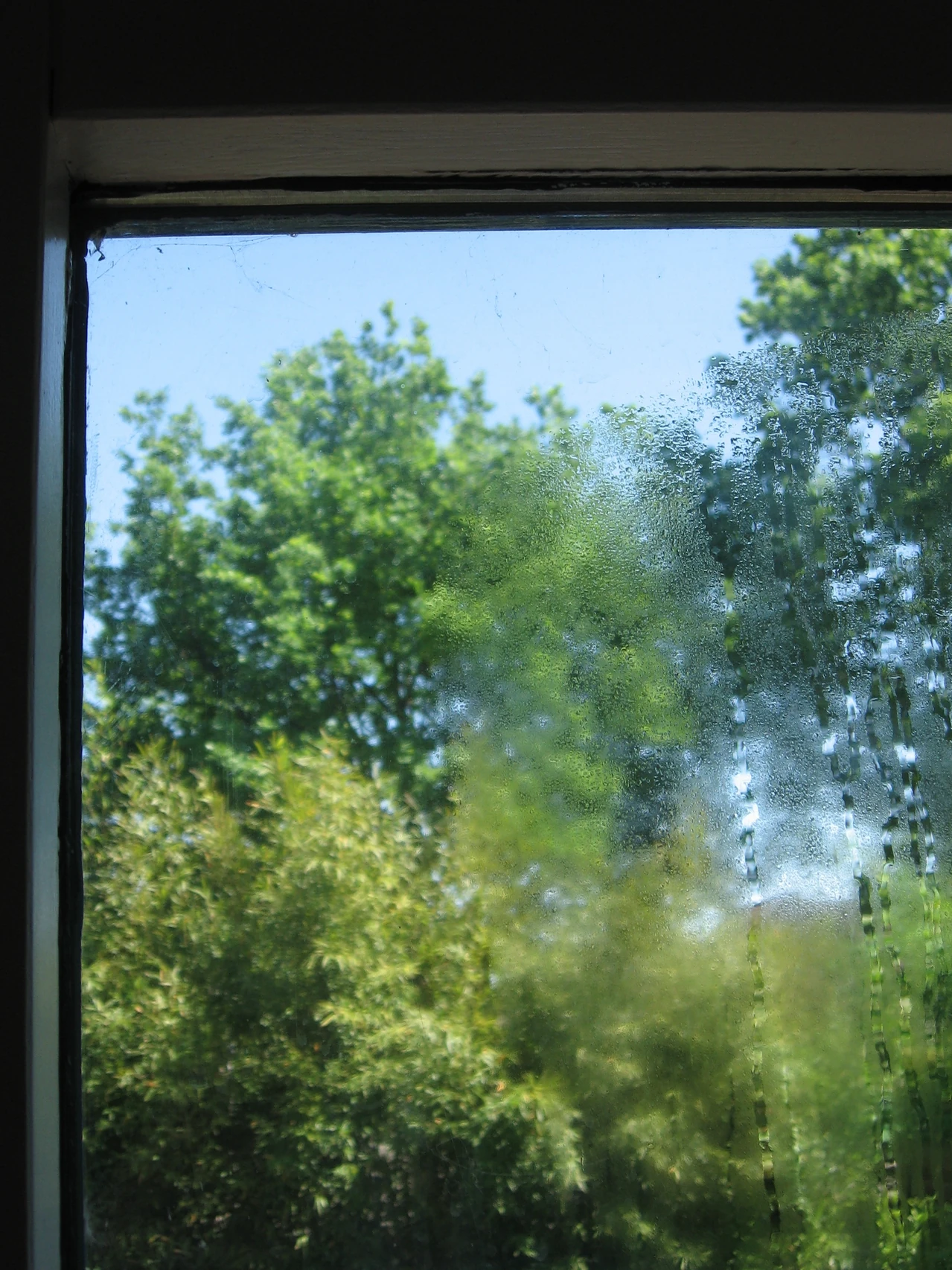
Liquid water, frost, or visible moisture forming on a surface inside a nominally sealed glazing cavity rather than on an exposed room-side or weather-side surface.
A polymeric or other bonding layer between glass plies that contributes adhesion, fragment retention, optical, acoustic, structural, security, or other specified performance.
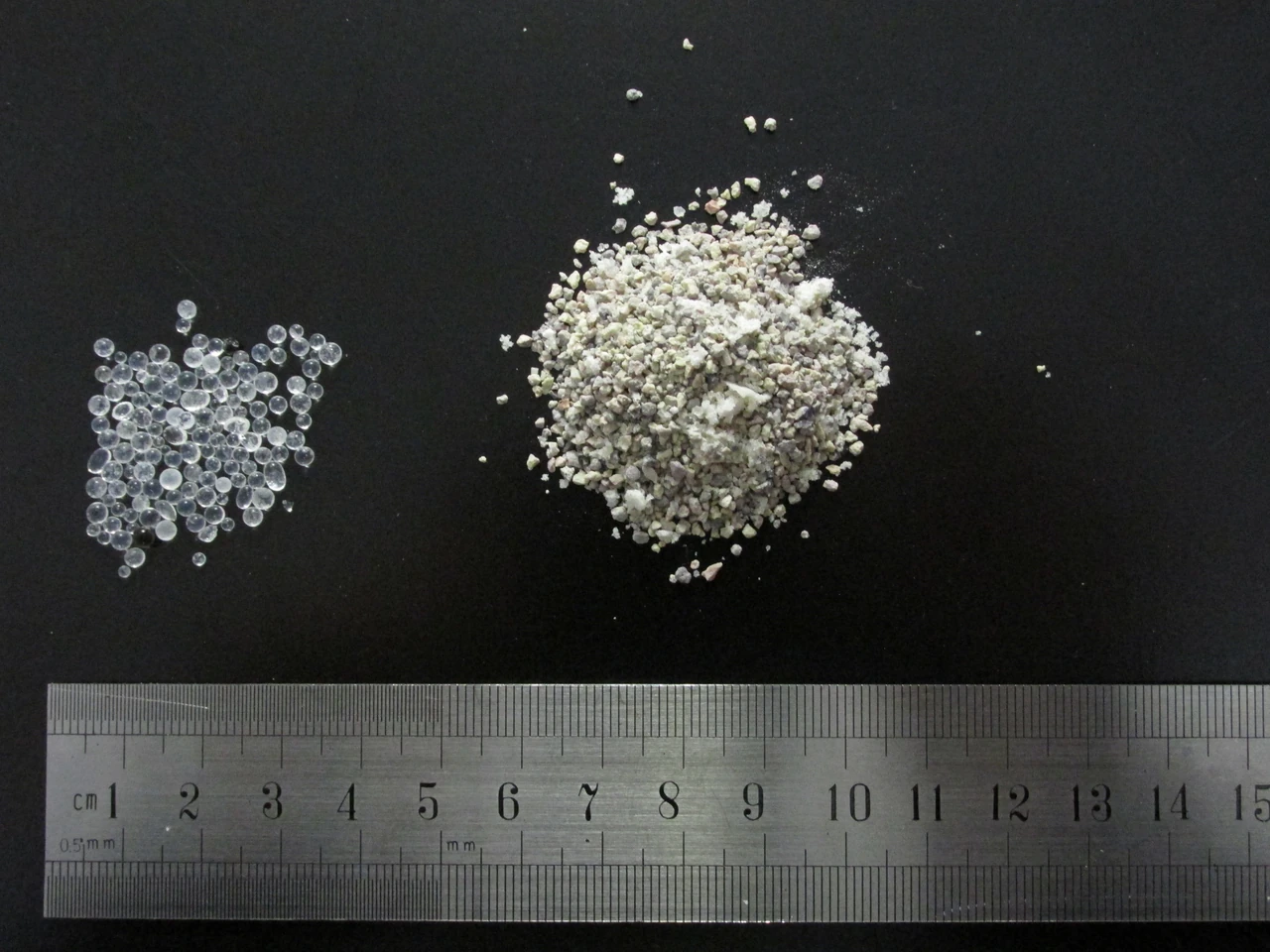
A moisture-adsorbing material incorporated into an IGU spacer or edge system to help keep the sealed cavity below the moisture level that produces visible condensation.