
A compatible fluid used to remove heat, carry debris, reduce friction, improve particle transport, or stabilize the tool-surface interaction.
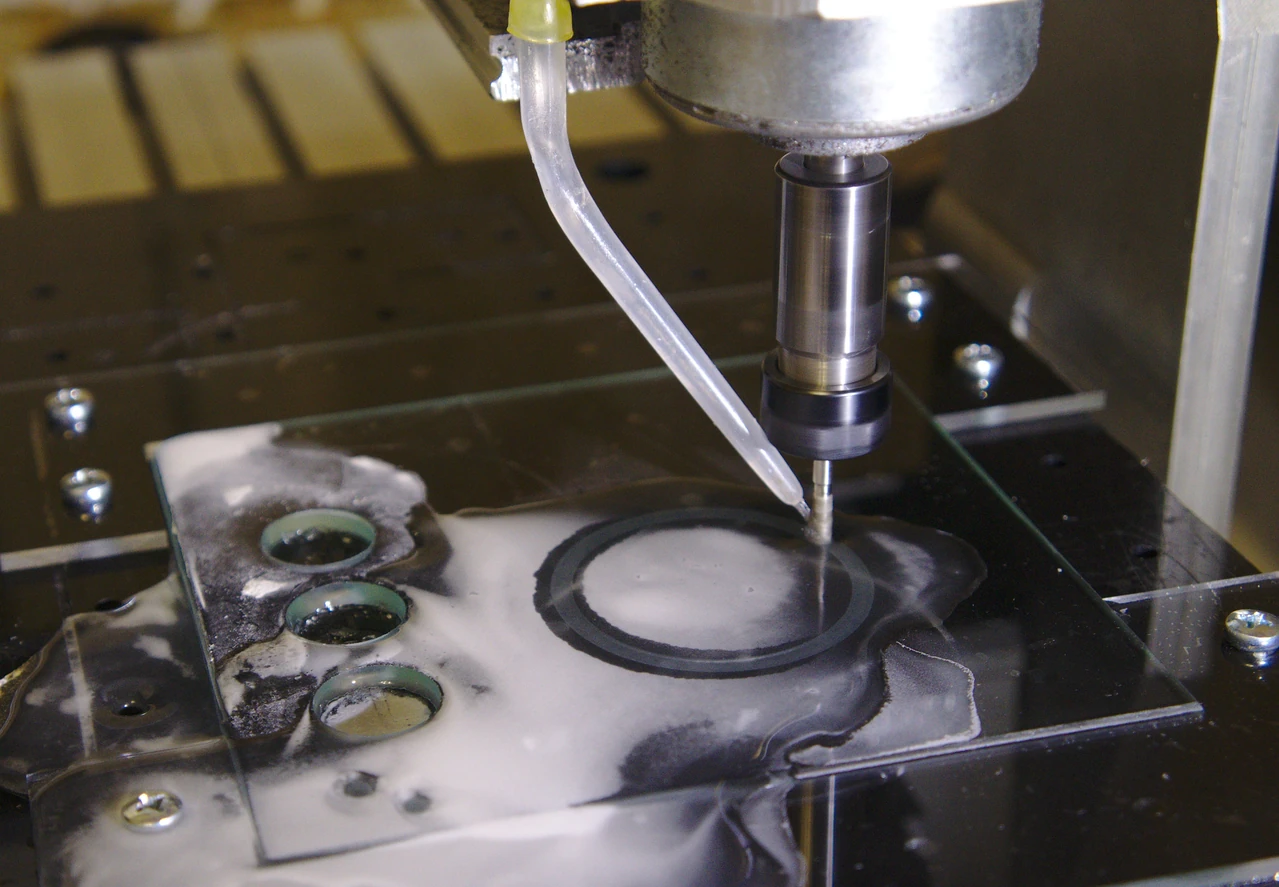
whitequark — CC0 · Image source · Image source
Meaning and boundaries
Cooling and lubrication are different functions, and more fluid is not automatically better; chemistry, purity, flow, electrical exposure, runoff, and coating compatibility matter.
Why it matters in glass restoration
Fluid selection can affect removal rate, scratches, pad loading, temperature, residue, and worker and property safety.
Related terms
References
- NASA — Handbook for Recommended Material Removal Processes for Advanced Ceramic Test Specimens and Components
Publisher’s original source - National Bureau of Standards / NIST — The Science of Ceramic Machining and Surface Finishing II
Publisher’s original source - Optica Publishing Group — Static and Dynamic Removal Rates of a Hydrodynamic Polishing Tool
Publisher’s original source - Electronic Code of Federal Regulations / OSHA — 29 CFR 1910.334 — Use of Electrical Equipment
Publisher’s original source