
On this page
RESOURCE CENTER / FIELD ASSESSMENT
Classify what inspection actually reveals.
Separate routine cleaning and surface contamination from visible damage, tactile damage, chipped or pitted conditions, and stop-or-refer outcomes.
GlassRenu field classifications distinguish routine cleaning, surface contamination, visible and tactile damage, and conditions outside approved in-place restoration.
This is GlassRenu’s assessment system—not an ASTM classification. It organizes observations and next steps; it does not establish glass strength, compliance, or permission to restore a glass product.
ASSESSMENT AT A GLANCE
Choose the condition that matches what inspection reveals
This is an assessment path, not a simple low-to-high severity scale. Categories 0 and 1 describe cleaning or contamination conditions; Categories 2 through 4 classify damage morphology; Category 5 is a stop-and-refer outcome.
- Cleaning / no damageRoutine soap-and-water cleaning
- Surface contaminationTreat material on the glass first
- Visible, not tactileLightest GlassRenu damage class
- Tactile clean scratchControlled restoration assessment
- Chipped / pitted damageDeep, potentially assessable damage
- Stop / refer / replaceOutside approved in-place scope
Select any category to jump to its complete GlassRenu definition and original example image.
Full category definitions and examples
Category 0 condition
A glass surface that needs only routine cleaning with soap and water and shows no remaining bonded residue or visible damage after it is clean and dry.

GlassRenu · Educational illustration
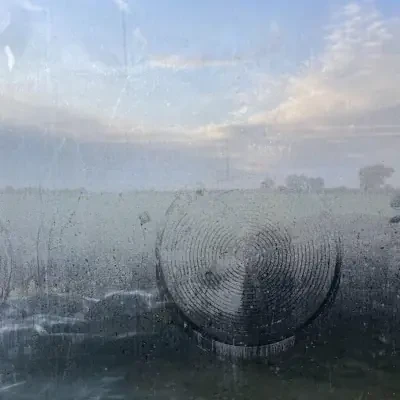
Category 1 condition
Contaminants that sit on the exposed surface of the glass and require treatment beyond routine soap-and-water cleaning. Examples include paint or paint spray, adhesive, ink, stickers, rubber transfer, grease, deposits, suction-cup marks, and heat haze.
GlassRenu media library · Image source · Image source
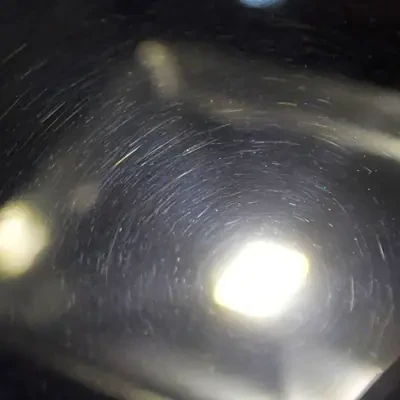
Category 2 damage
Visible surface damage that can be seen in direct sunlight or controlled raking light but cannot be felt with a light pass of a clean, dry fingernail.
GlassRenu media library · Image source · Image source
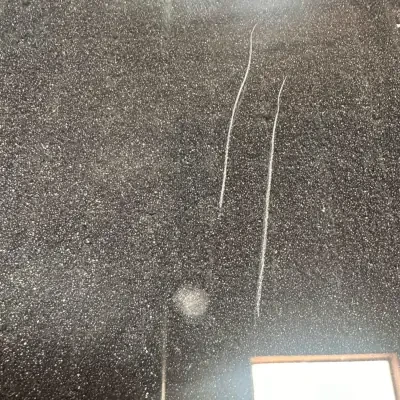
Category 3 damage
Visible surface damage that can be felt with a light pass of a clean, dry fingernail but remains a clean, isolated, continuous scratch or groove without visible chipping or flecking along its edges.
GlassRenu media library · Image source · Image source
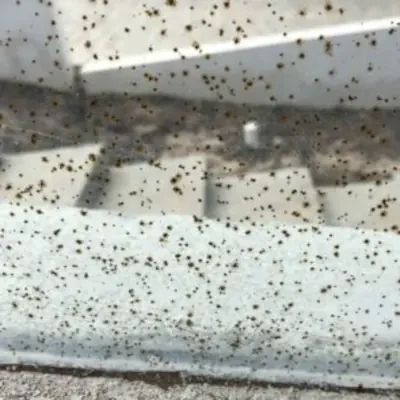
Category 4 damage
Visible, tactile glass damage with small chips, flecks, rough breakout, pits, craters, fused particles, or other edge deterioration along or around the damaged area.
GlassRenu media library · Image source · Image source
Category 5 condition
A condition that cannot be safely or effectively restored in place or lies outside GlassRenu's approved restoration scope.
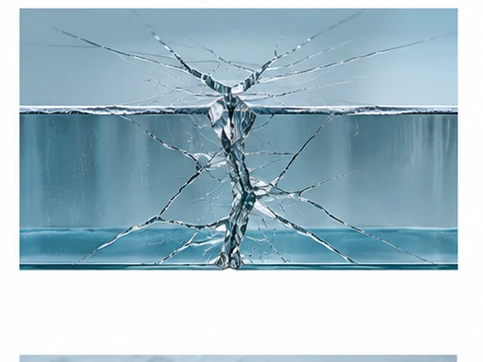
GlassRenu · Educational illustration