
COMPREHENSIVE GLASS RESTORATION GLOSSARY
Find the precise term. Follow the connected evidence.
Search clear definitions, related concepts, visual examples and original-source references across glass construction, damage assessment, restoration and safety.
Find the precise term. Follow the related concepts. Read the source in context.
Comprehensive Glossary
A
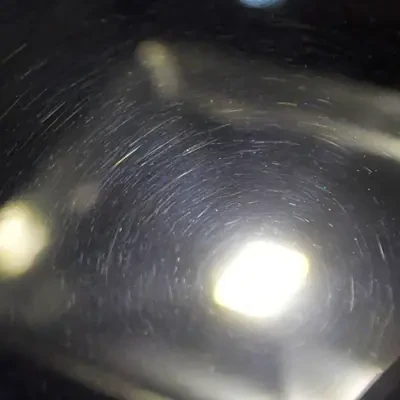
Abrasion
Surface wear produced by rubbing, sliding, or impacting particles or materials against glass, often creating many fine scratches or generalized haze.
Glass foundations
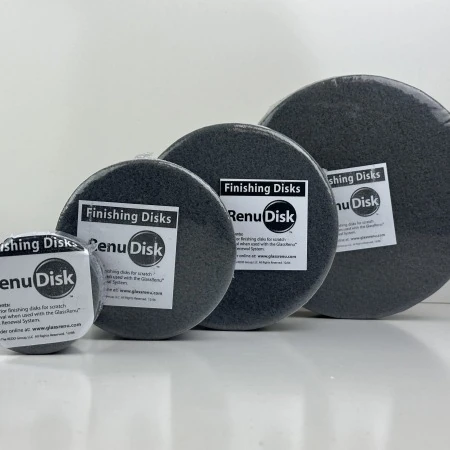
Abrasive
A material harder or otherwise capable of wearing, cutting, plowing, or refining another surface through relative motion and contact.
Restoration processes and safety
Abrasive disc
A flexible or rigid circular product carrying fixed abrasive or an abrasive structure for powered surface treatment.
Restoration processes and safety
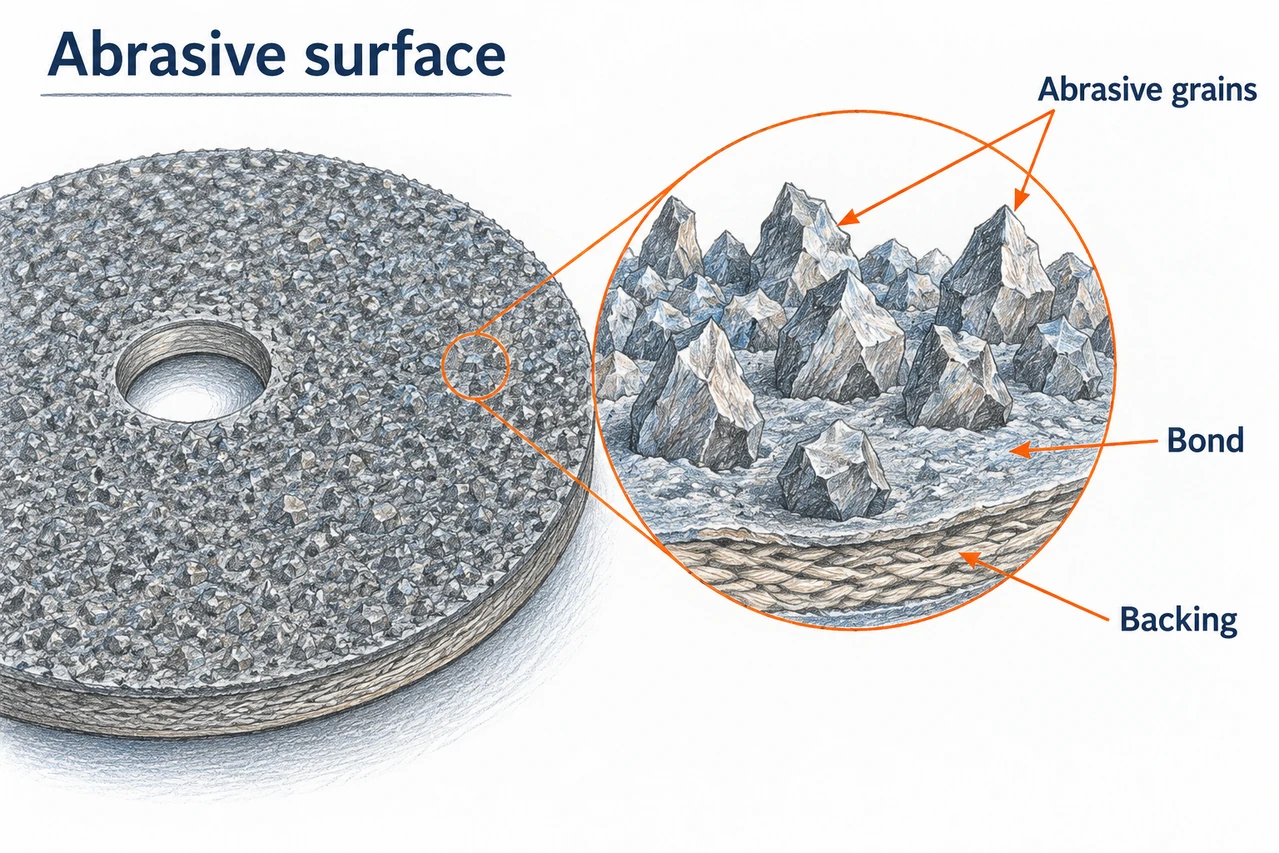
Abrasive particle size and grit designation
The measured particle-size distribution of an abrasive and the named grading system used to designate it.
Restoration processes and safety
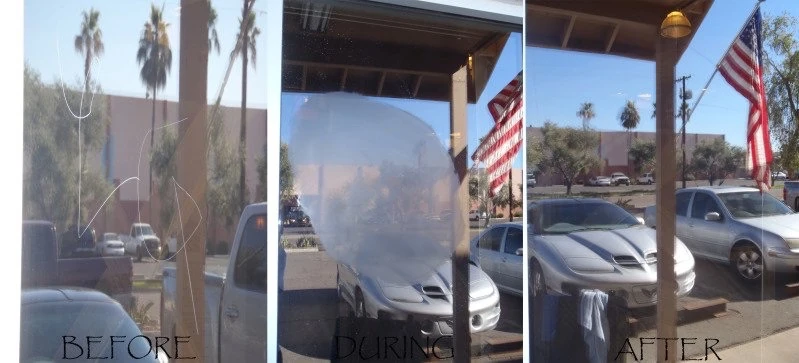
Acceptance criteria
The documented conditions a product or completed work must satisfy to be accepted for a stated purpose.
Inspection and repair decisions
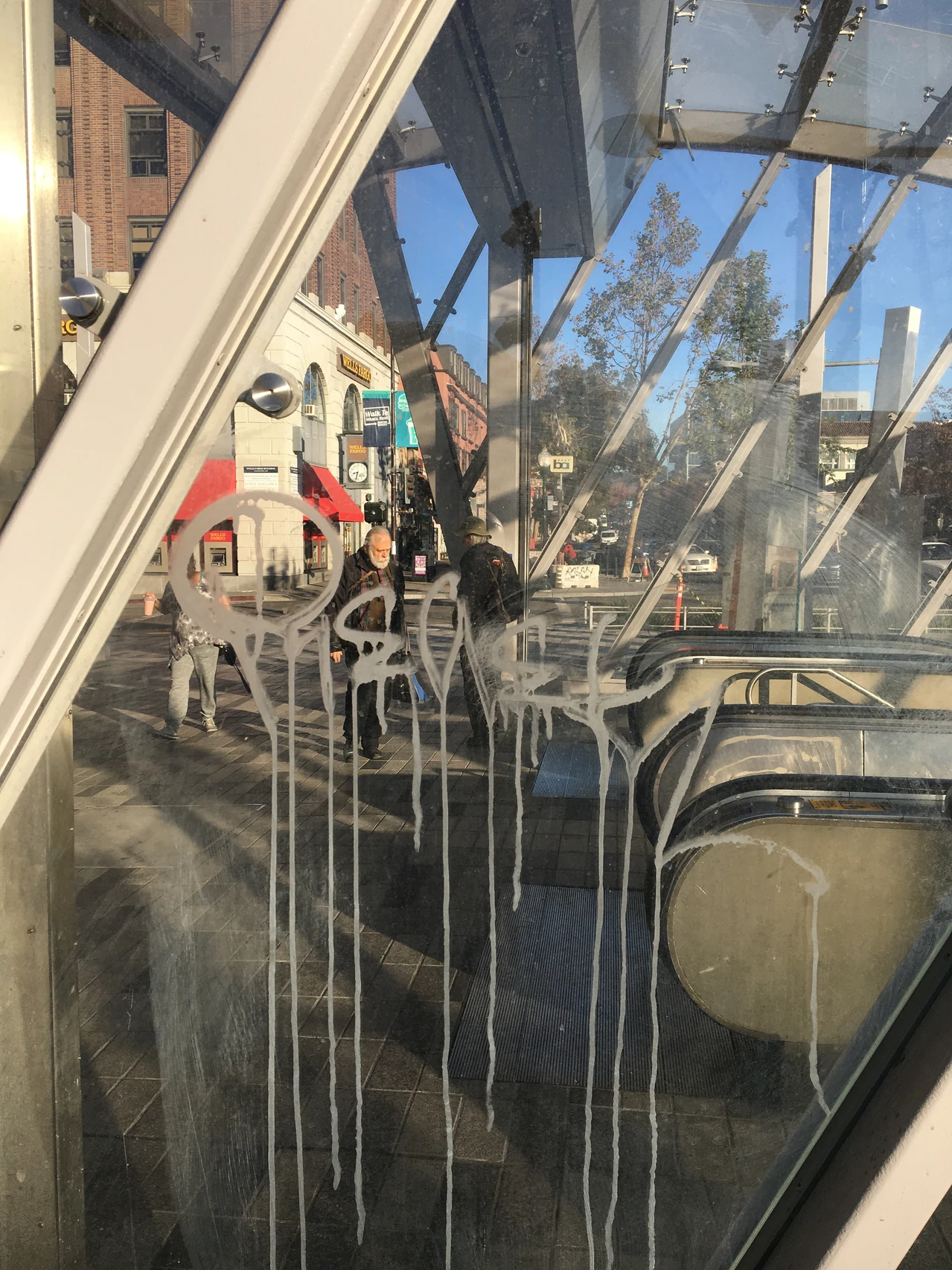
Acid attack
Chemical alteration produced when an acidic material reacts with glass, a coating, decoration, seal, or adjacent glazing component.
Deposits and contamination
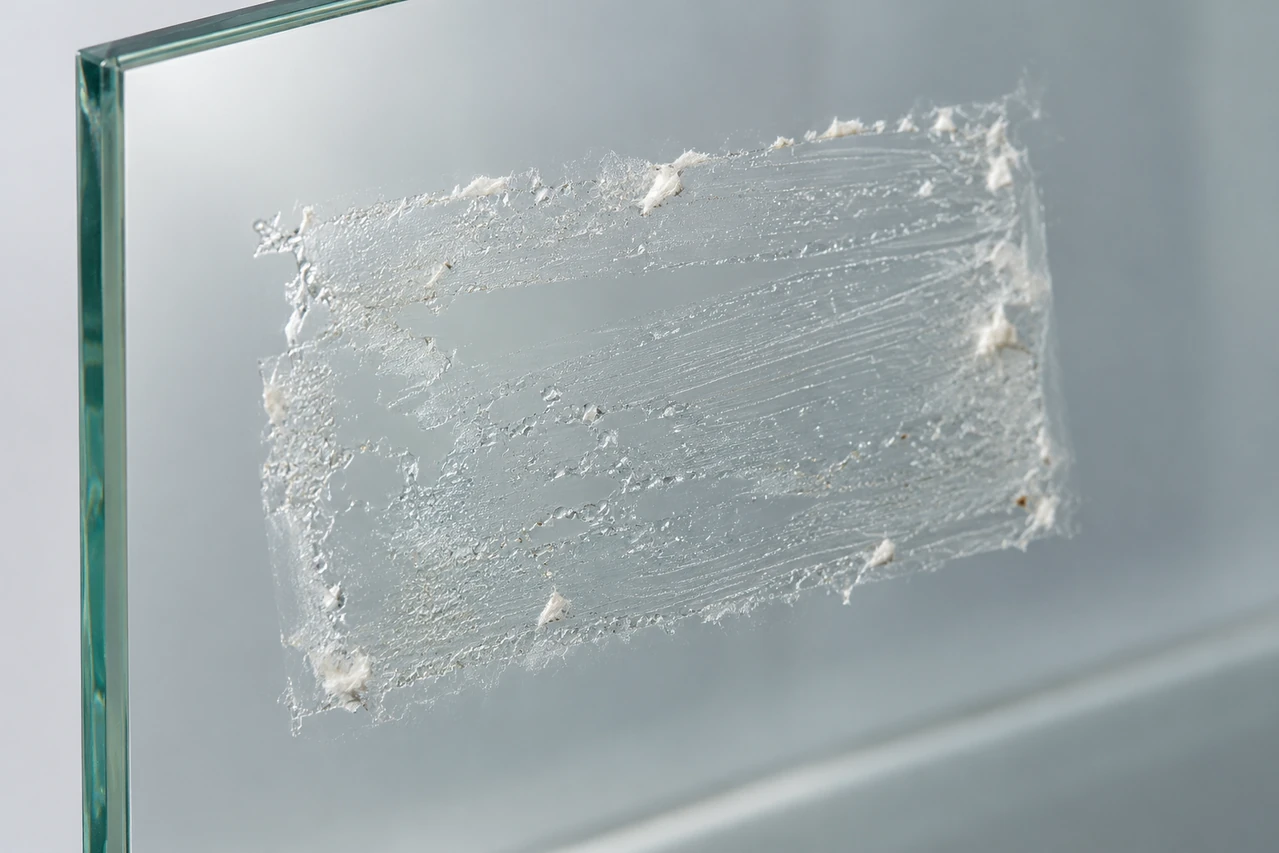
Adhered residue
Material remaining on glass that is attached strongly enough that ordinary rinsing or light wiping does not remove it.
Deposits and contamination
Adhesive residue
Material left on glass after tape, labels, films, mastics, glues, or other adhesive products are removed or age in place.
Deposits and contamination
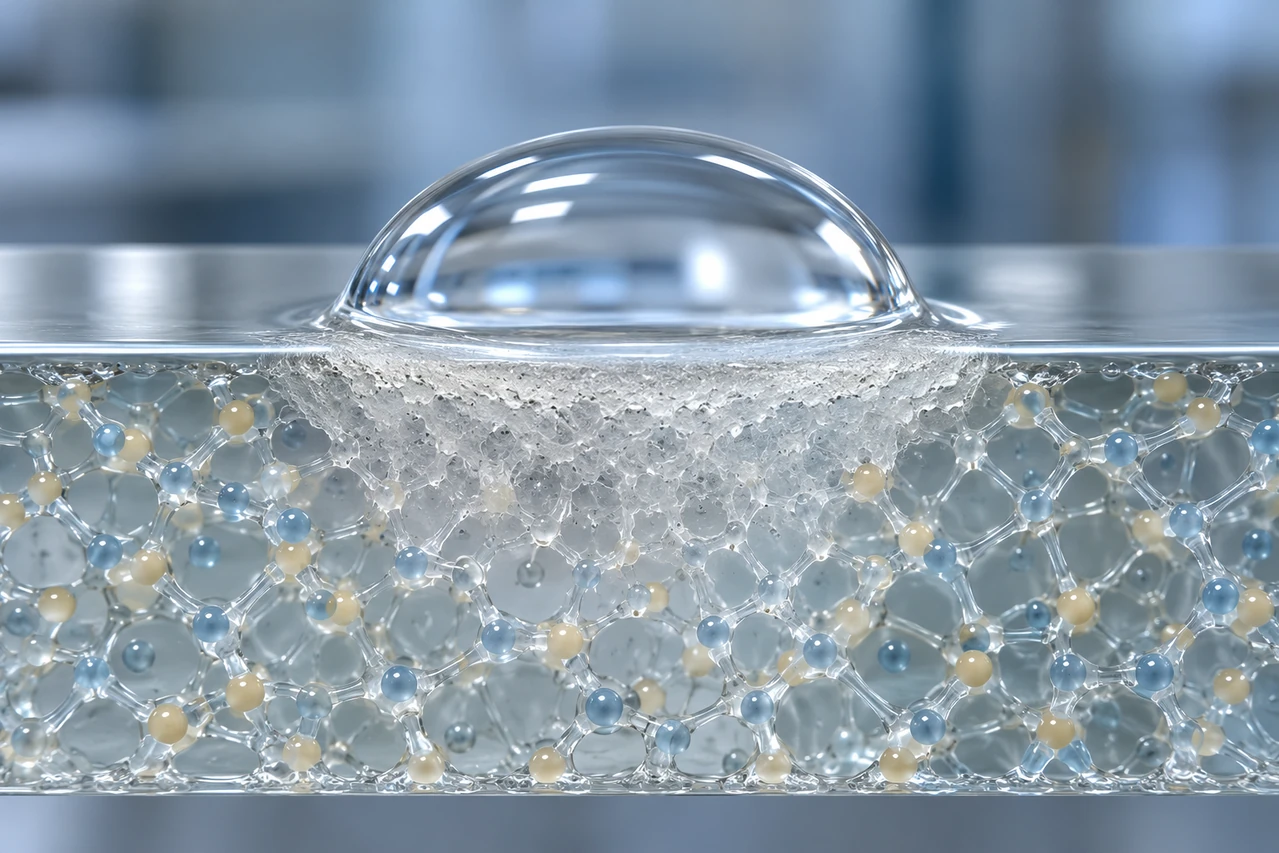
Alkaline attack
Chemical alteration produced when a basic or alkaline liquid attacks the silica network or other components of glass, a coating, or a decoration.
Deposits and contamination
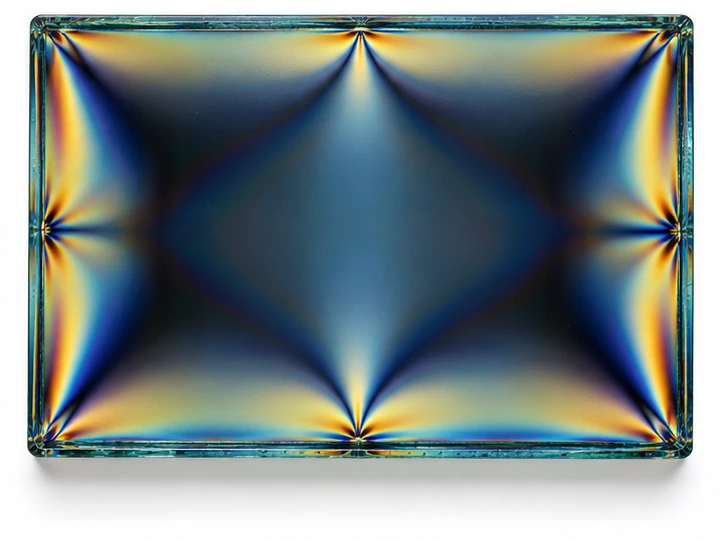
Anisotropy (strain pattern)
A patterned visual effect that can appear in heat-treated glass under polarized light because the residual stress distribution changes how light passes through the lite.
Glass foundations
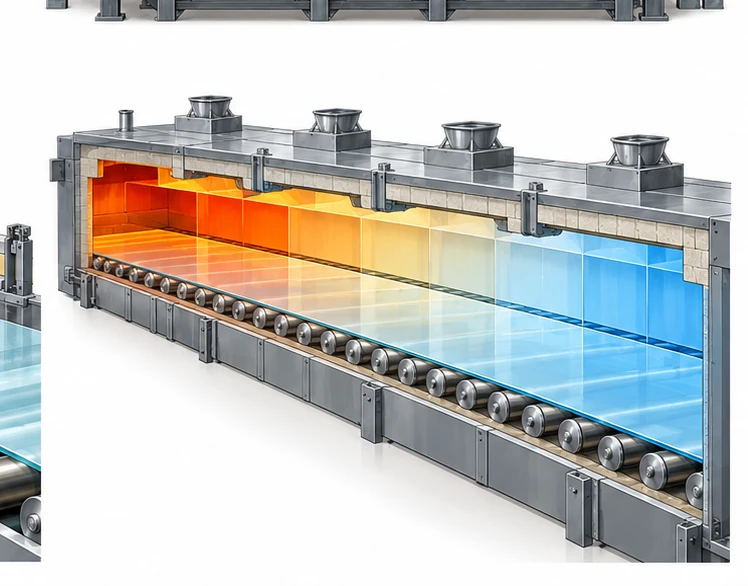
Annealed glass
Glass cooled in a controlled manner to reduce residual manufacturing stress so it can be cut and fabricated before installation.
Glass foundations
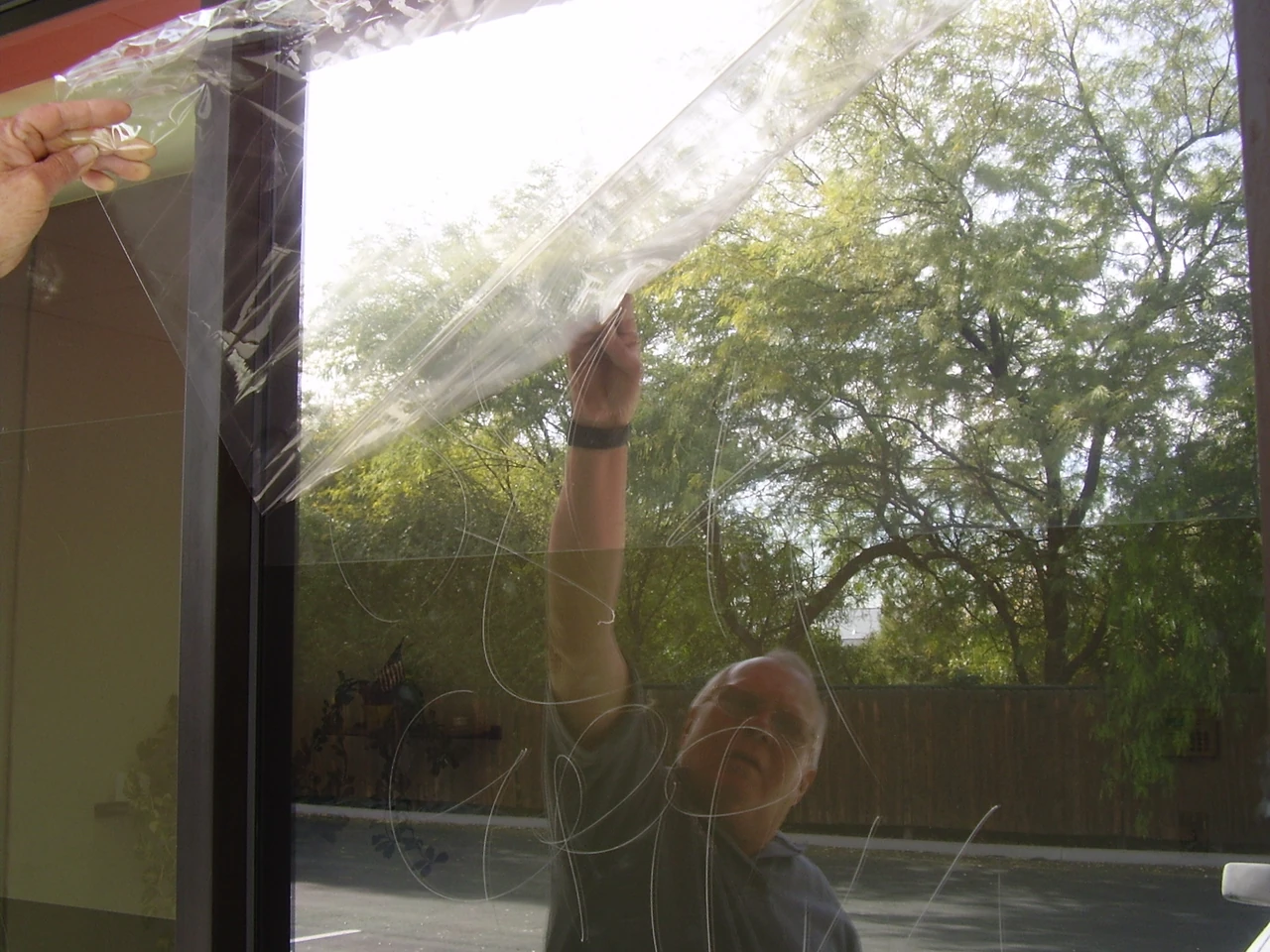
Applied window film
A manufactured polymeric film installed onto an existing glass surface to modify solar, optical, ultraviolet, decorative, privacy, safety, or security behavior.
Glazing systems and specialty applications
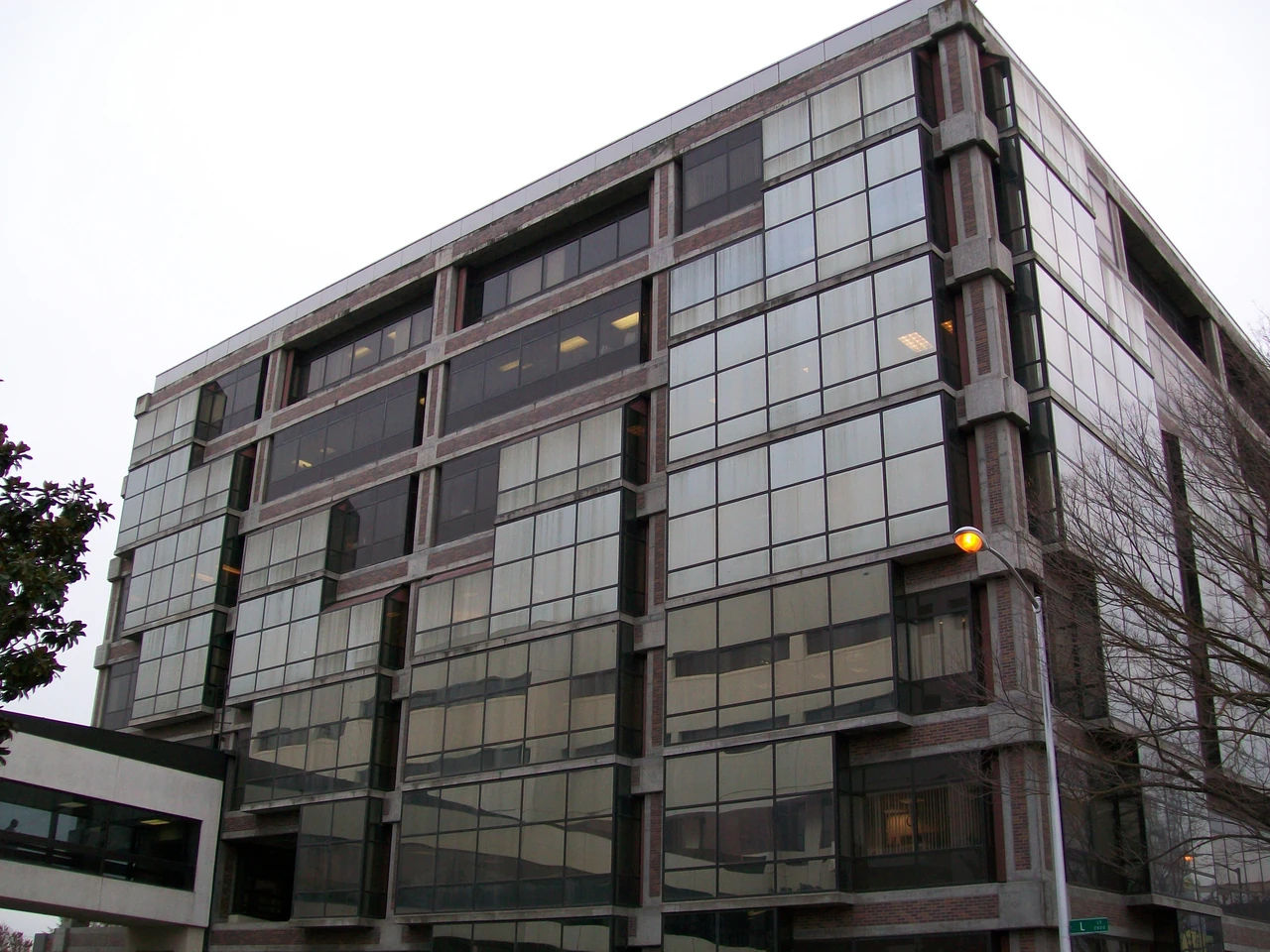
Atmospheric soiling
Dirt and deposited pollutants accumulated from the surrounding air, including dust, soot, aerosols, salts, and other airborne material.
Deposits and contamination
B
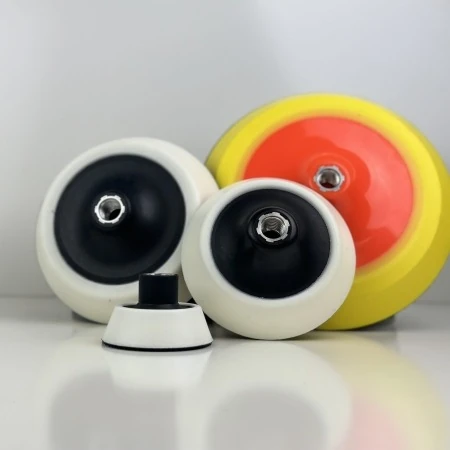
Backing pad
The interface that connects an abrasive disc or polishing pad to the powered tool and supports it during rotation.
Restoration processes and safety
Baseline condition
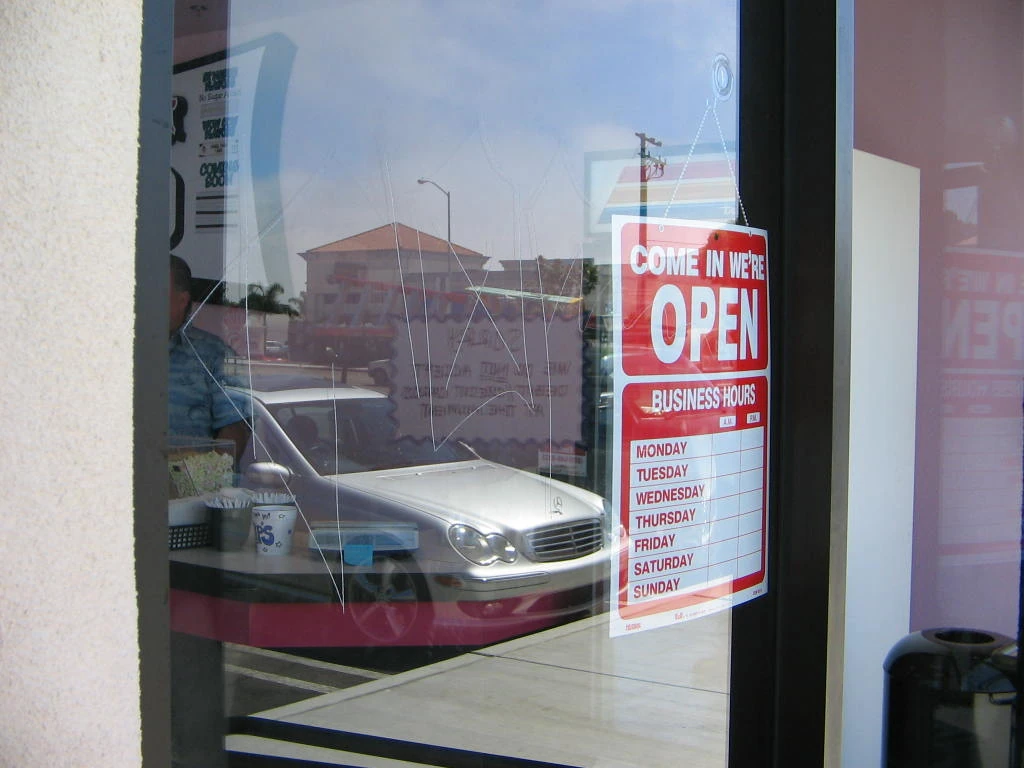
The documented state of the glass and surrounding assembly before cleaning, testing, or restoration begins.
Inspection and repair decisions
Blemish cluster
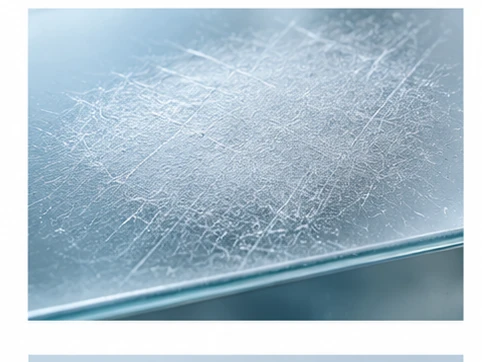
Multiple blemishes located close enough together to be evaluated as a group under a defined inspection area.
Damage categories and surface conditions
Blend zone
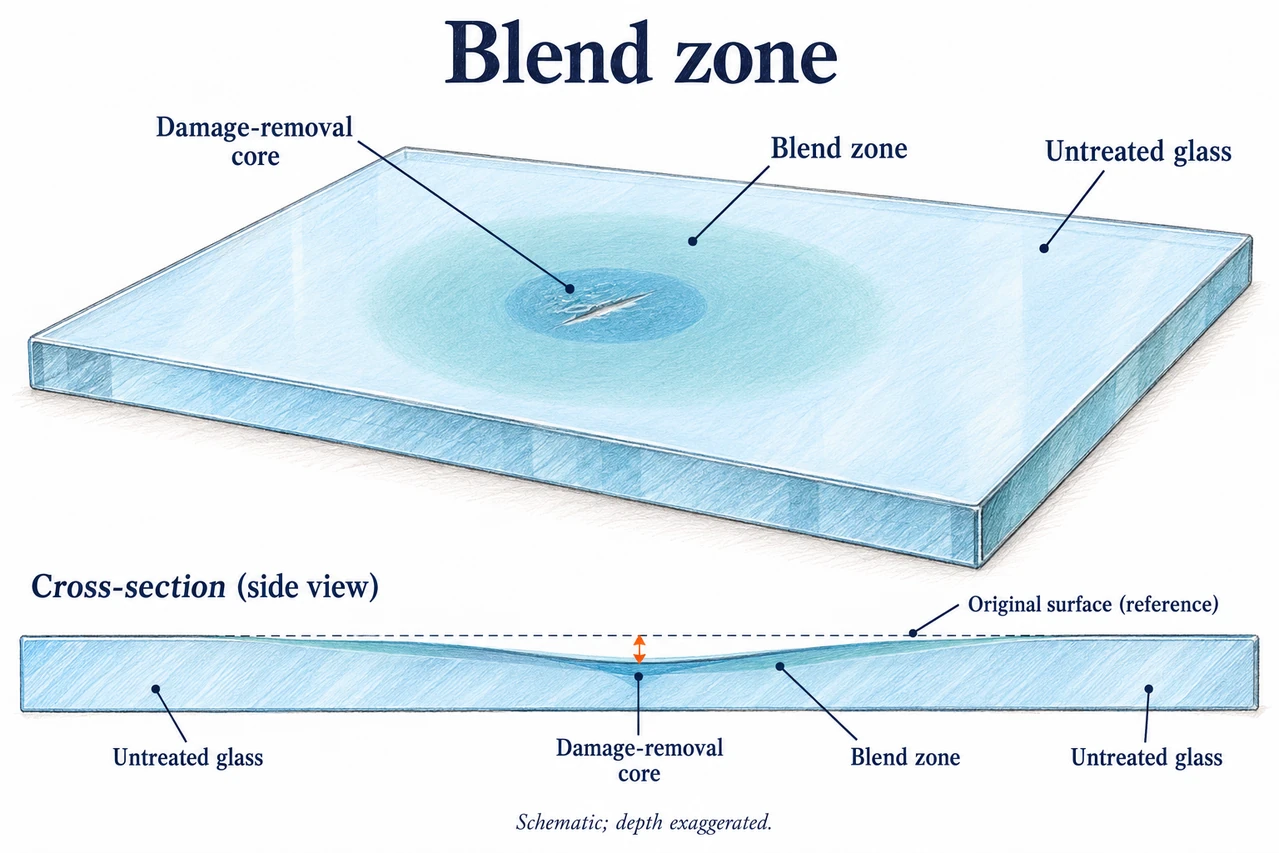
The surrounding area over which material removal or finishing is gradually distributed to transition from a deeper treated region into adjacent glass.
Restoration processes and safety
Butt-jointed glazing
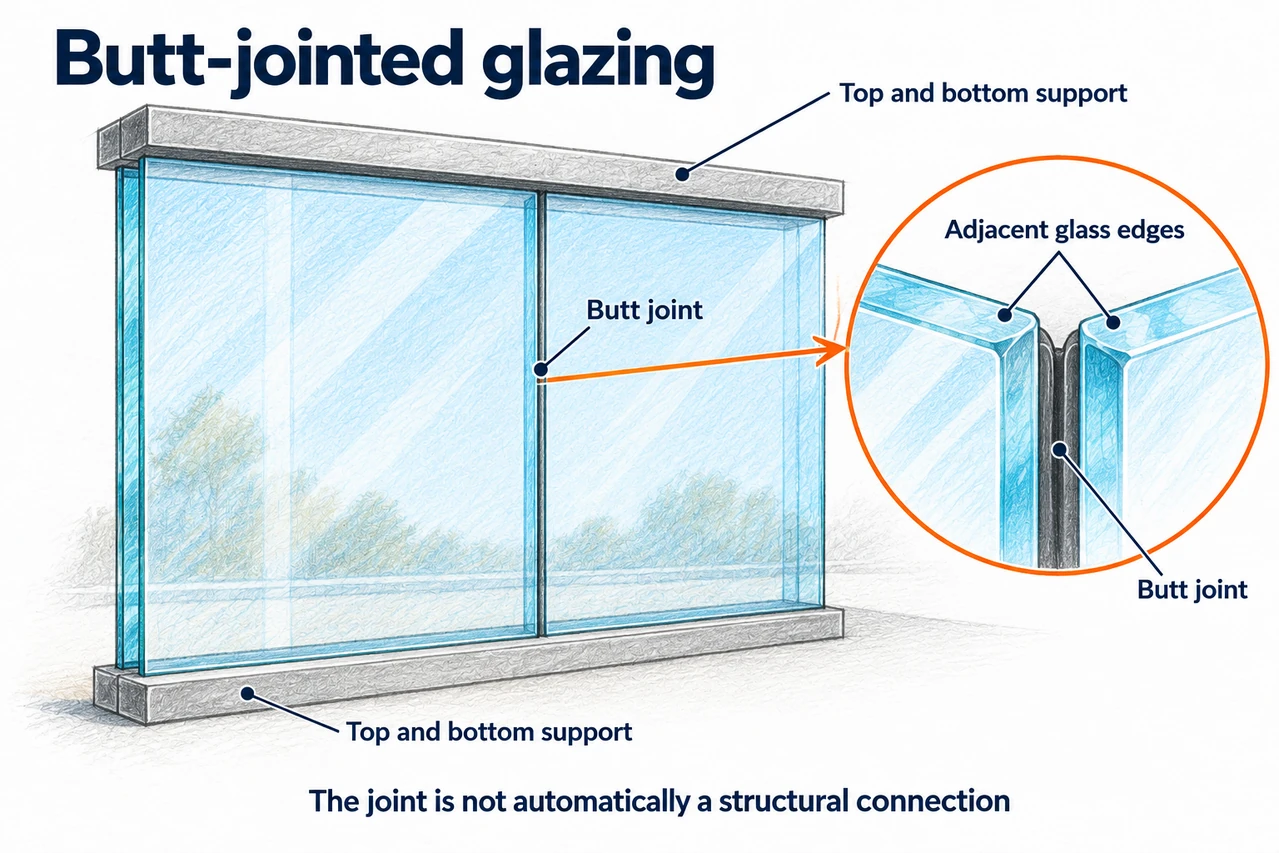
A configuration in which adjacent glass edges meet at an open or sealant-filled joint without a conventional mullion directly covering that joint.
Glazing systems and specialty applications
C
Calcium carbonate scale
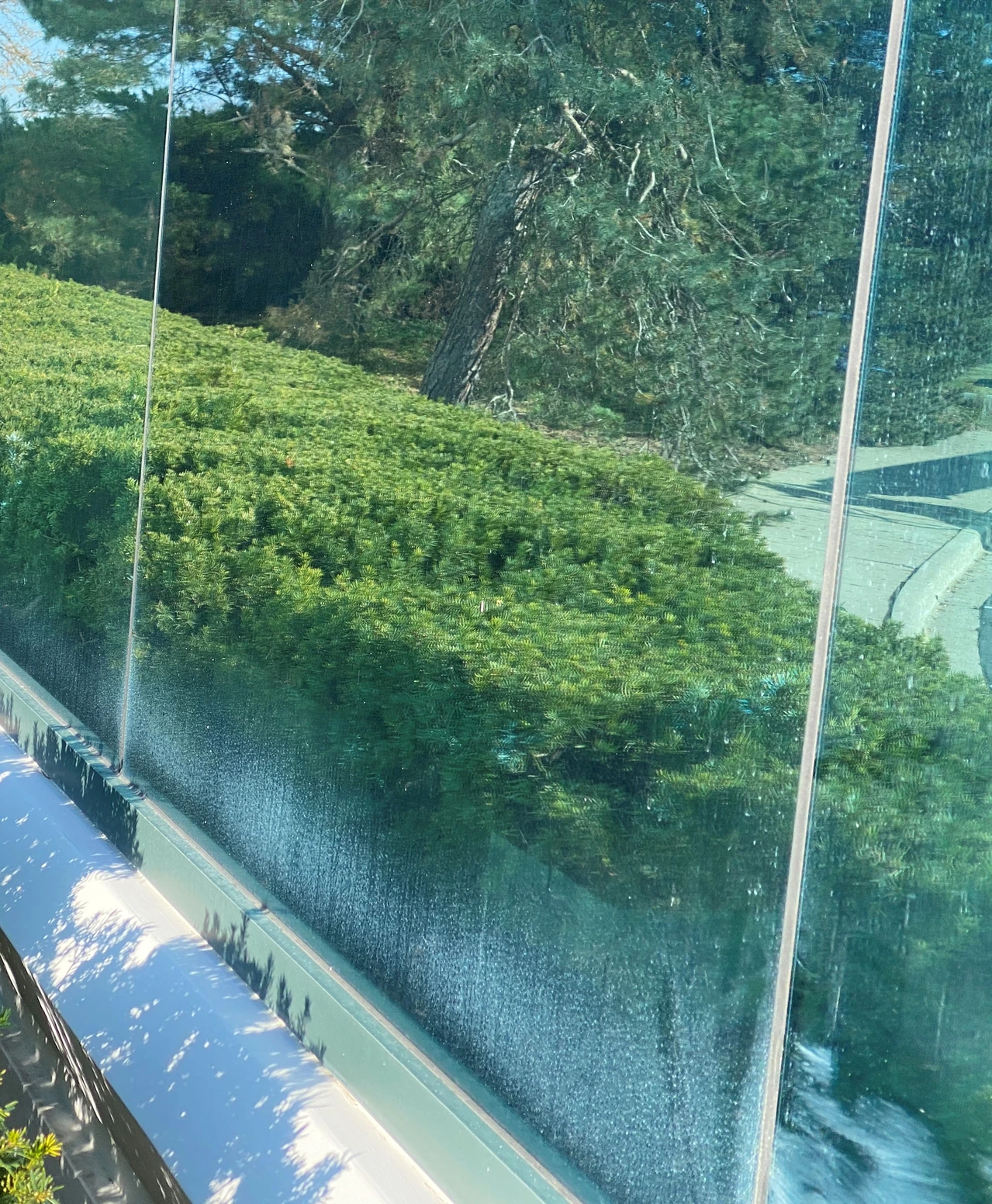
A mineral scale containing calcium carbonate that can form as hard water changes chemistry, is heated, or evaporates.
Deposits and contamination
Captured glazing
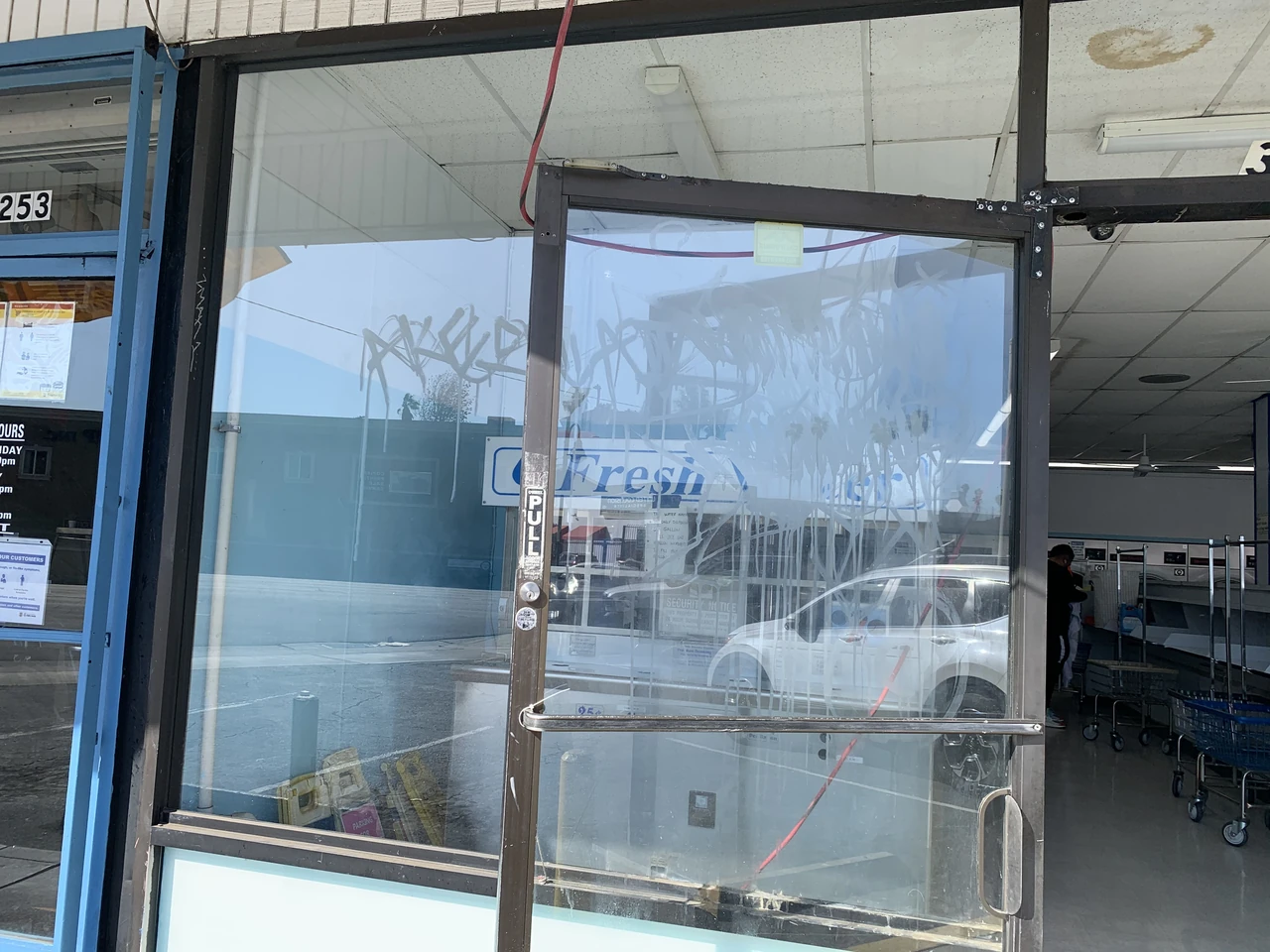
A glazing configuration in which framing, stops, caps, or other mechanical components retain the glass edge on two, three, or four sides.
Glazing systems and specialty applications

Category 0 condition
A glass surface that needs only routine cleaning with soap and water and shows no remaining bonded residue or visible damage after it is clean and dry.
Damage categories and surface conditions
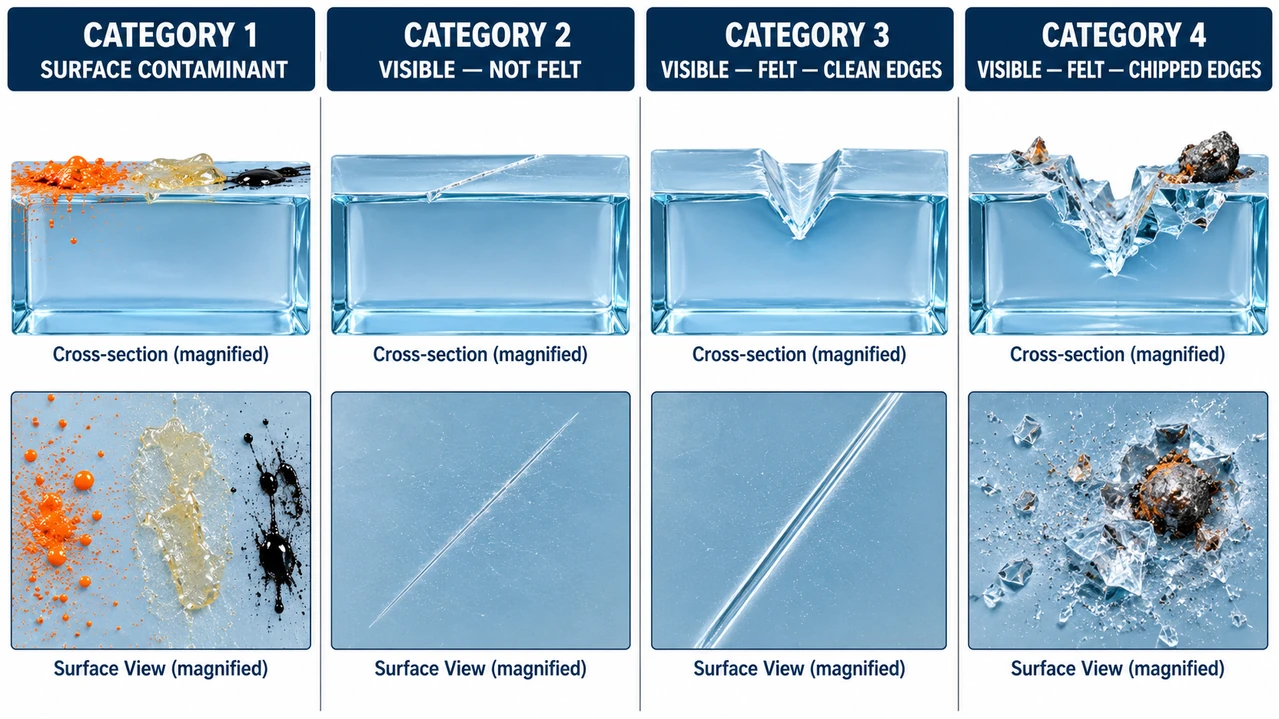
Category 1 condition
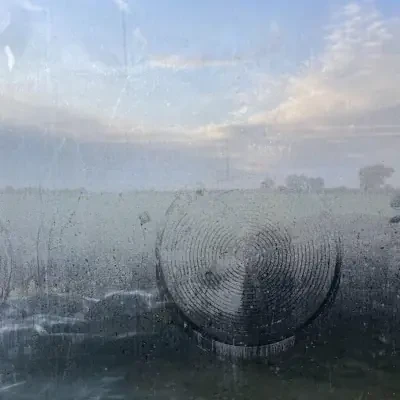
Contaminants that sit on the exposed surface of the glass and require treatment beyond routine soap-and-water cleaning. Examples include paint or paint spray, adhesive, ink, stickers, rubber transfer, grease, deposits, suction-cup marks, and heat haze.
Damage categories and surface conditions
Category 2 damage
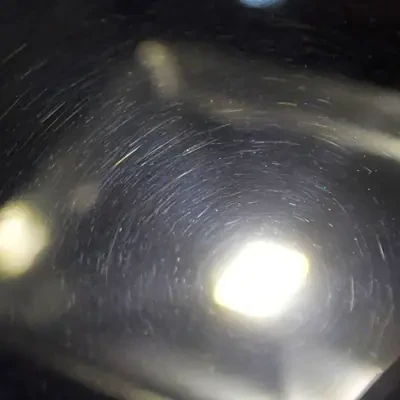
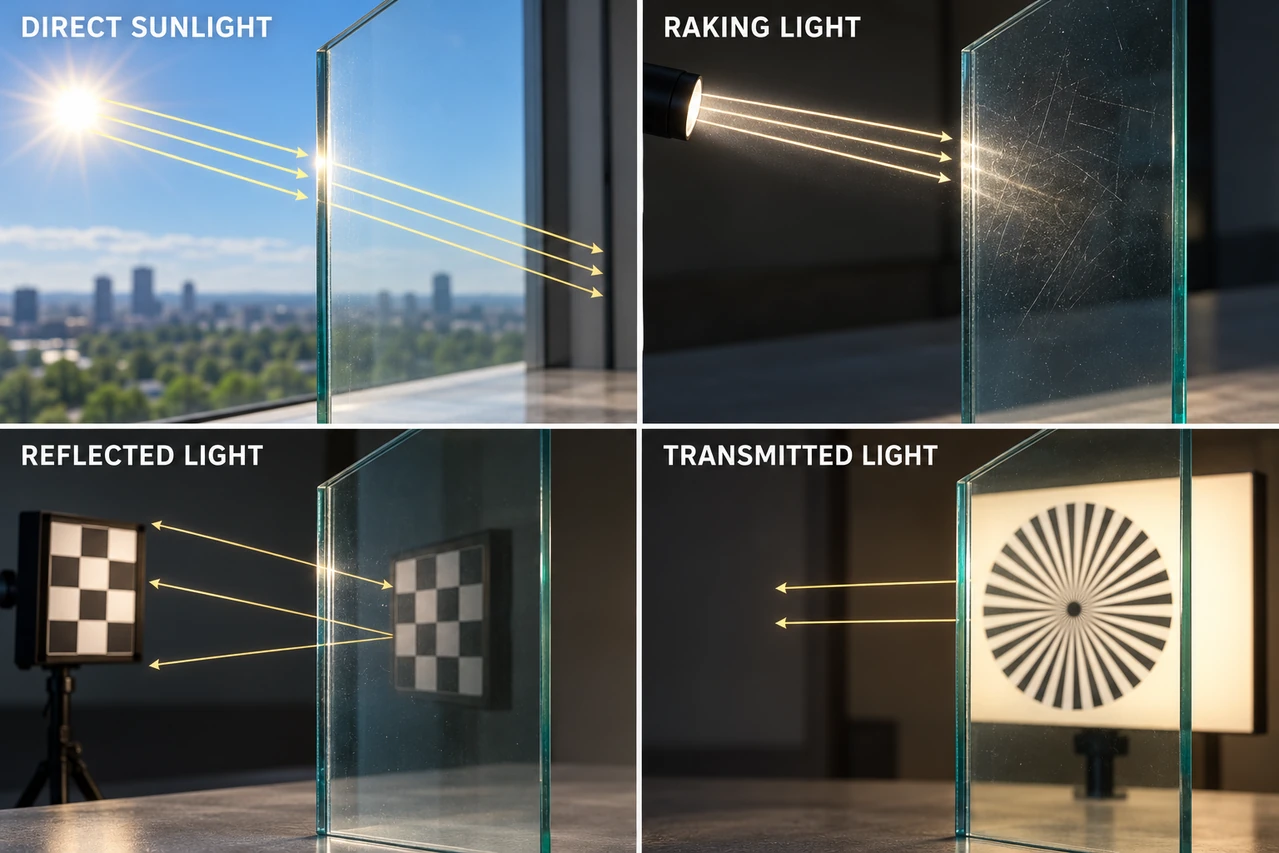
Visible surface damage that can be seen in direct sunlight or controlled raking light but cannot be felt with a light pass of a clean, dry fingernail.
Damage categories and surface conditions
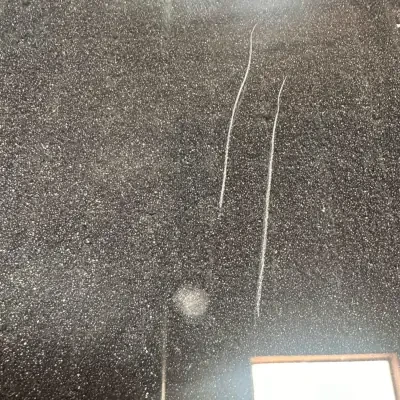
Category 3 damage
Visible surface damage that can be felt with a light pass of a clean, dry fingernail but remains a clean, isolated, continuous scratch or groove without visible chipping or flecking along its edges.
Damage categories and surface conditions
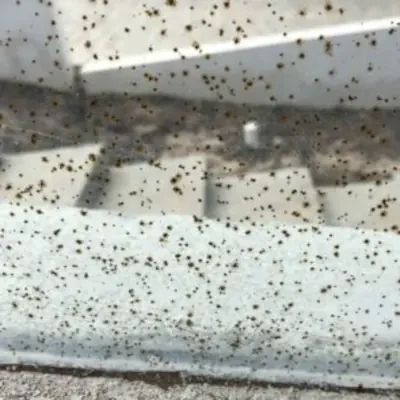
Category 4 damage
Visible, tactile glass damage with small chips, flecks, rough breakout, pits, craters, fused particles, or other edge deterioration along or around the damaged area.
Damage categories and surface conditions
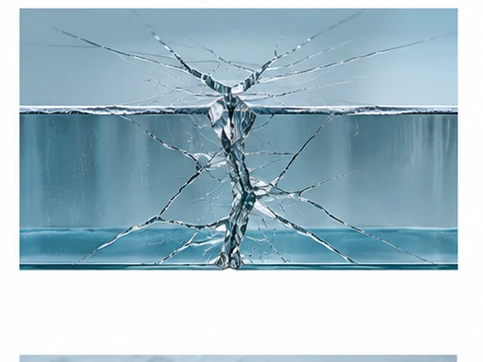
Category 5 condition
A condition that cannot be safely or effectively restored in place or lies outside GlassRenu's approved restoration scope.
Damage categories and surface conditions
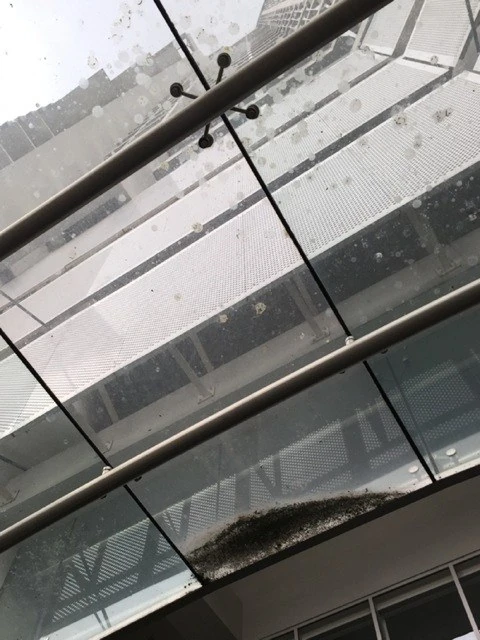
Cementitious splatter
Droplets or fragments of cement-, mortar-, grout-, stucco-, or concrete-based material deposited directly on glass.
Deposits and contamination
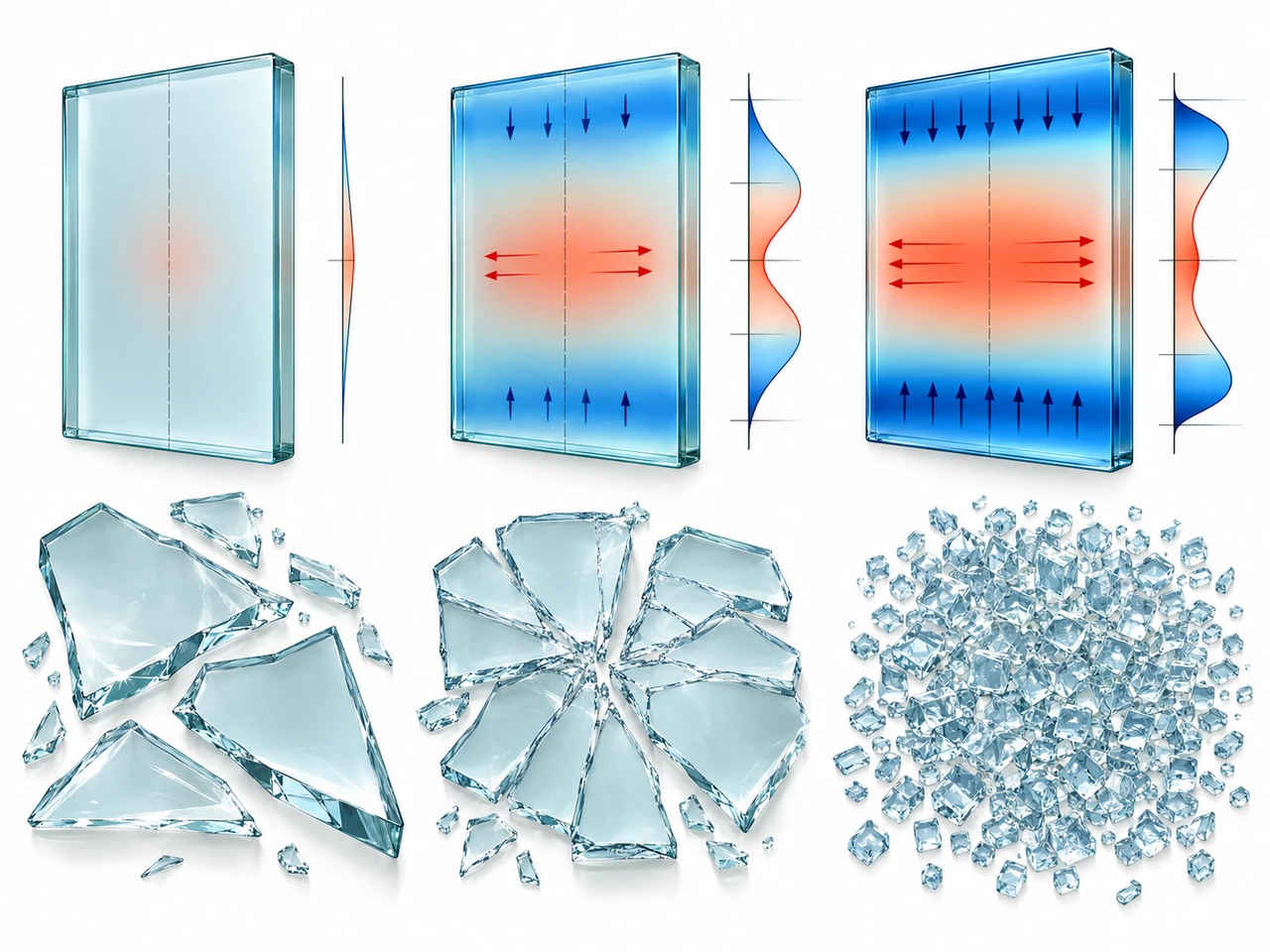
Center tension
The internal tensile-stress region that balances the compressive stress near the surfaces of heat-treated glass.
Glass foundations
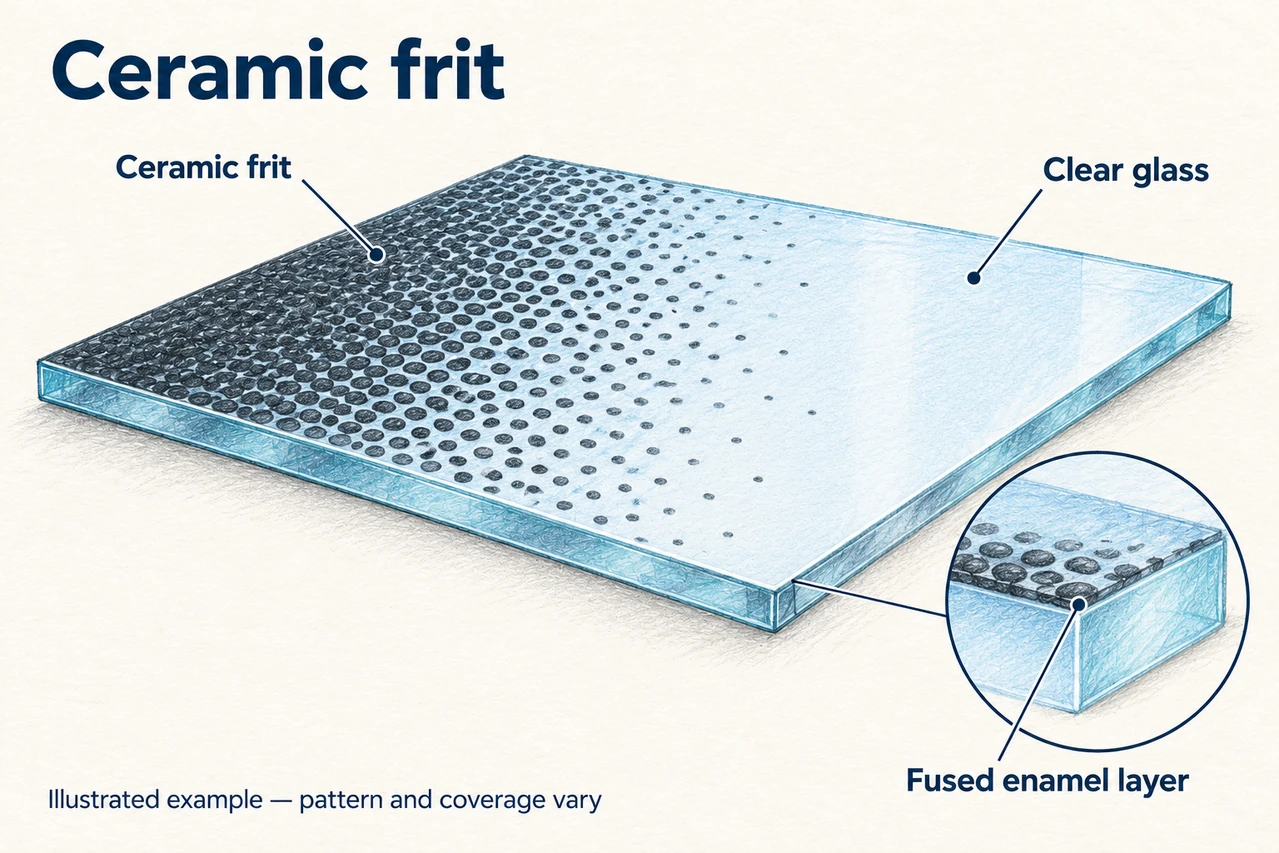
Ceramic frit
A ceramic enamel composition applied to glass in a pattern or continuous area and fused or otherwise processed during manufacture to create a durable decorative or opaque coating.
Glazing systems and specialty applications
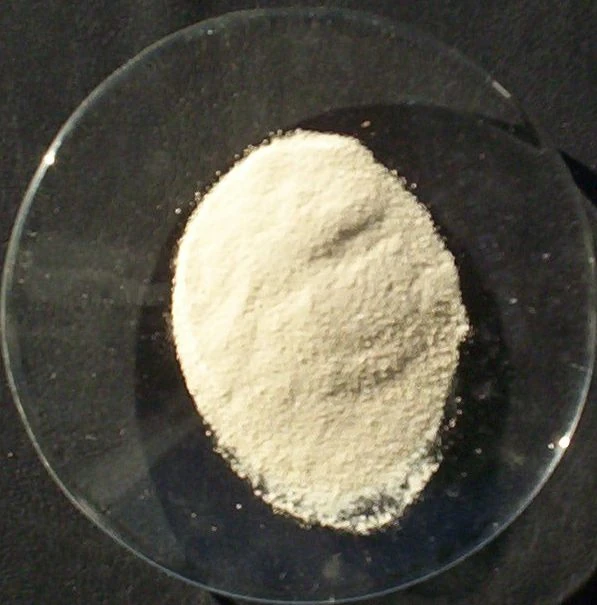
Cerium oxide (ceria)
A cerium-oxygen compound, commonly represented as CeO2, used in many glass-polishing systems as an abrasive and chemically active polishing medium.
Glass foundations
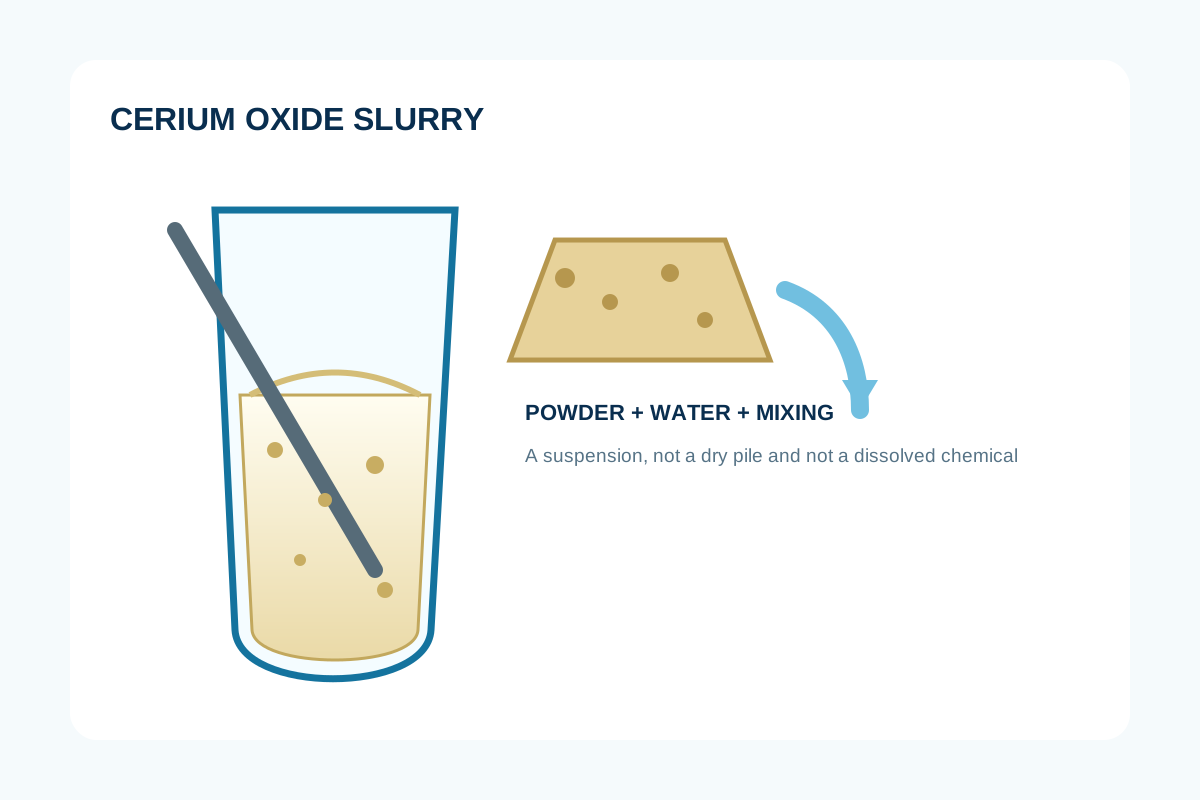
Cerium oxide slurry
A suspension containing cerium-oxide-based polishing particles in water or another specified liquid carrier.
Restoration processes and safety
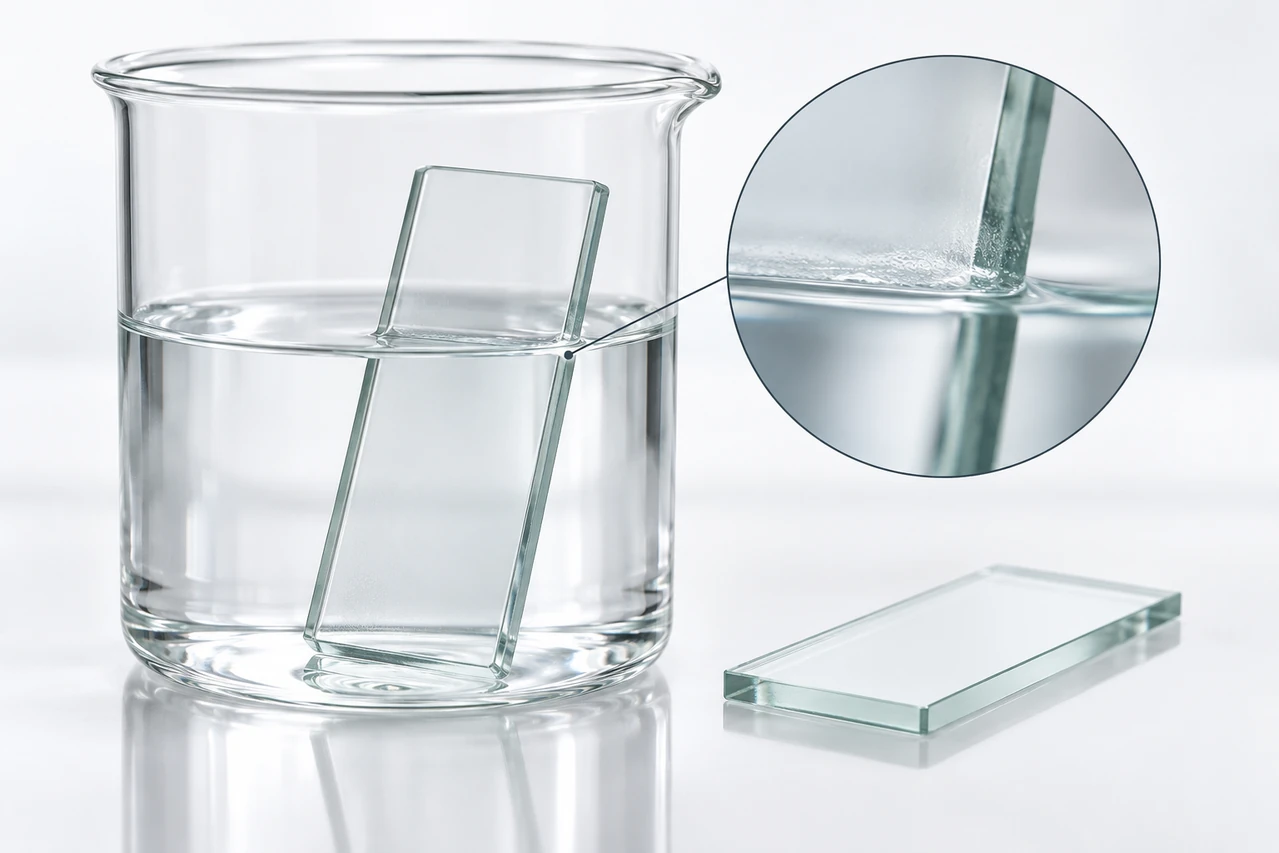
Chemical durability
The ability of a glass or glass surface to resist chemical alteration under defined exposure conditions.
Deposits and contamination
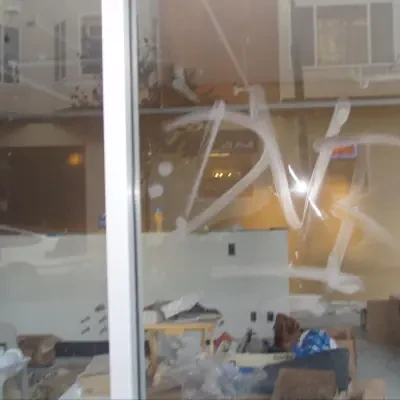
Chemical etching
A chemical reaction that alters or removes part of the glass surface or an applied coating, changing texture, clarity, or reflectance.
Glass foundations
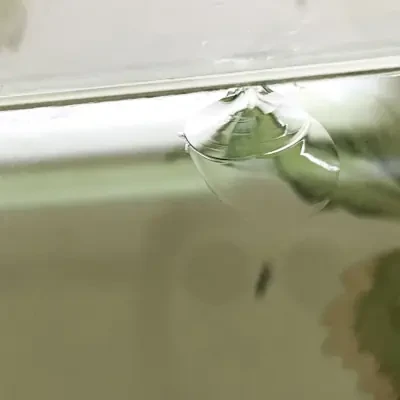
Chip
A localized area where a fragment of glass has broken away from a surface or edge.
Glass foundations
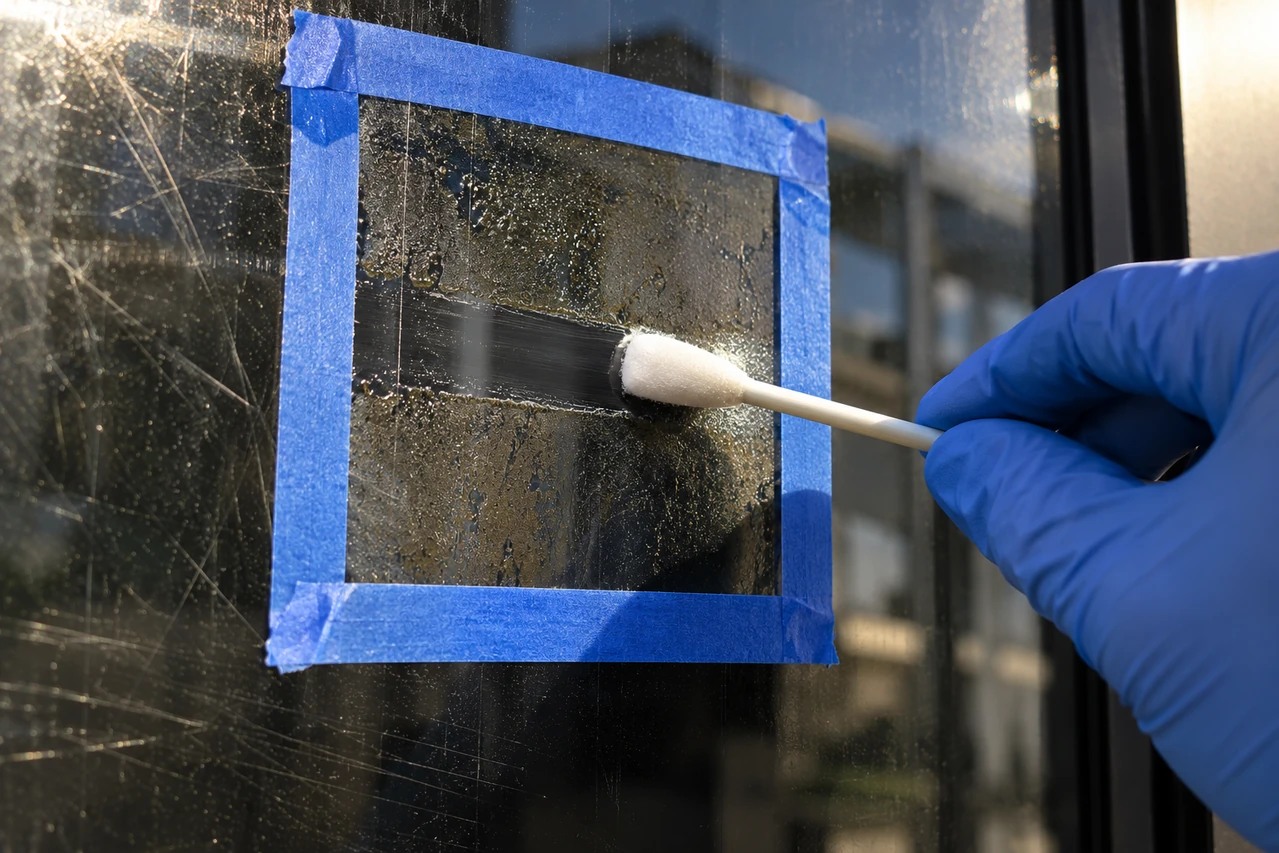
Cleaning test
A limited, documented trial intended to determine whether an observed condition can be removed by an approved cleaning method without harming the glass or adjacent materials.
Inspection and repair decisions
Cleaning-abrasive damage
A field of fine scratches, swirls, haze, or scuffing produced when abrasive particles or tools move across glass during cleaning.
Damage categories and surface conditions
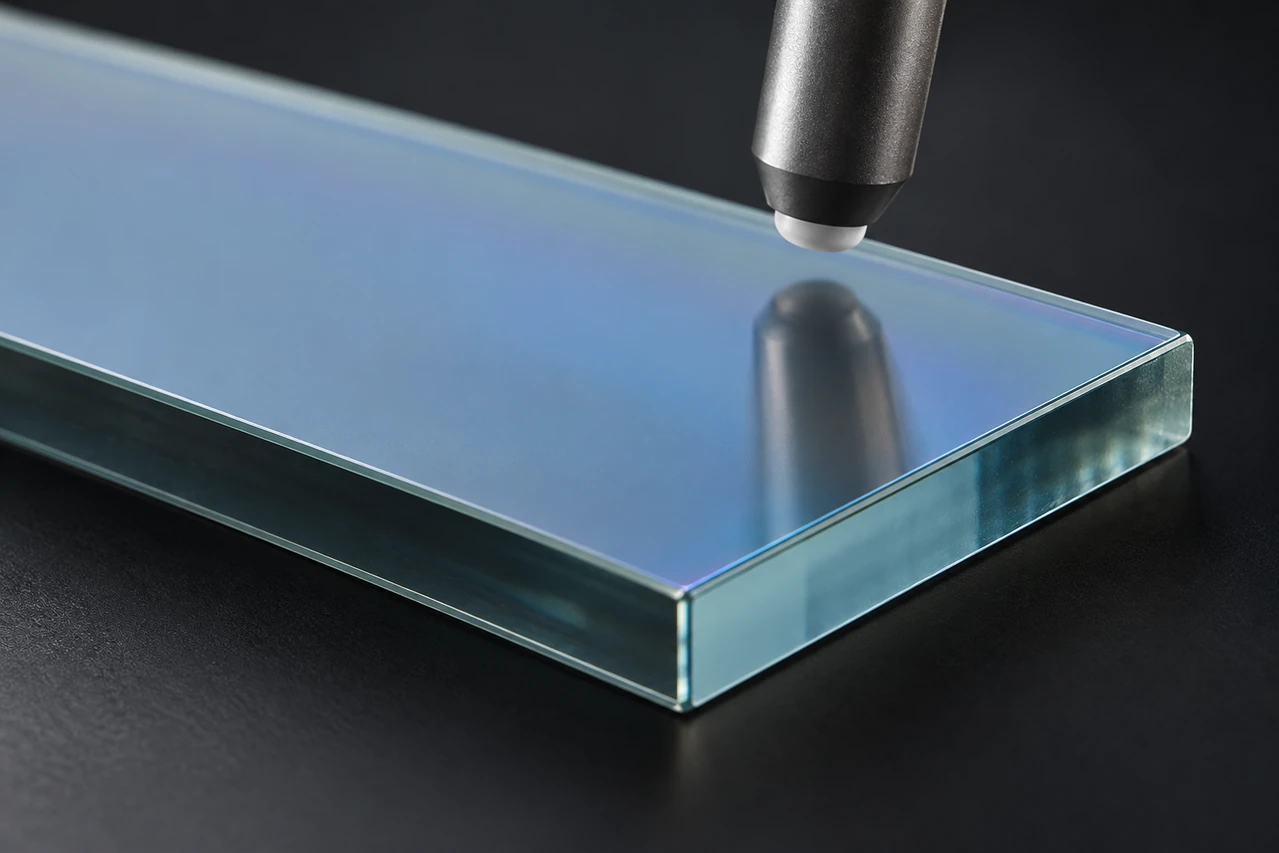
Coated glass
Glass carrying an intentionally deposited surface layer that changes optical, thermal, reflective, decorative, or other performance.
Glass foundations
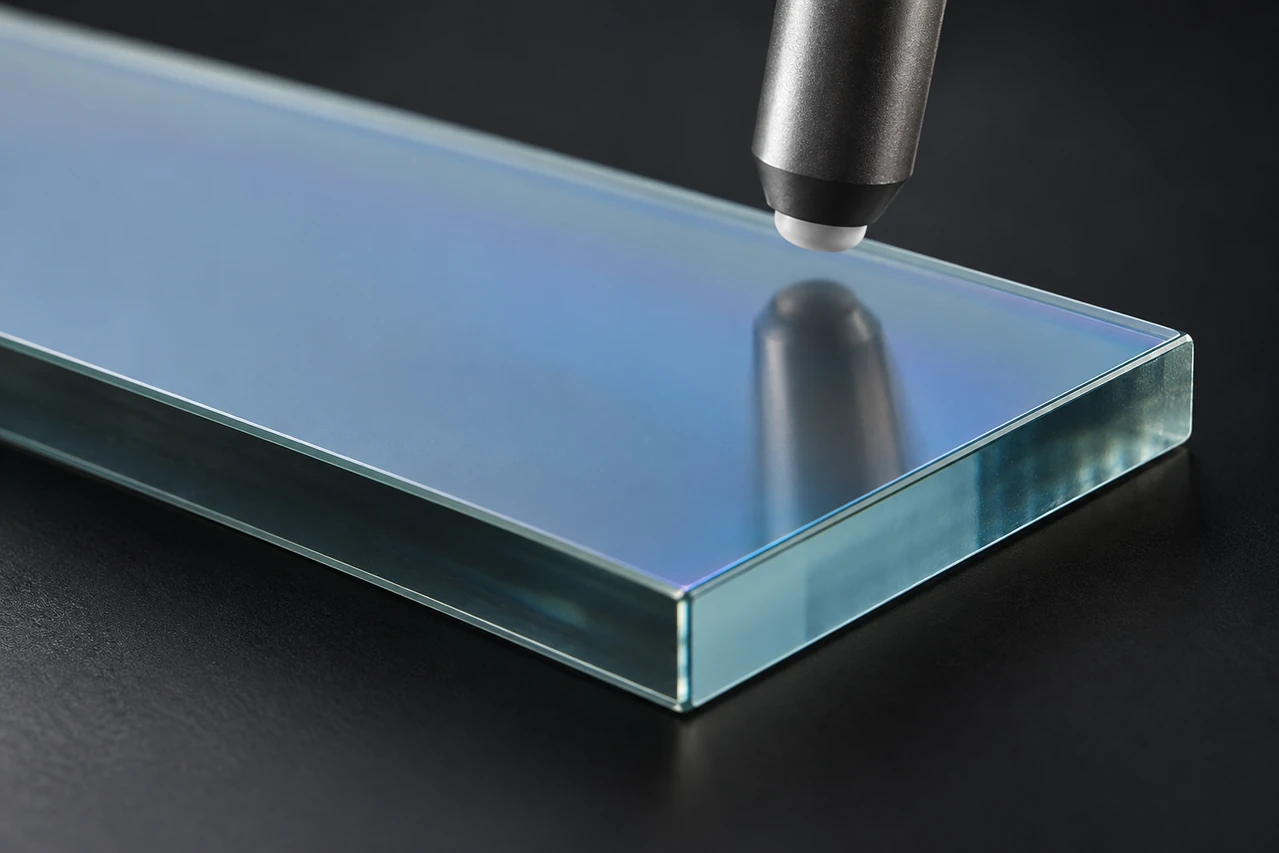
Coating identification
Determination of whether a coating is present, its function or product family when possible, and the surface on which it is located.
Inspection and repair decisions
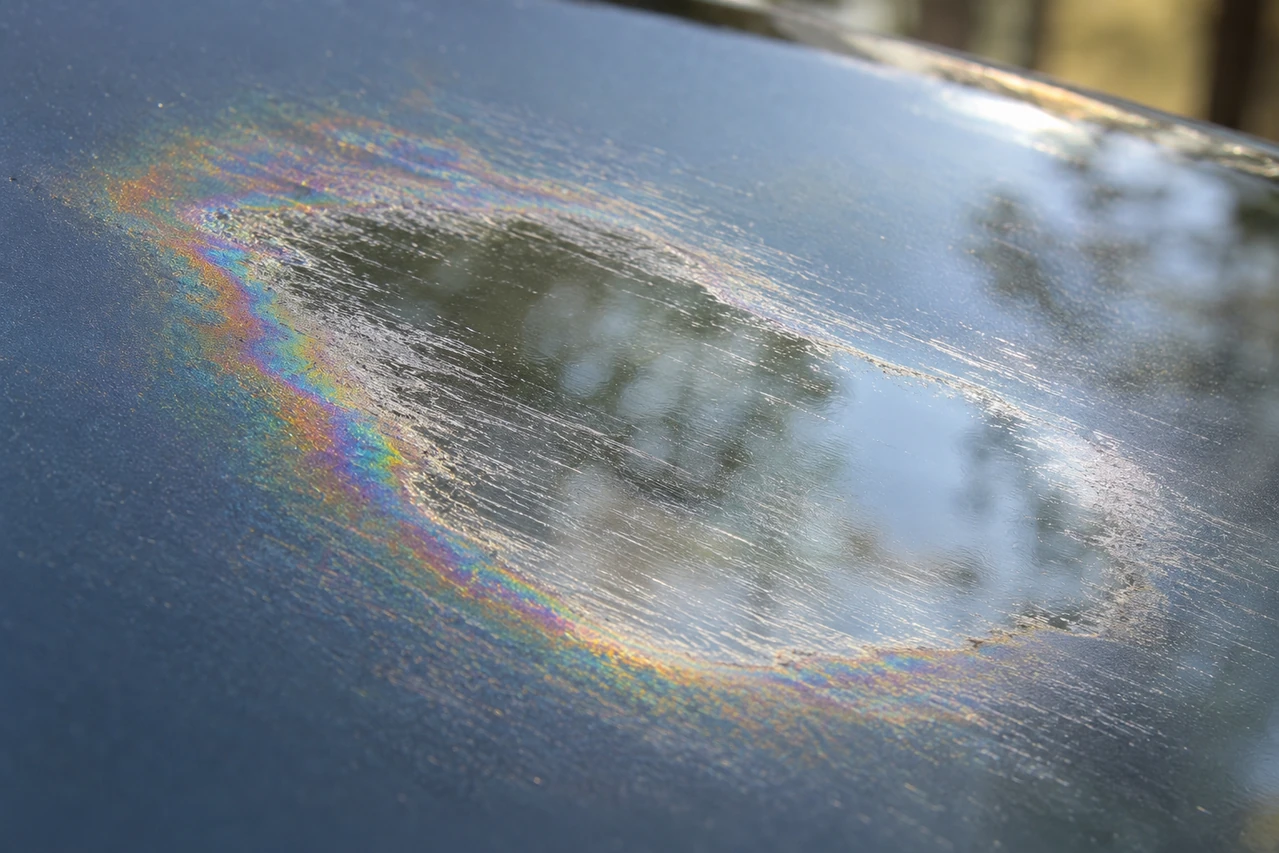
Coating removal
Partial or complete loss of an applied coating from a glass surface through abrasion, scraping, chemical action, weathering, or deliberate deletion.
Damage categories and surface conditions
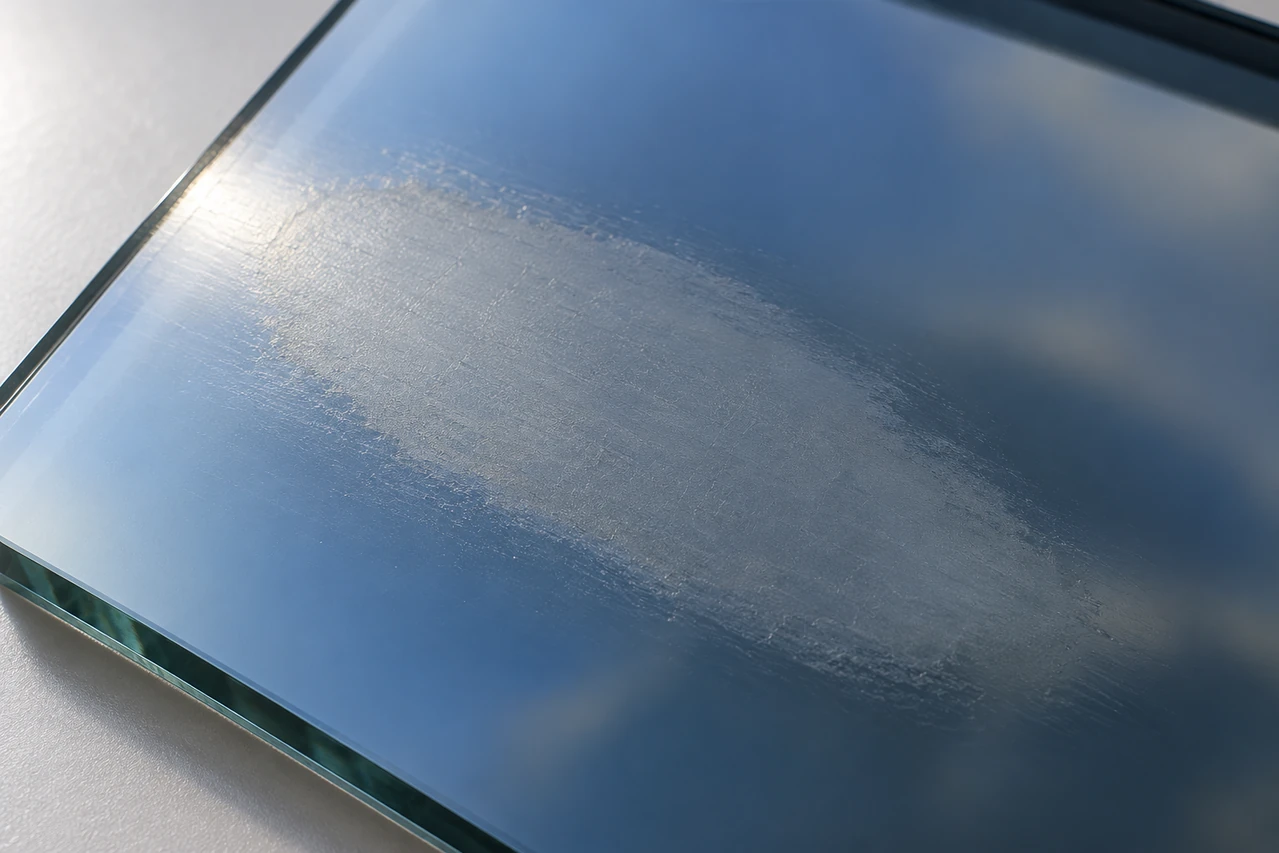
Coating rub
A rubbed or abraded area of a glass coating that changes gloss, color, reflectance, transmittance, or continuity without necessarily forming one narrow scratch.
Damage categories and surface conditions
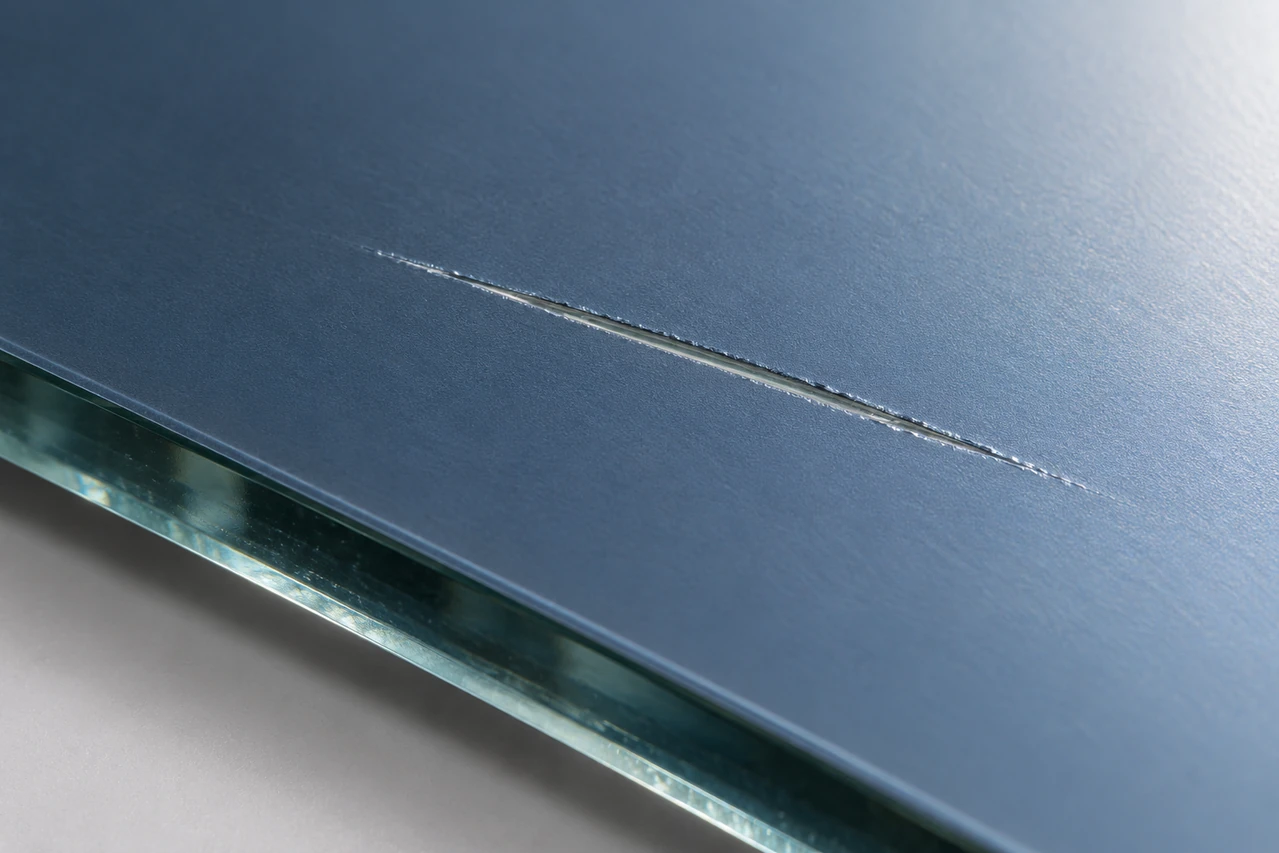
Coating scratch
A linear disruption of an applied glass coating that changes its appearance, continuity, or performance.
Damage categories and surface conditions
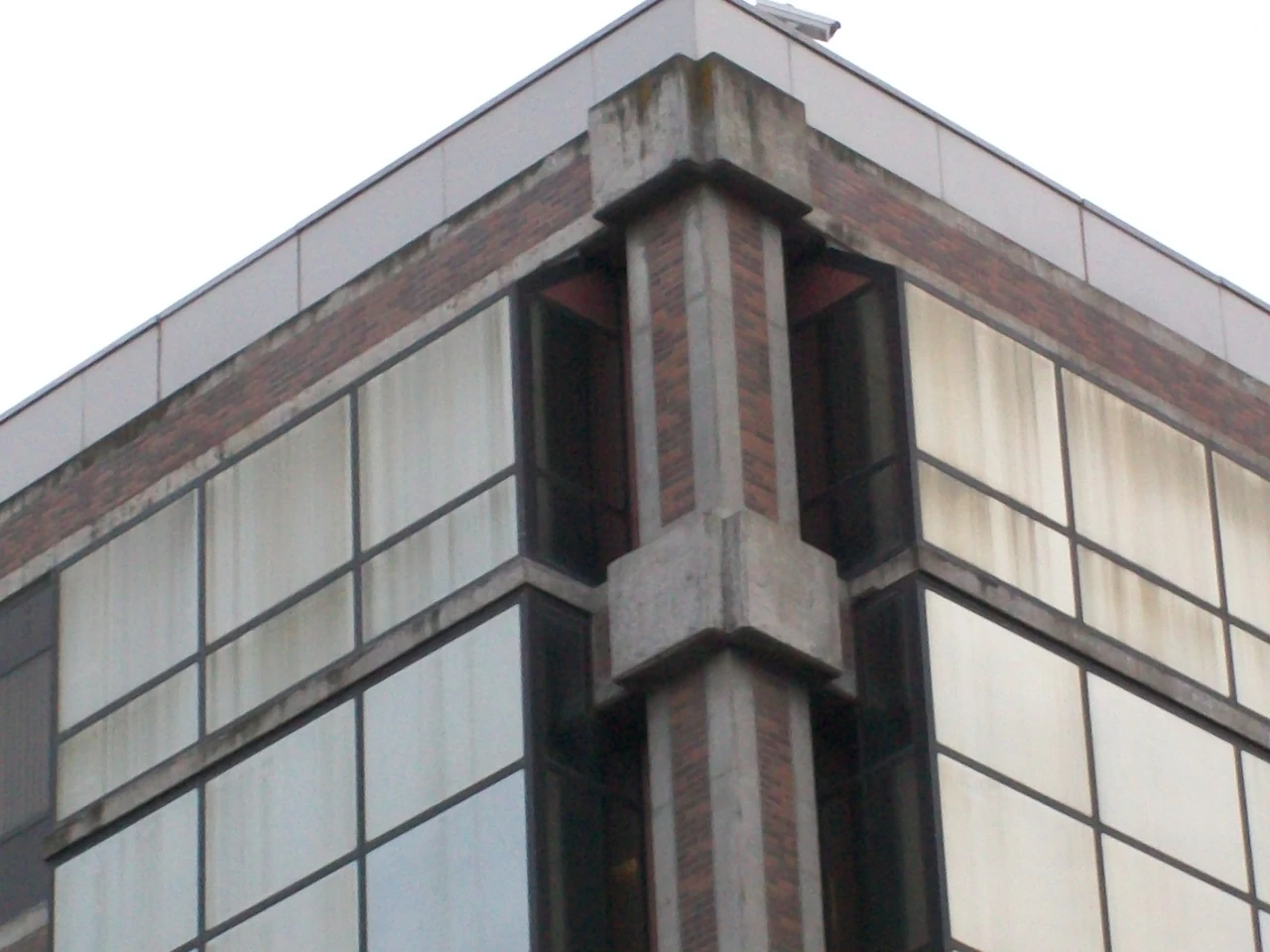
Concrete or masonry runoff
Water that has contacted concrete, mortar, stucco, stone, grout, or masonry-cleaning materials before flowing onto glass.
Deposits and contamination
Condition photograph
A dated image made to record the glass, its context, and a specific condition under documented viewing conditions.
Inspection and repair decisions
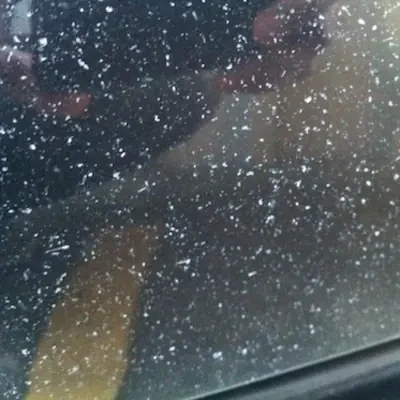
Construction dust
Airborne or settled particulate generated by cutting, grinding, drilling, demolition, masonry, drywall, concrete, or other construction activity.
Deposits and contamination
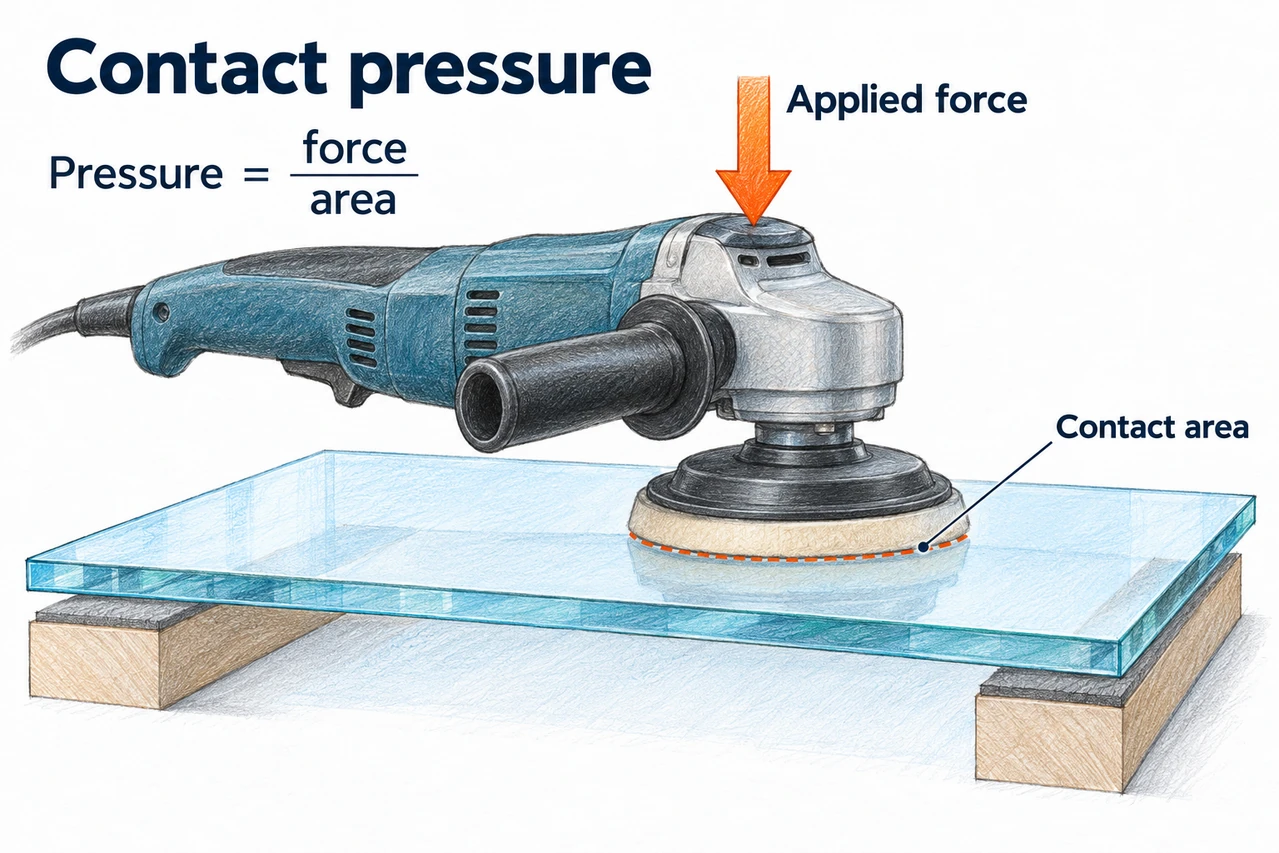
Contact pressure
The normal force applied through a tool divided by the effective contact area at the glass surface.
Restoration processes and safety
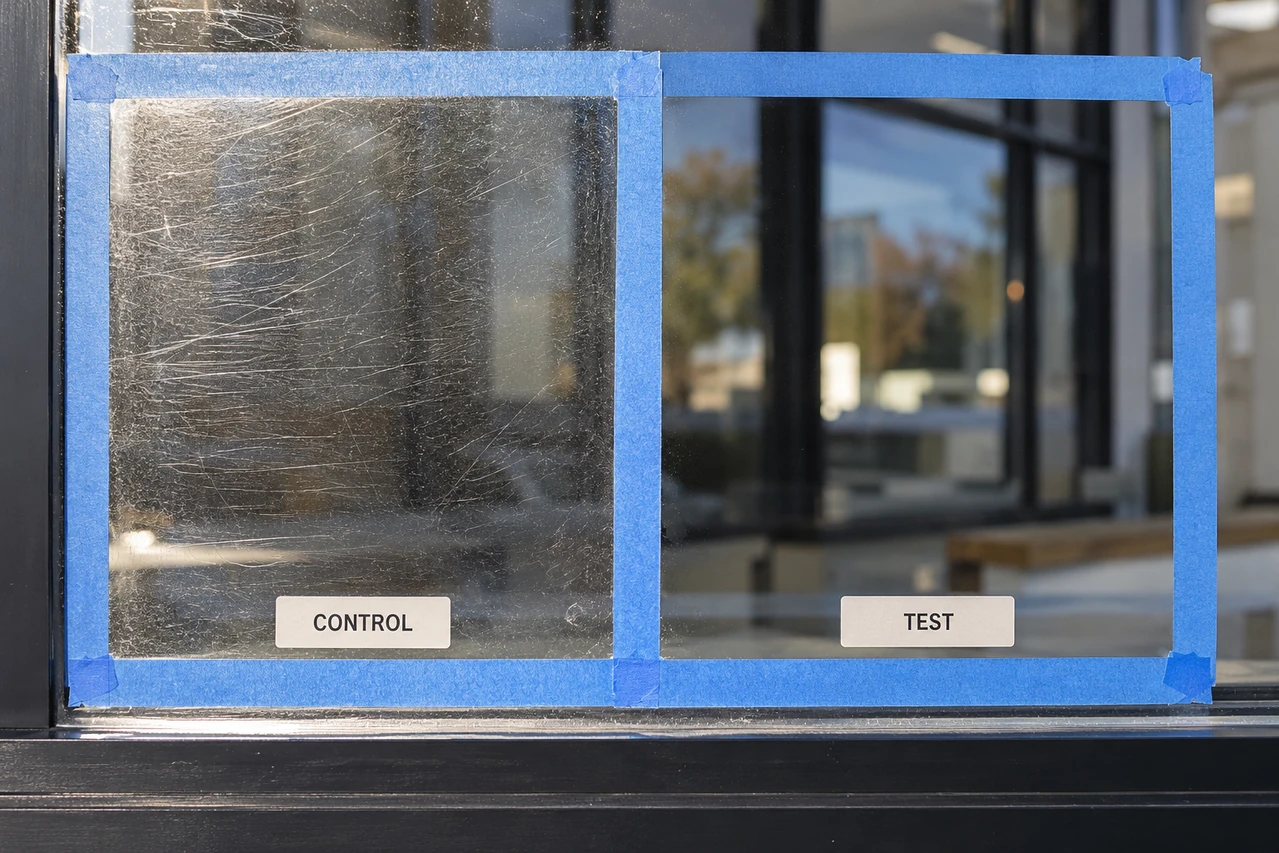
Control area
An intentionally untreated or differently treated comparison area used to interpret the effect of a test or restoration process.
Inspection and repair decisions
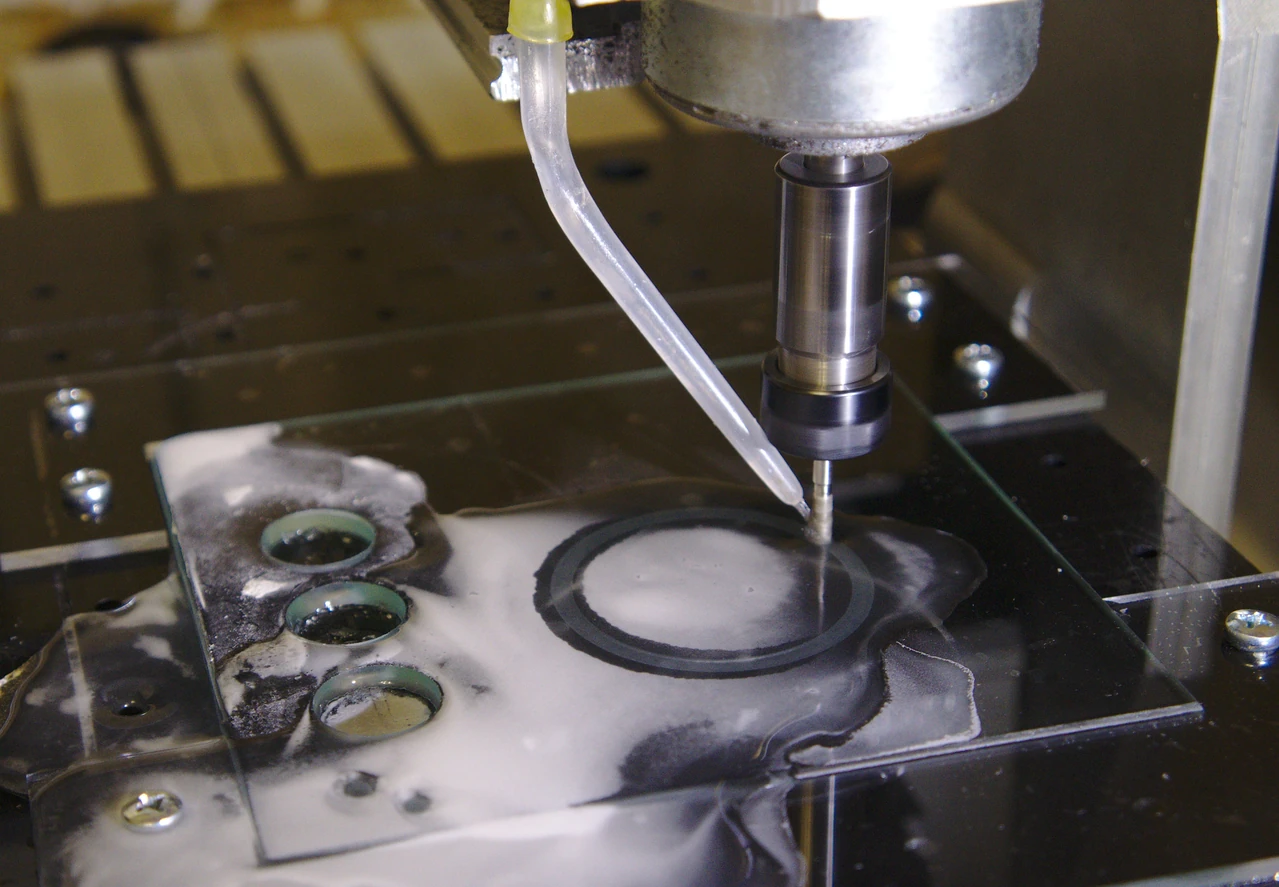
Coolant and lubricant
A compatible fluid used to remove heat, carry debris, reduce friction, improve particle transport, or stabilize the tool-surface interaction.
Restoration processes and safety
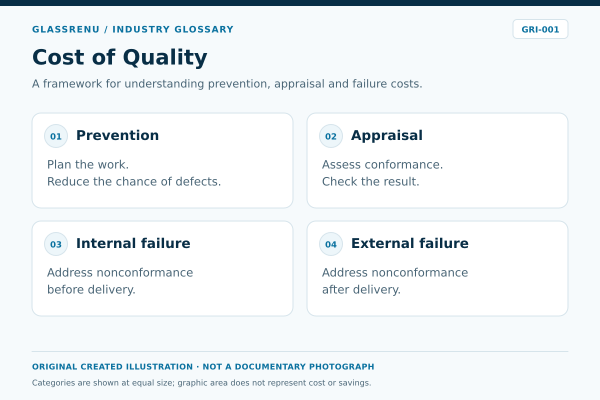
Cost of Quality
A framework for identifying resources spent to prevent quality problems, evaluate conformance, and address failures found before or after delivery.
Industry operations and project delivery
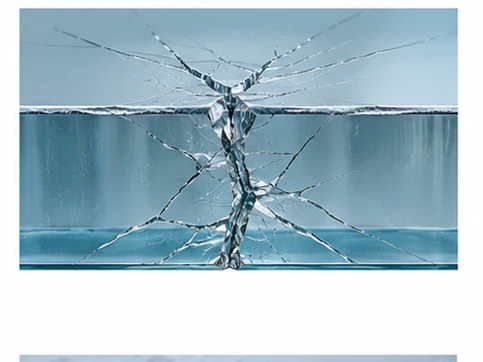
Crack
A fracture in which the glass has separated along a new internal surface, even if the opening is extremely small.
Glass foundations
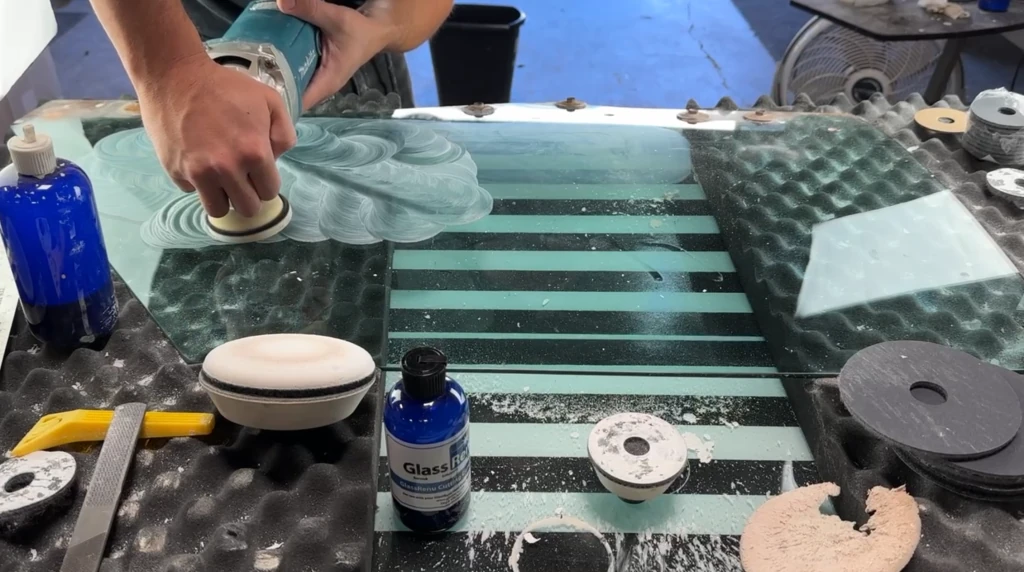
Cross-contamination
Unintended transfer of abrasive particles, glass stock, metal, chemicals, residue, fibers, or dirt between tools, stages, surfaces, containers, or work areas.
Restoration processes and safety
D

Damage assessment
A documented evaluation of observed glass damage, the affected product and surface, likely cause, extent, risk factors, and available next actions.
Inspection and repair decisions
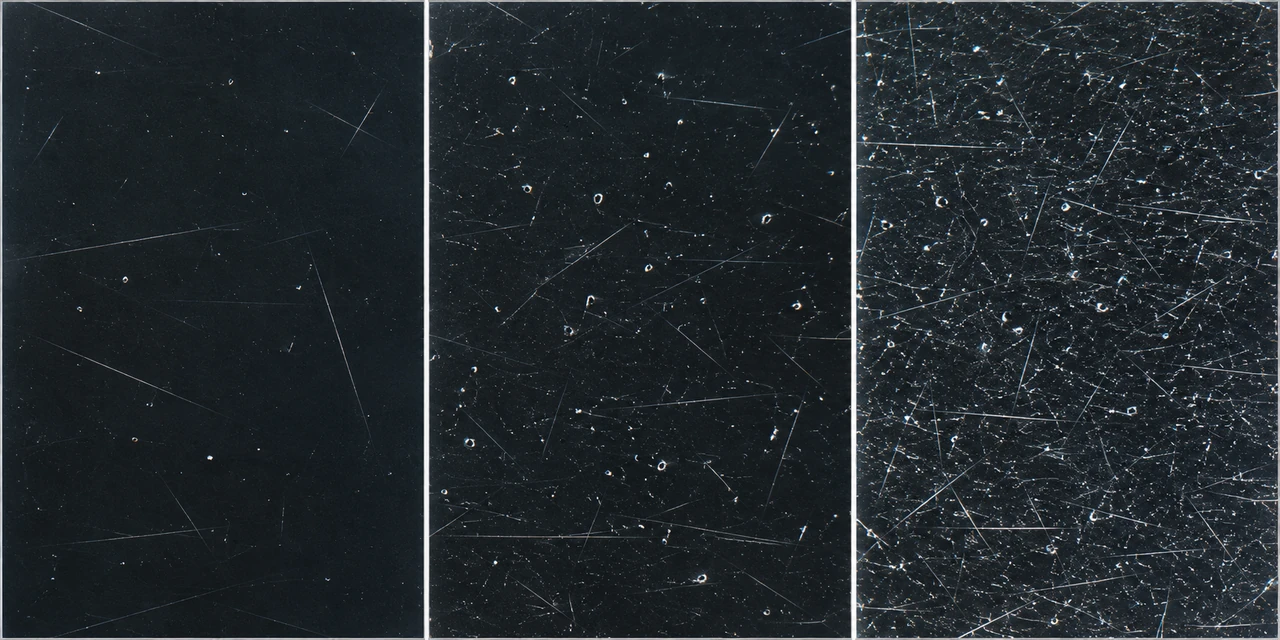
Damage density
The number, total length, affected area, or other stated amount of damage within a defined surface area.
Damage categories and surface conditions
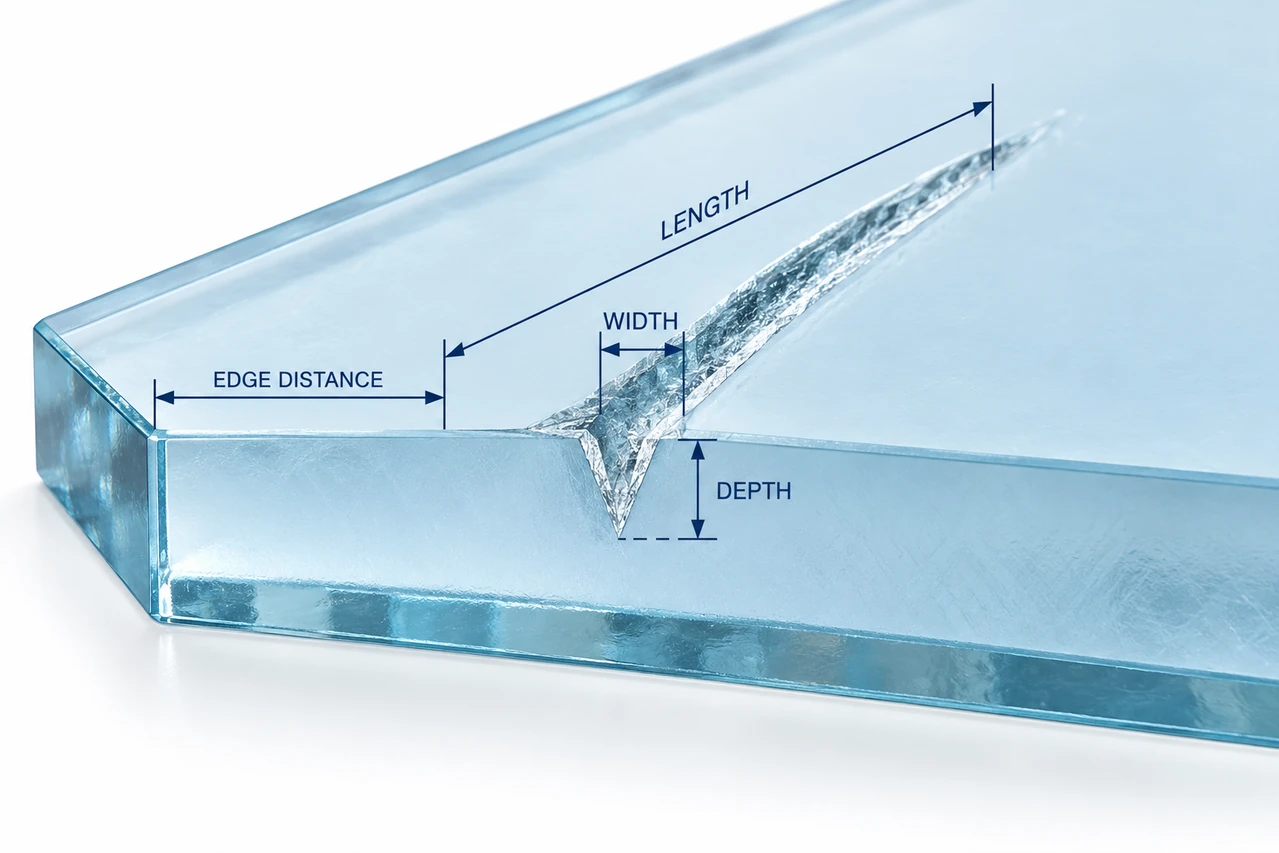
Damage length
The measured end-to-end extent of an individual damage feature along its principal path.
Damage categories and surface conditions

Damage map
A diagram, annotated image, or coordinate record showing the type, location, size, and distribution of damage on a lite or assembly.
Inspection and repair decisions
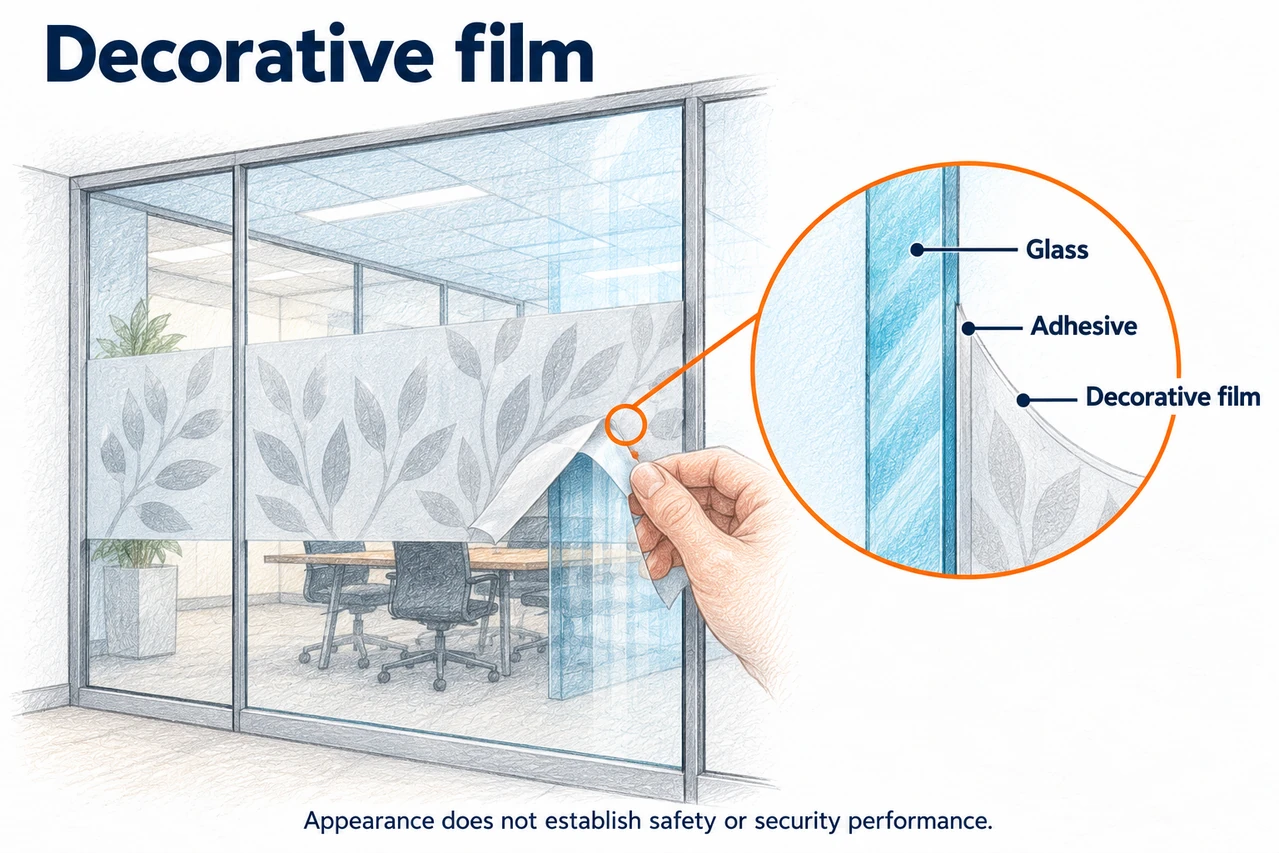
Decorative film
An applied film used primarily to change glass appearance, translucency, pattern, privacy, color, or graphics.
Glazing systems and specialty applications
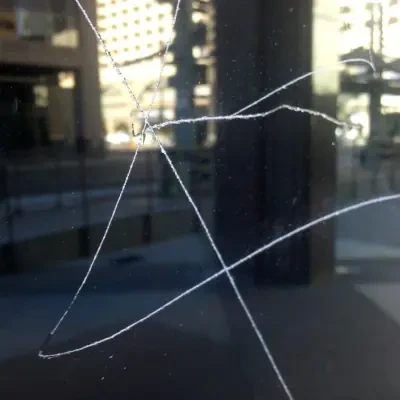
Deep graffiti scratch
A proposed GlassRenu class for deliberate scratched vandalism whose measured morphology or affected area exceeds the approved light-graffiti route.
Damage categories and surface conditions
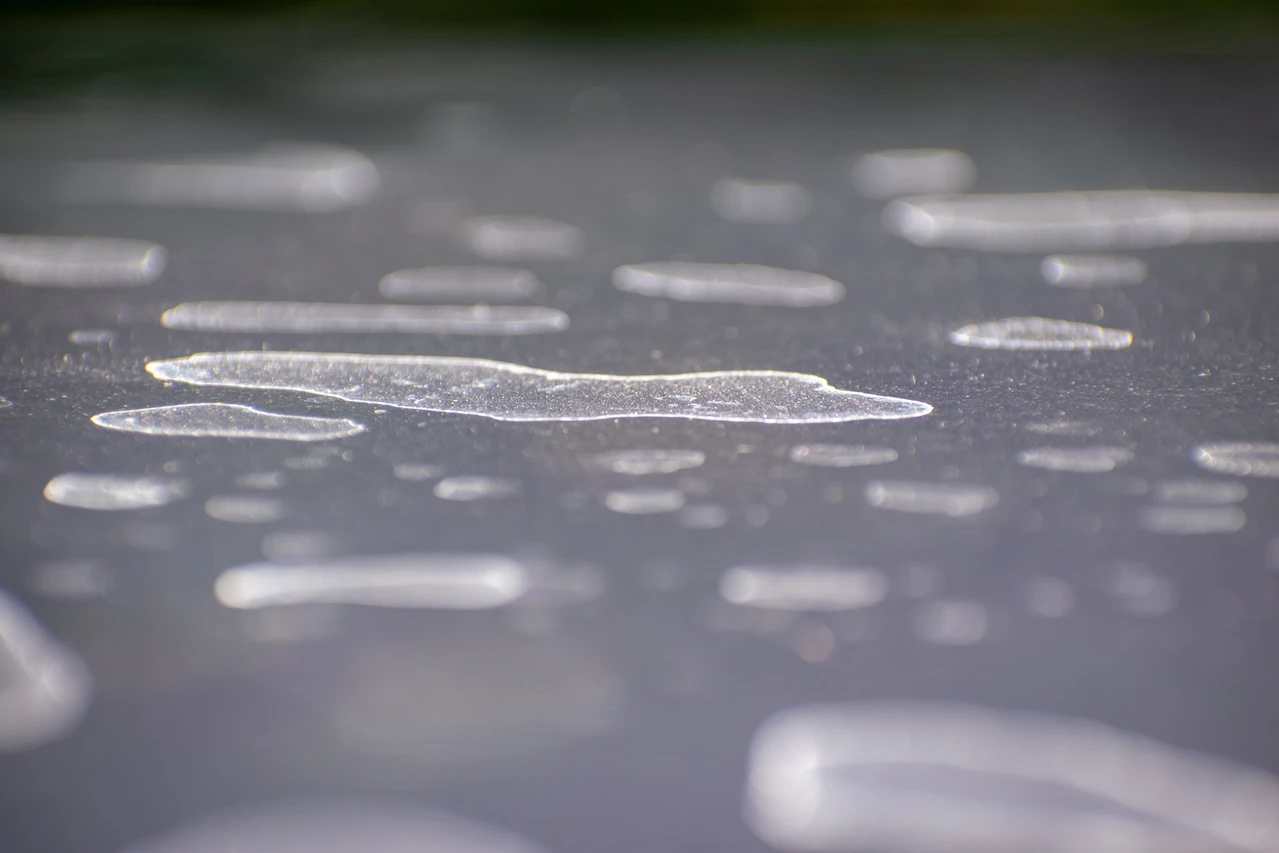
Deposit
Material accumulated or precipitated on a glass surface through runoff, evaporation, transfer, overspray, or another deposition process.
Deposits and contamination
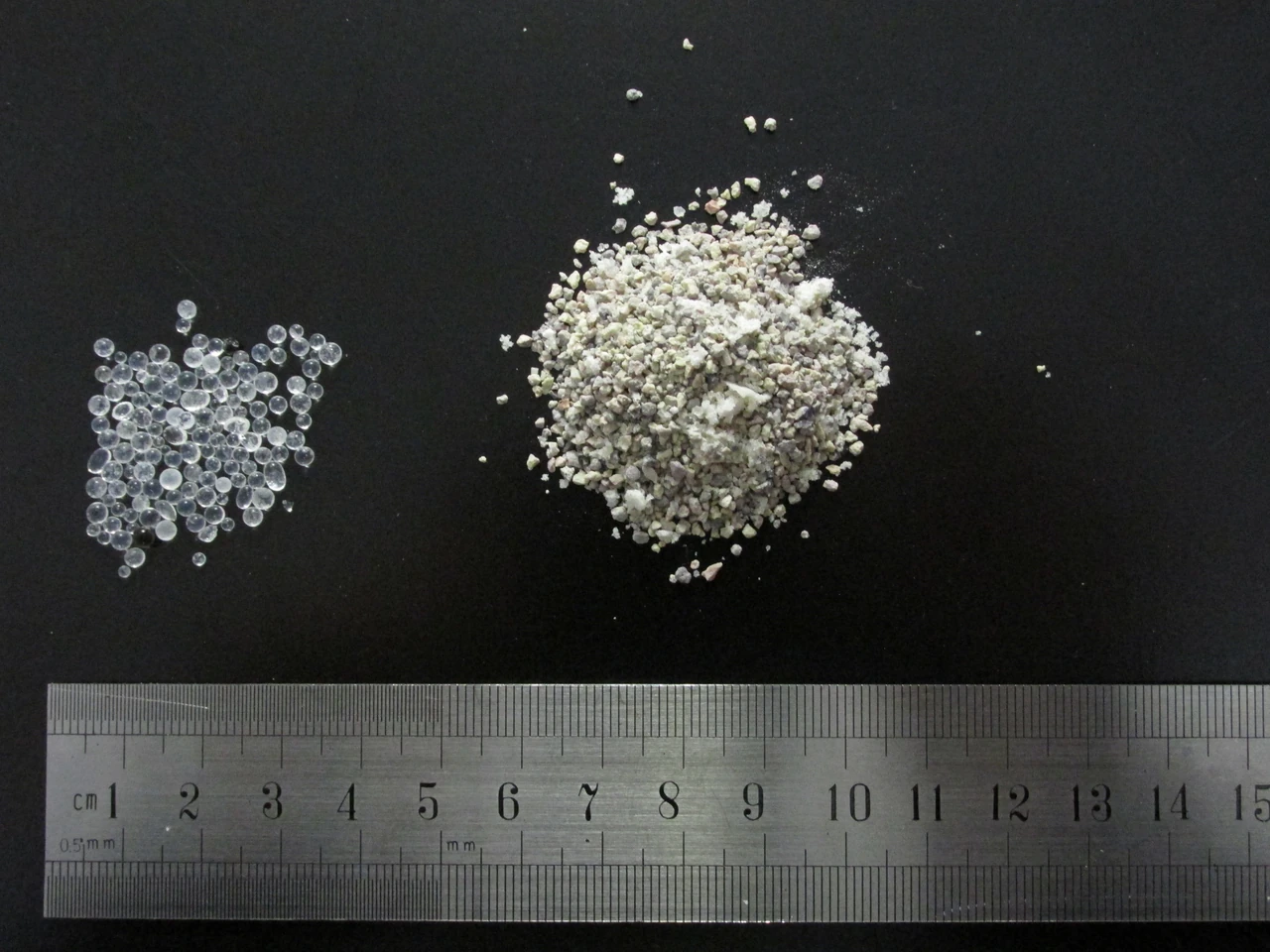
Desiccant
A moisture-adsorbing material incorporated into an IGU spacer or edge system to help keep the sealed cavity below the moisture level that produces visible condensation.
Glazing systems and specialty applications

Diagnostic test
A limited examination or procedure used to distinguish among plausible materials, causes, or condition types.
Inspection and repair decisions
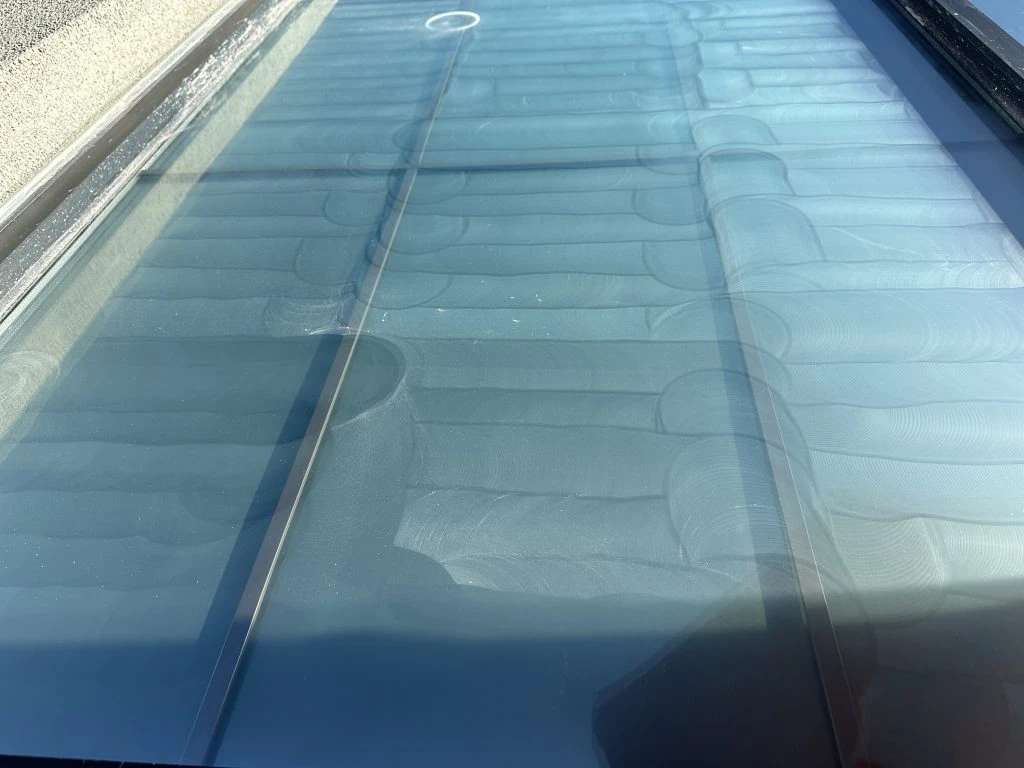
Direct sunlight
Undiffused sunlight falling directly on the glass or entering the observer's viewing path.
Inspection and repair decisions
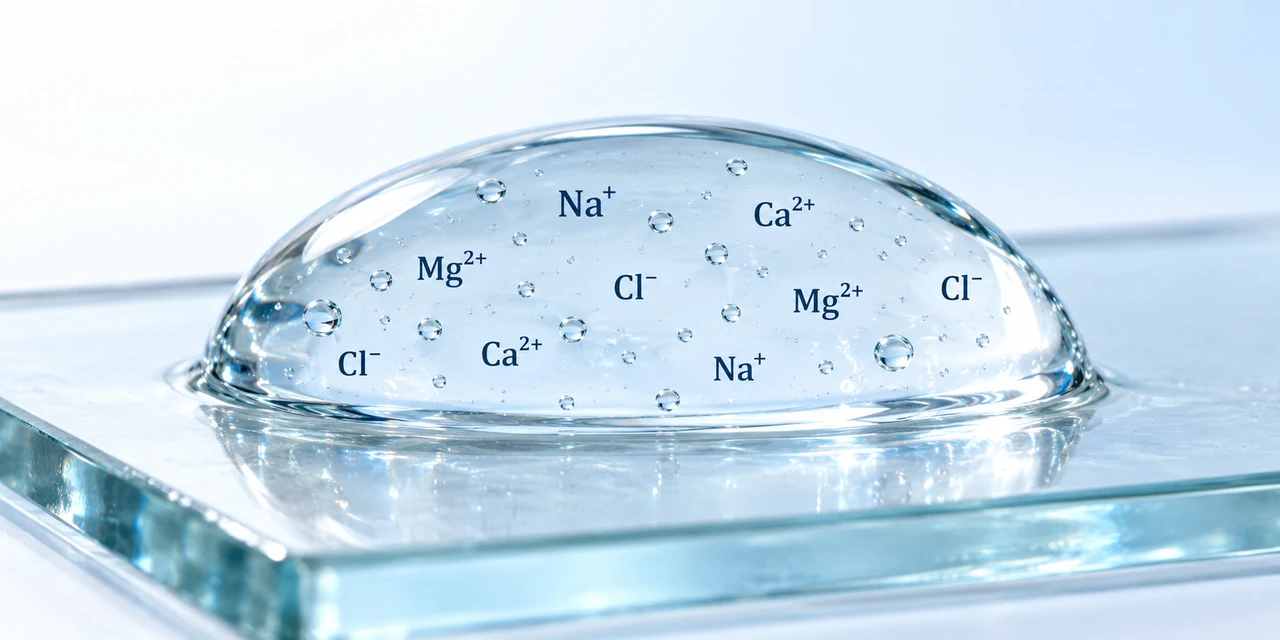
Dissolved solids
Mineral salts and other substances present in water at the molecular or ionic level rather than as visible suspended particles.
Deposits and contamination
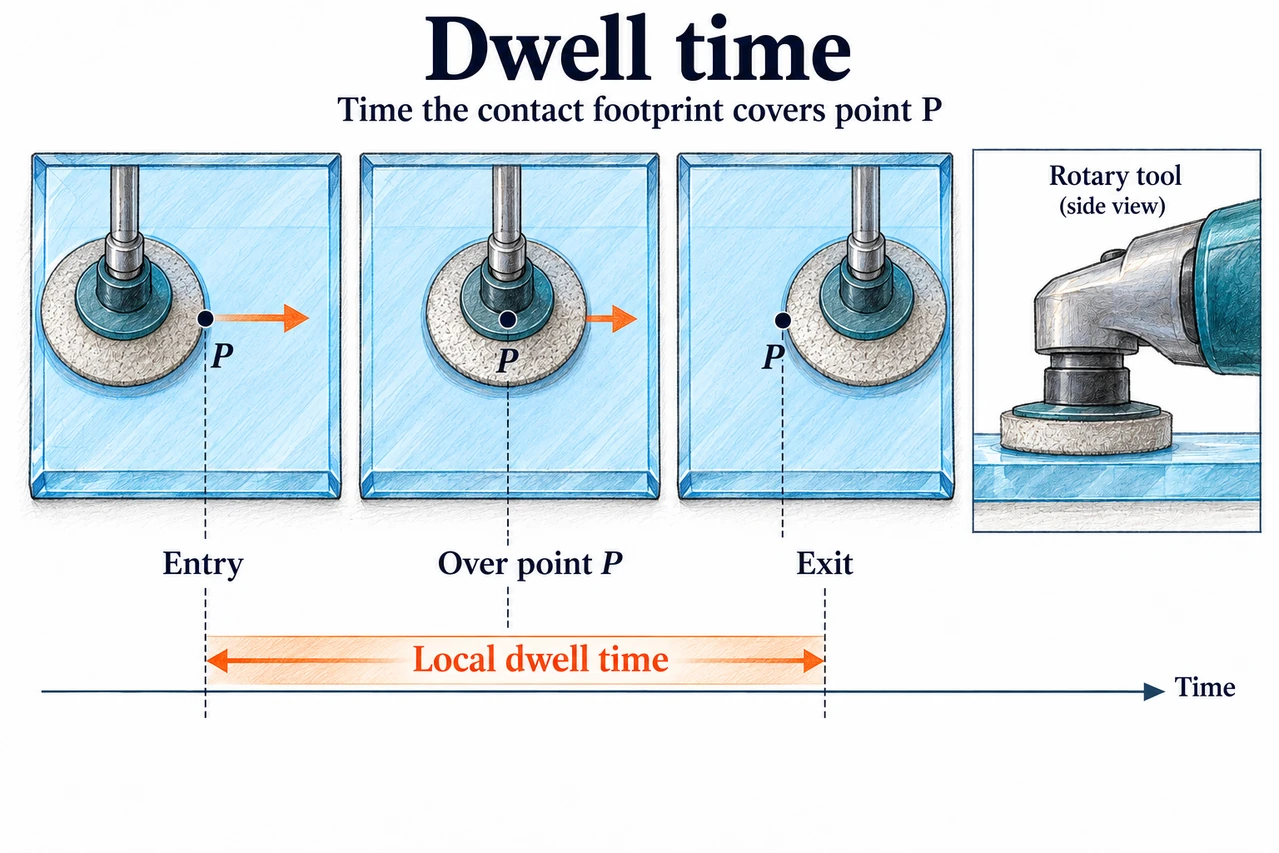
Dwell time
The time a moving or stationary tool acts on a particular location or defined area under stated process conditions.
Restoration processes and safety
E
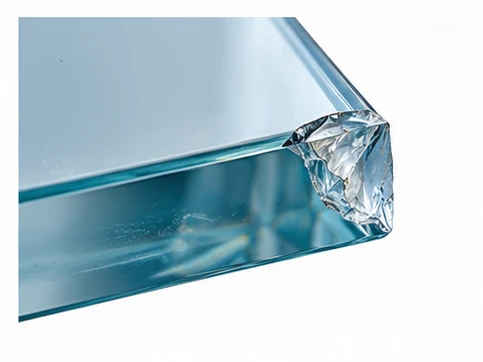
Edge damage
A chip, flake, crack, bruise, or other discontinuity at or very near a glass edge.
Glass foundations
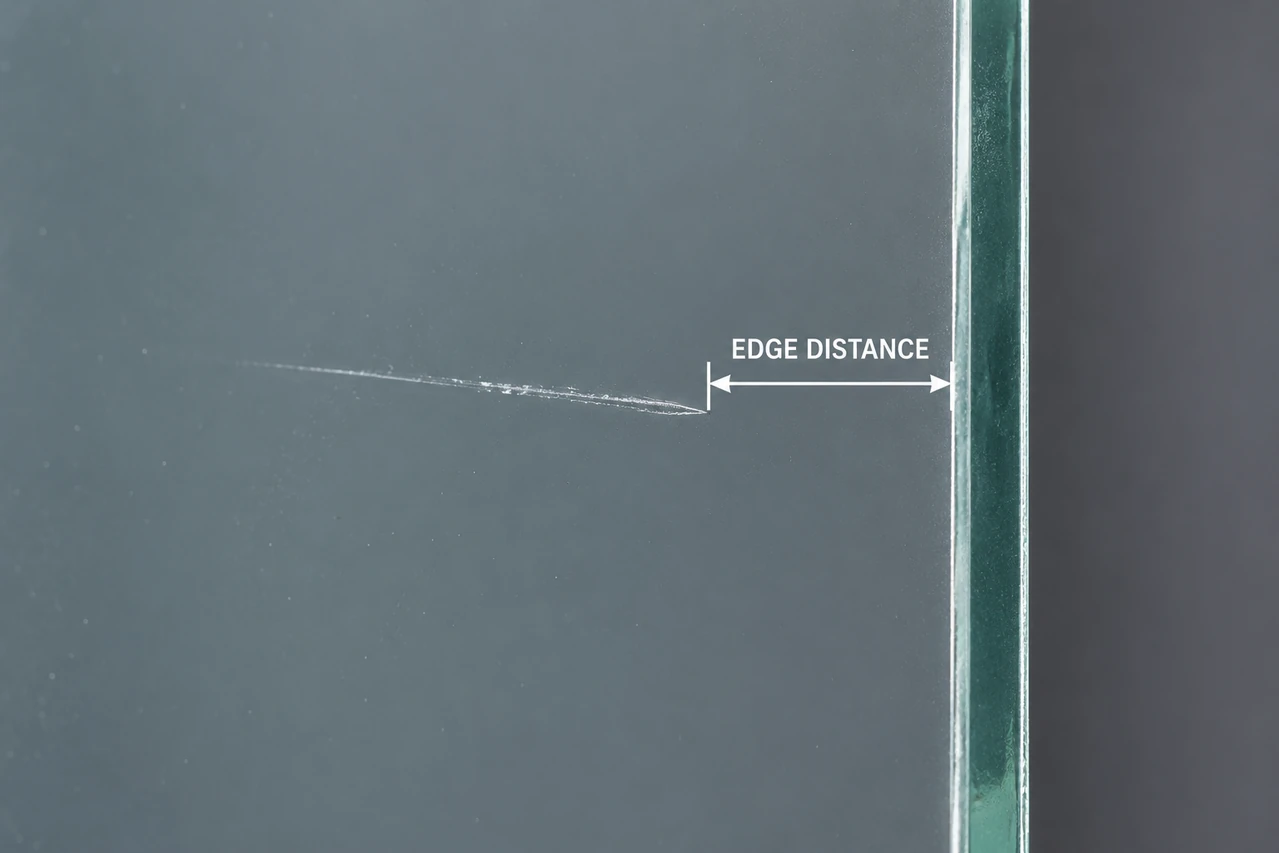
Edge proximity
The shortest measured distance from a damage feature or proposed work area to the nearest glass edge, hole, notch, cutout, or other stress-concentrating boundary.
Damage categories and surface conditions
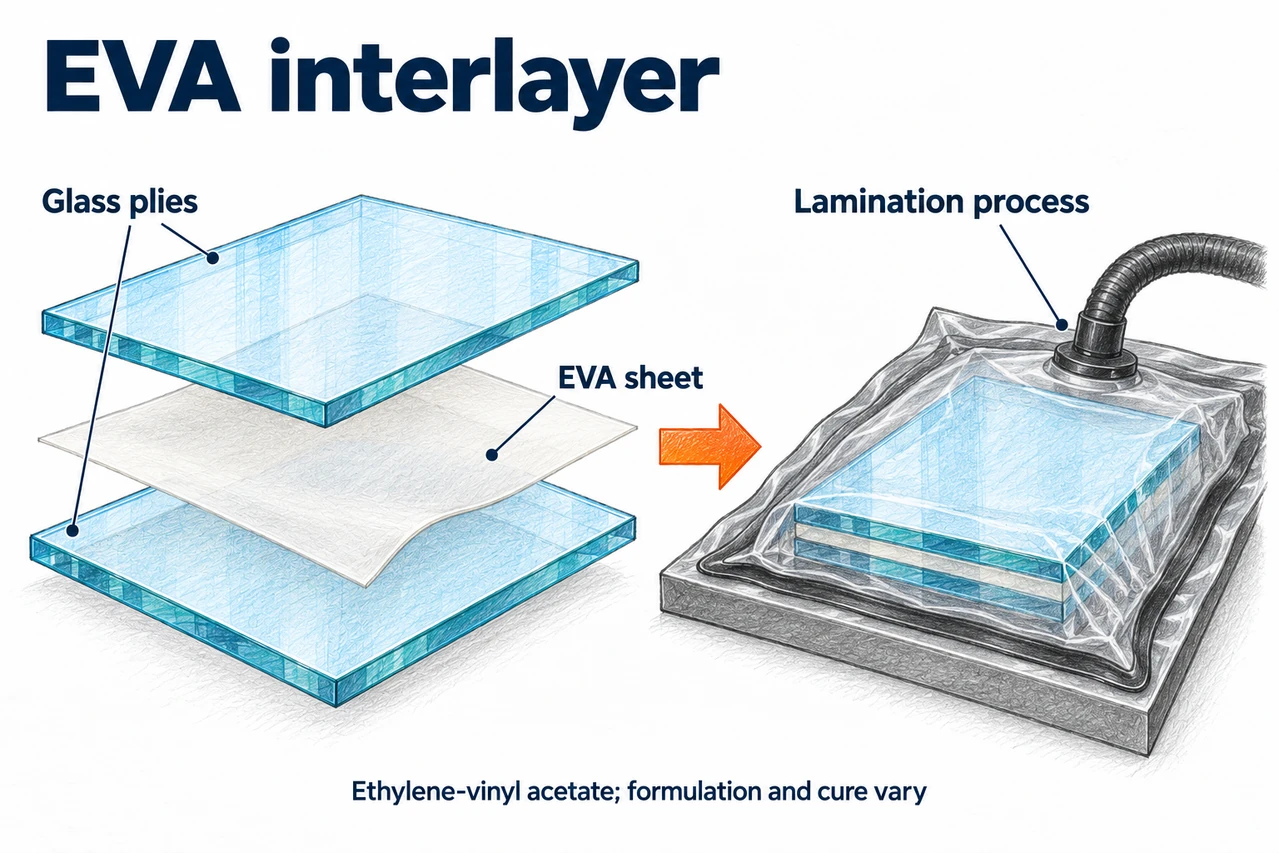
EVA interlayer
An ethylene-vinyl acetate-based interlayer formulated for selected laminated-glass products and fabrication processes.
Glazing systems and specialty applications
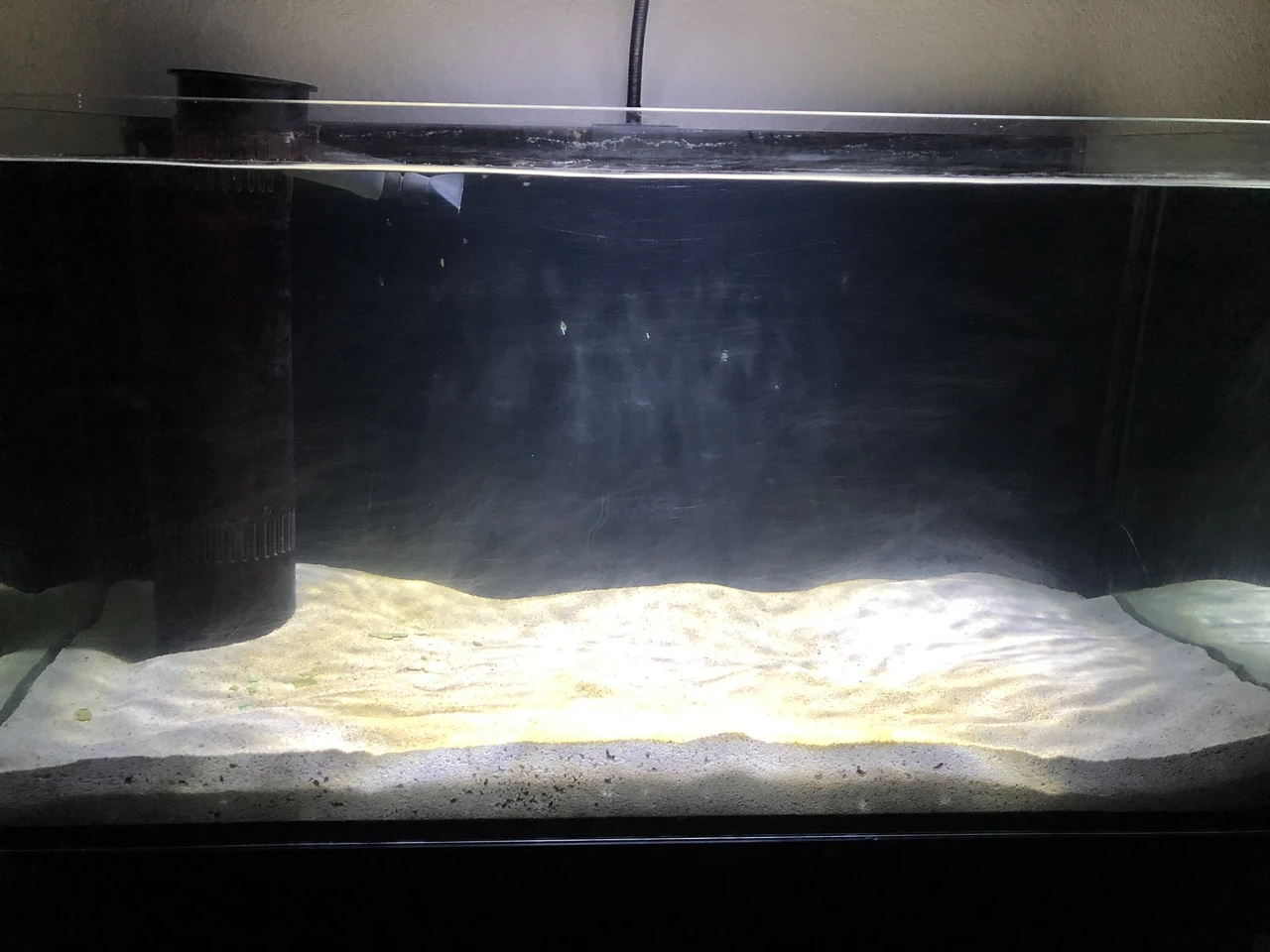
Evaporation residue
Material left on a surface after water or another liquid evaporates and its nonvolatile constituents remain.
Deposits and contamination
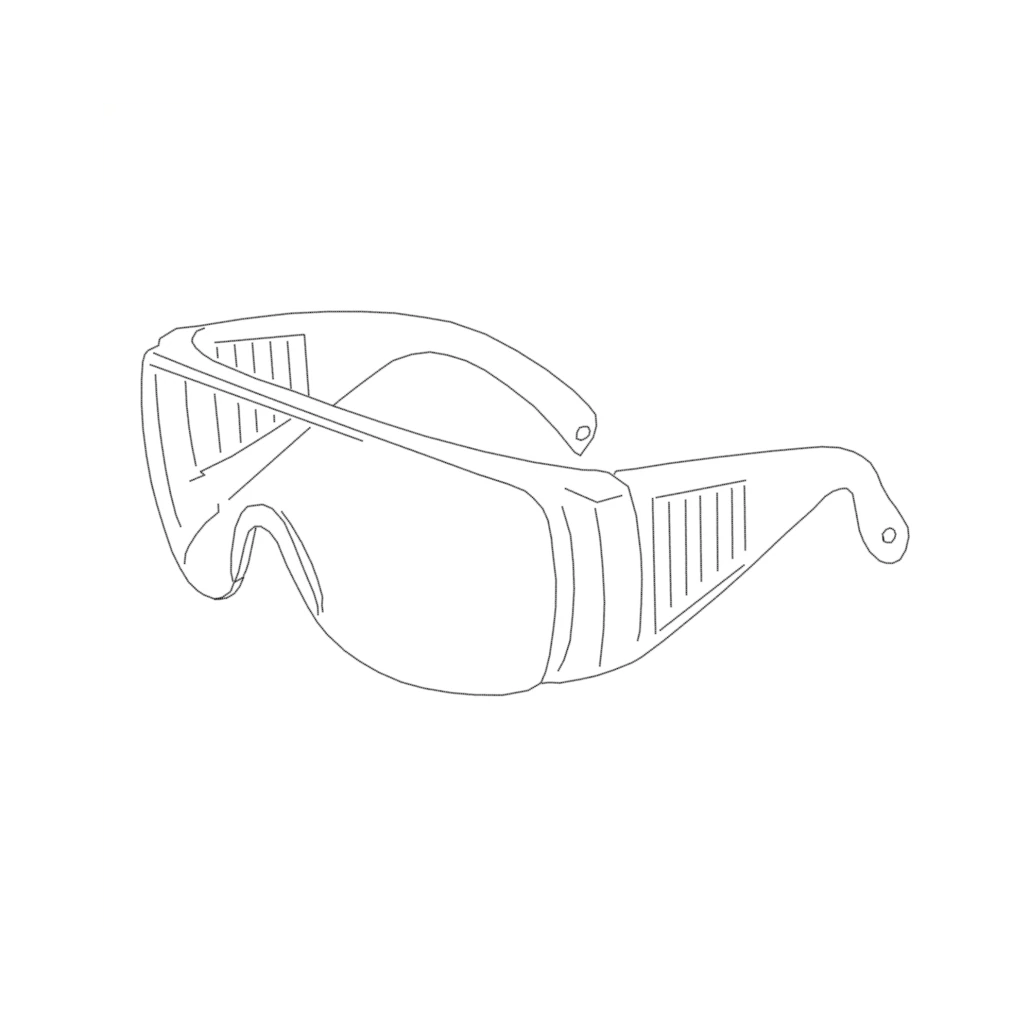
Eye and face protection
Protective equipment selected to shield the eyes and face from flying glass or abrasive particles, liquid splash, chemicals, and other assessed hazards.
Restoration processes and safety
F
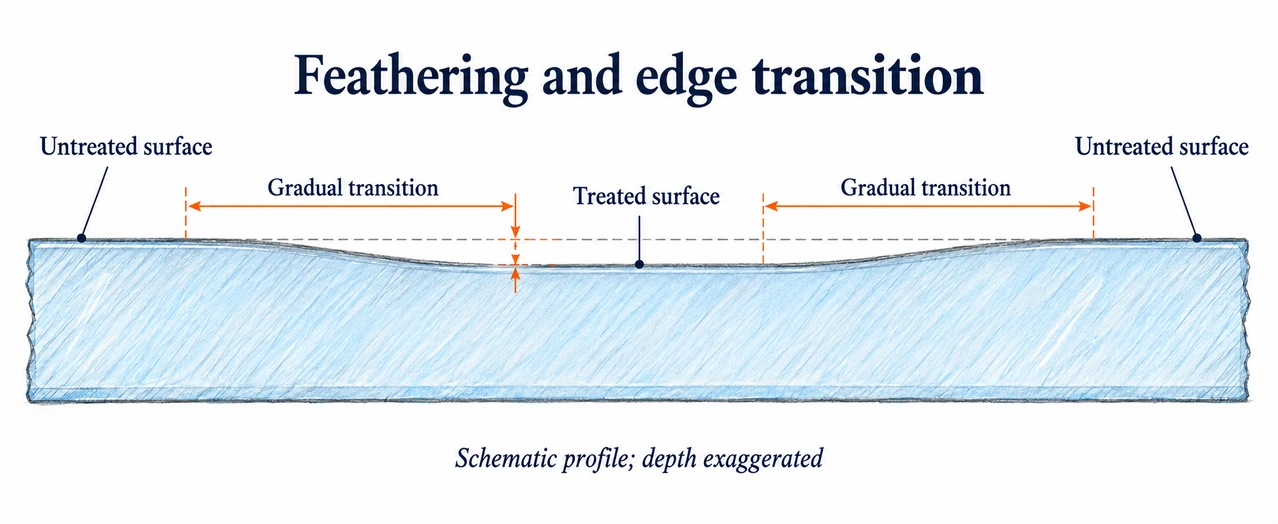
Feathering and edge transition
Progressively reducing treatment intensity toward the perimeter of a work area so the surface profile and finish merge gradually into untreated glass.
Restoration processes and safety
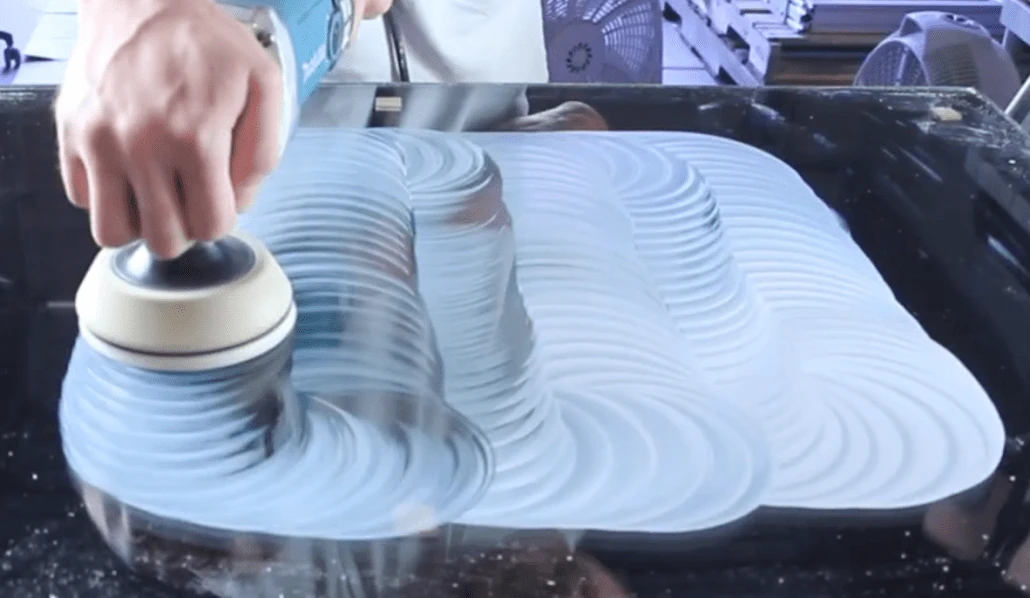
Final polishing
The last approved finishing stage used to reduce residual haze and tool marks and bring the treated area to the agreed optical and appearance criteria.
Restoration processes and safety

Fines and ticks
A field term for small fine scratches and/or pits associated with particles or debris contacting glass during manufacturing, handling, or roller transport.
Damage categories and surface conditions
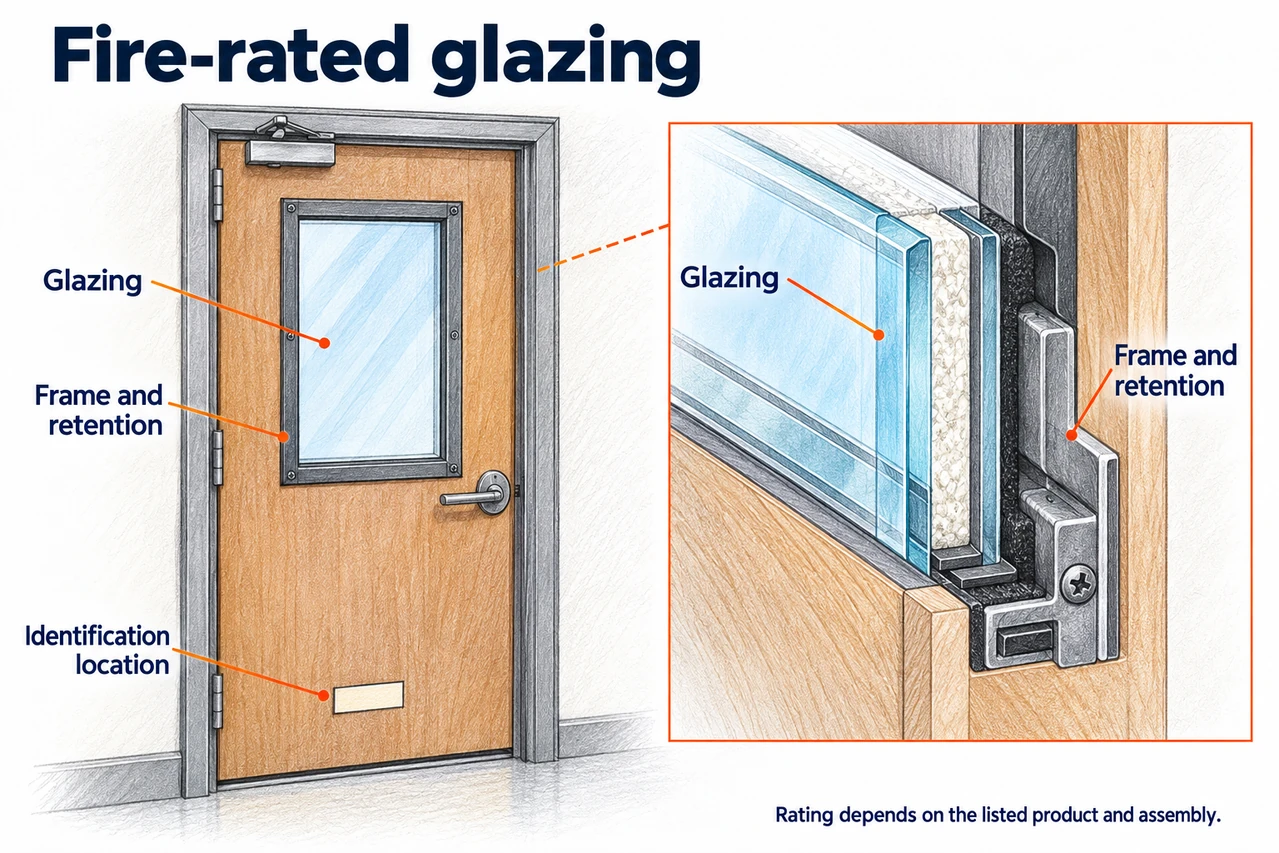
Fire-rated glazing
A listed and labeled glazing product or assembly evaluated for a defined fire-protection or fire-resistance function, duration, installation, and set of limitations.
Glazing systems and specialty applications
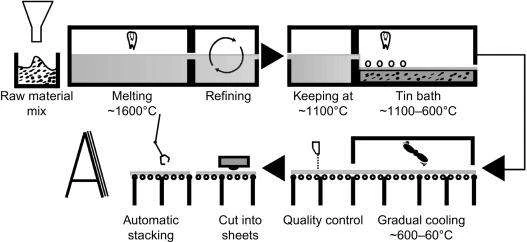
Float glass
Flat glass produced by floating molten glass on molten tin so the ribbon develops flat, nearly parallel surfaces before controlled cooling.
Glass foundations

Frameless glazing
A broad description for glass installations with little or no visually dominant perimeter framing, often using clamps, channels, pivots, patch fittings, sealant joints, or point supports.
Glazing systems and specialty applications
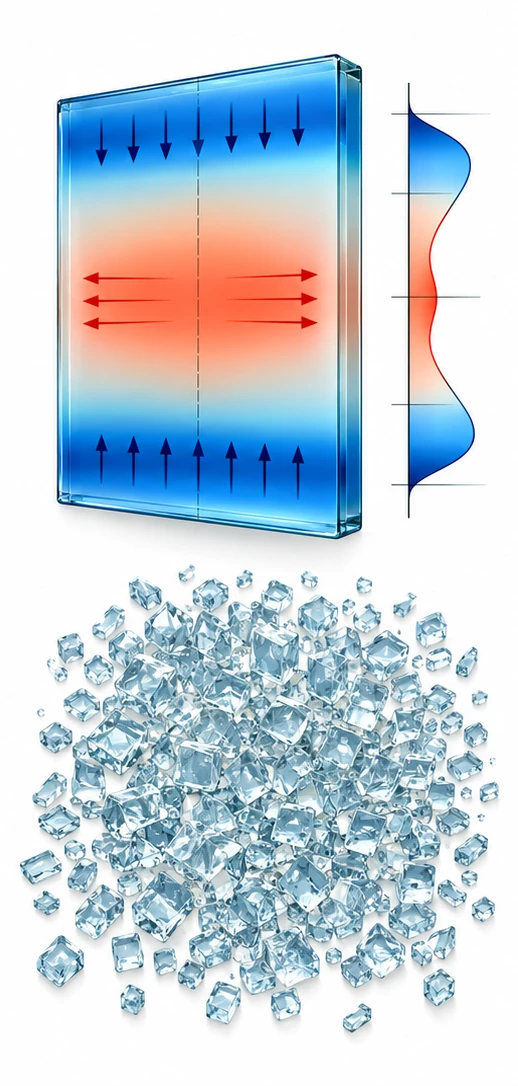
Fully tempered glass
Flat glass heat-treated to a specified high surface-compression state and characteristic fragmentation behavior.
Glass foundations
G
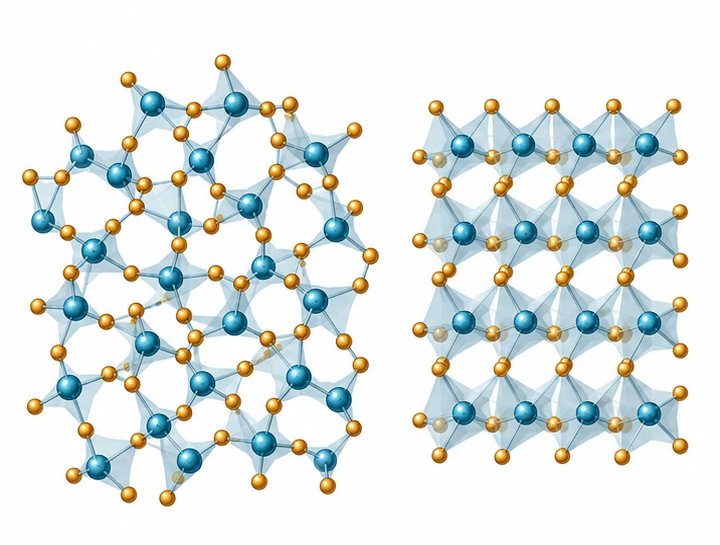
Glass
A hard, brittle, non-crystalline material formed by cooling a melt without creating a regular crystal structure. Architectural glass is usually a silica-based composition.
Glass foundations
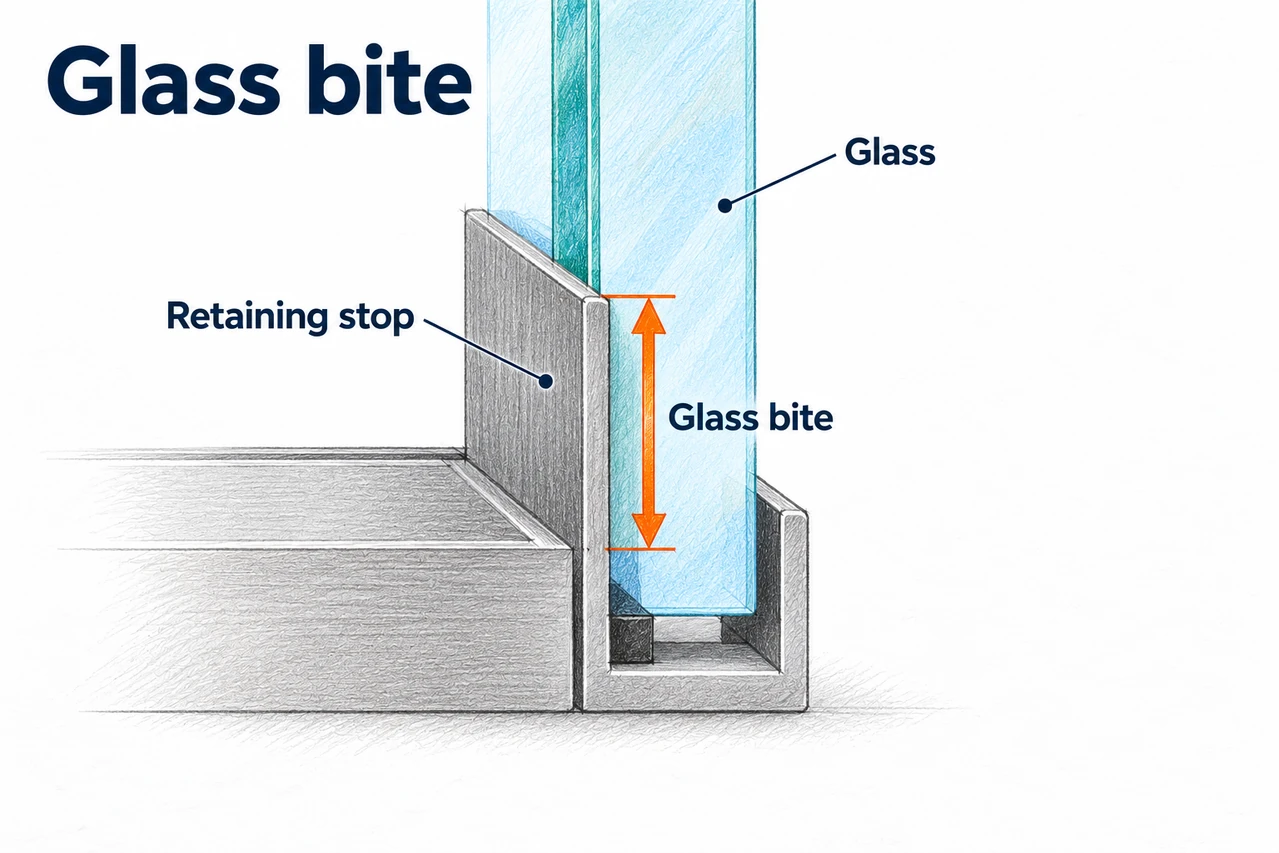
Glass bite
The dimension by which a frame, stop, sealant, clamp, or other support engages or overlaps the glass at its edge.
Glazing systems and specialty applications
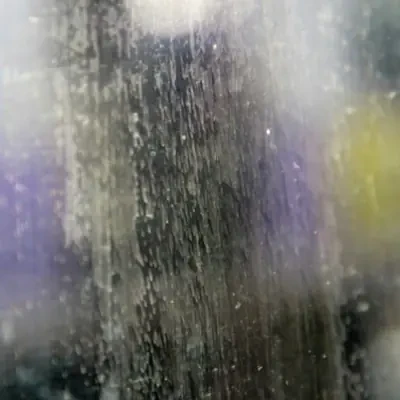
Glass corrosion / weathering
Chemical alteration of a glass surface through interaction with water, humidity, pollutants, salts, or other environmental agents over time.
Glass foundations
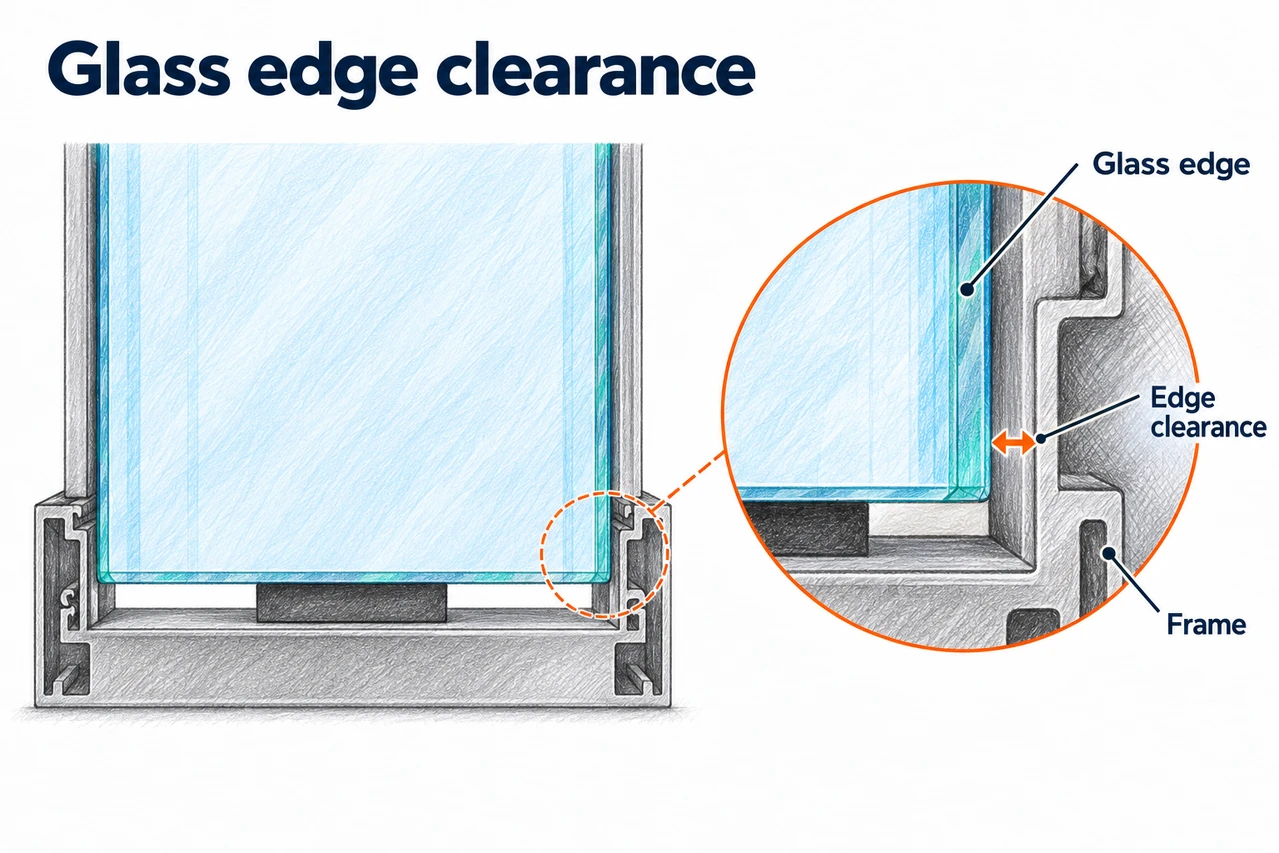
Glass edge clearance
The designed space between the edge of a glass lite and the adjacent frame, stop, setting surface, or other hard component.
Glazing systems and specialty applications
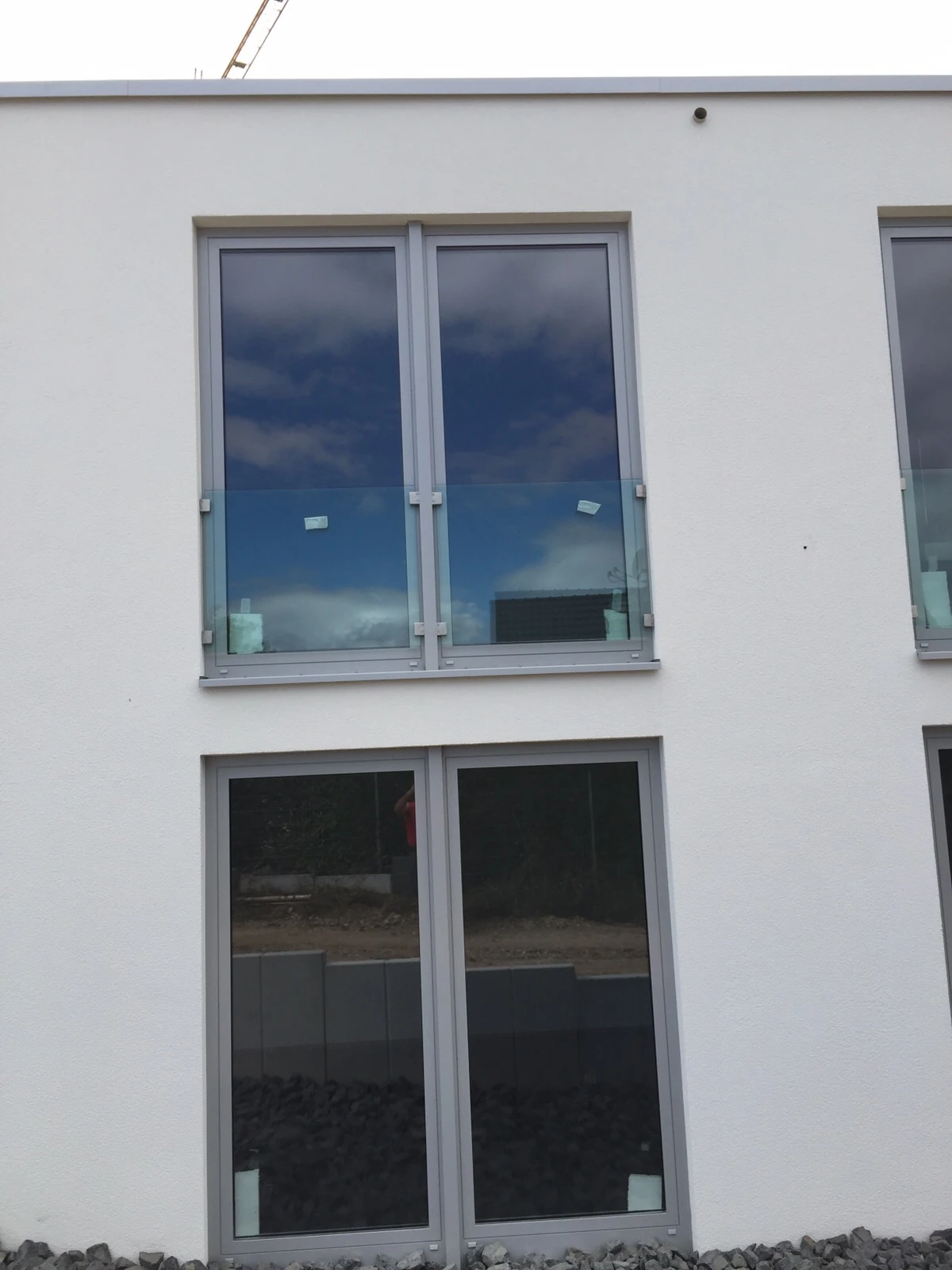
Glass guardrail or balustrade
A permanent guard, railing, balustrade, gate, or infill system in which glass or another glazing material is a major structural or protective component.
Glazing systems and specialty applications
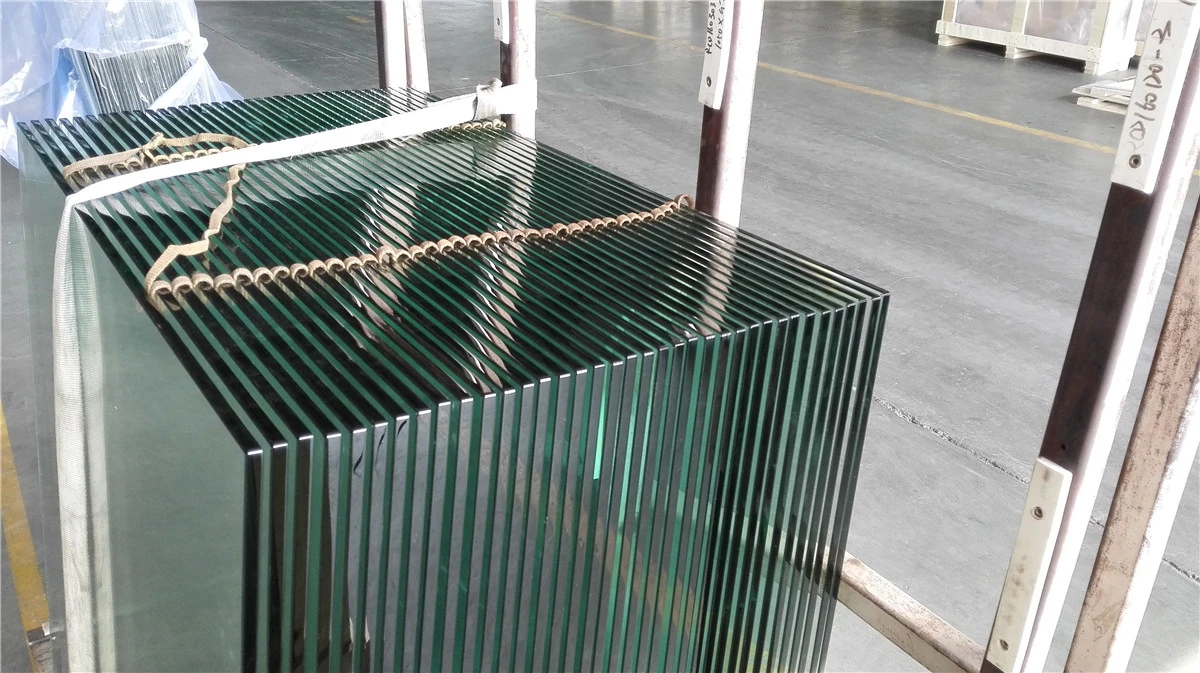
Glass lite
One individual piece or pane of glass within a monolithic, laminated, or insulating-glass construction.
Glazing systems and specialty applications
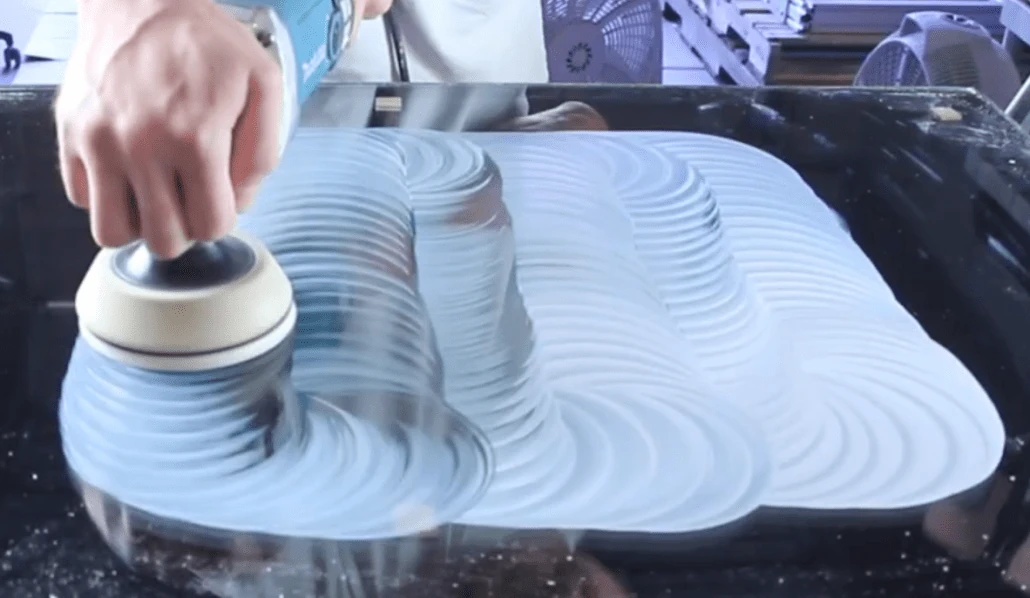
Glass polishing
A controlled finishing process that removes or smooths a thin surface layer to reduce roughness, scratches, haze, or optical defects.
Glass foundations
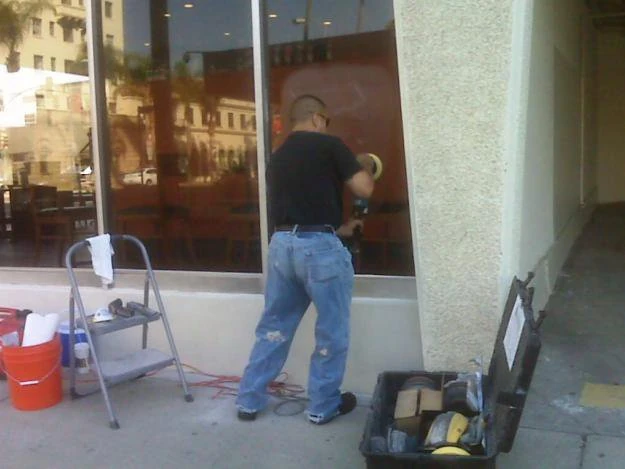
Glass restoration
A controlled intervention intended to improve a defined condition of existing glass while retaining the lite or assembly in place or in service.
Restoration processes and safety
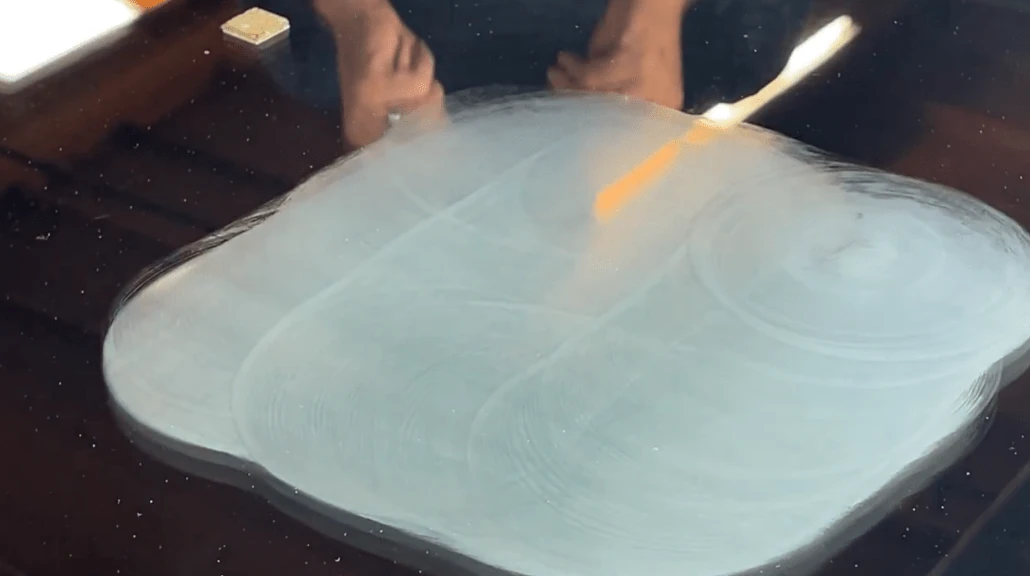
Glass resurfacing
Removal and refinement of a controlled layer of a glass surface to reduce damage or restore an agreed appearance.
Restoration processes and safety
Glass surface finishing
The controlled sequence of abrasive and polishing operations used to produce a required glass-surface geometry, roughness, clarity, or optical appearance.
Restoration processes and safety
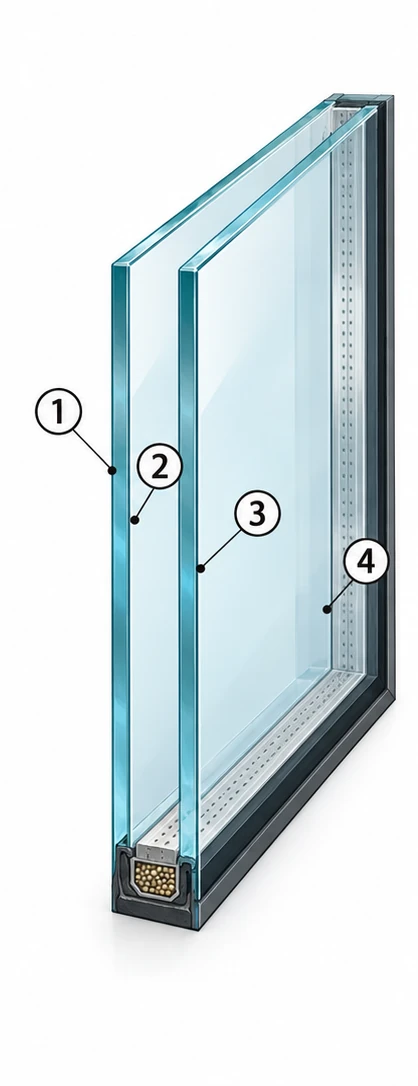
Glass surface numbering
An exterior-to-interior convention that numbers each exposed or concealed glass surface in sequence, beginning with surface 1 outdoors.
Glass foundations
Glass-on-glass scratch
A scratch or scuffed line produced when one glass surface, edge, fragment, or contaminant-bearing lite moves against another glass surface.
Damage categories and surface conditions
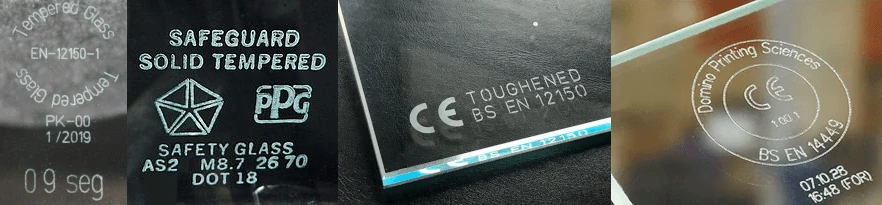
Glass-type verification
Evidence-based confirmation of the glass construction and treatment relevant to the proposed work.
Inspection and repair decisions
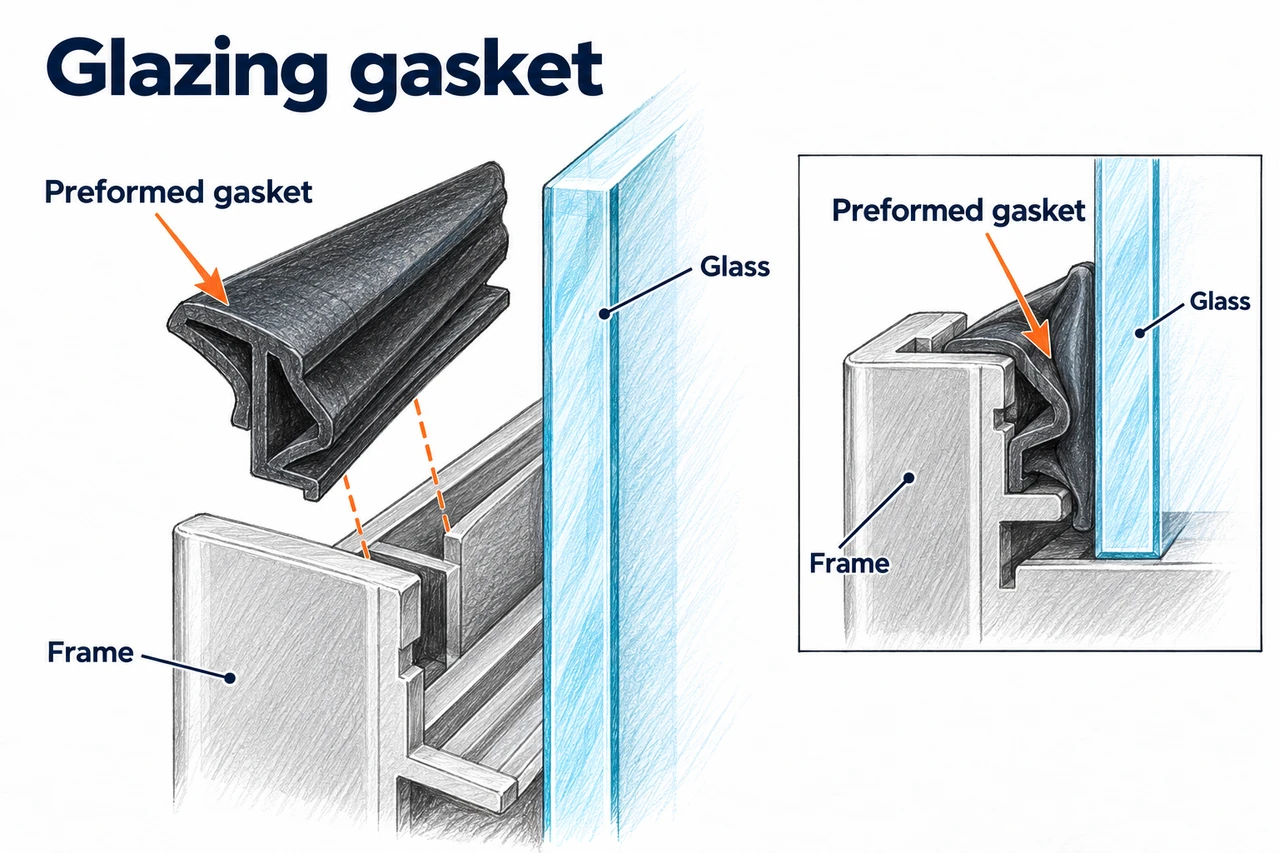
Glazing gasket
A preformed resilient component that seals, cushions, spaces, or retains glazing within a mechanically restrained frame system.
Glazing systems and specialty applications
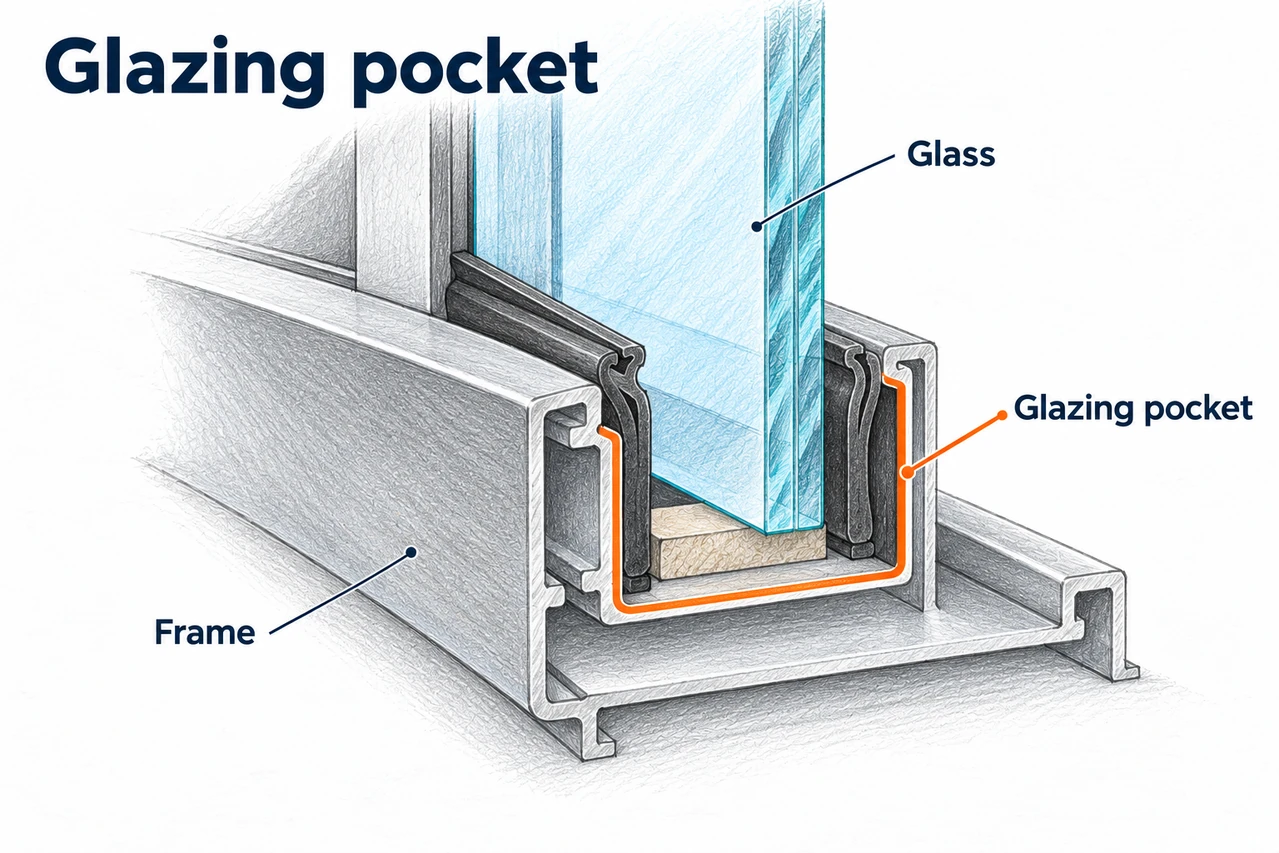
Glazing pocket
The frame recess or channel that receives and retains the glass, glazing materials, and required clearances.
Glazing systems and specialty applications
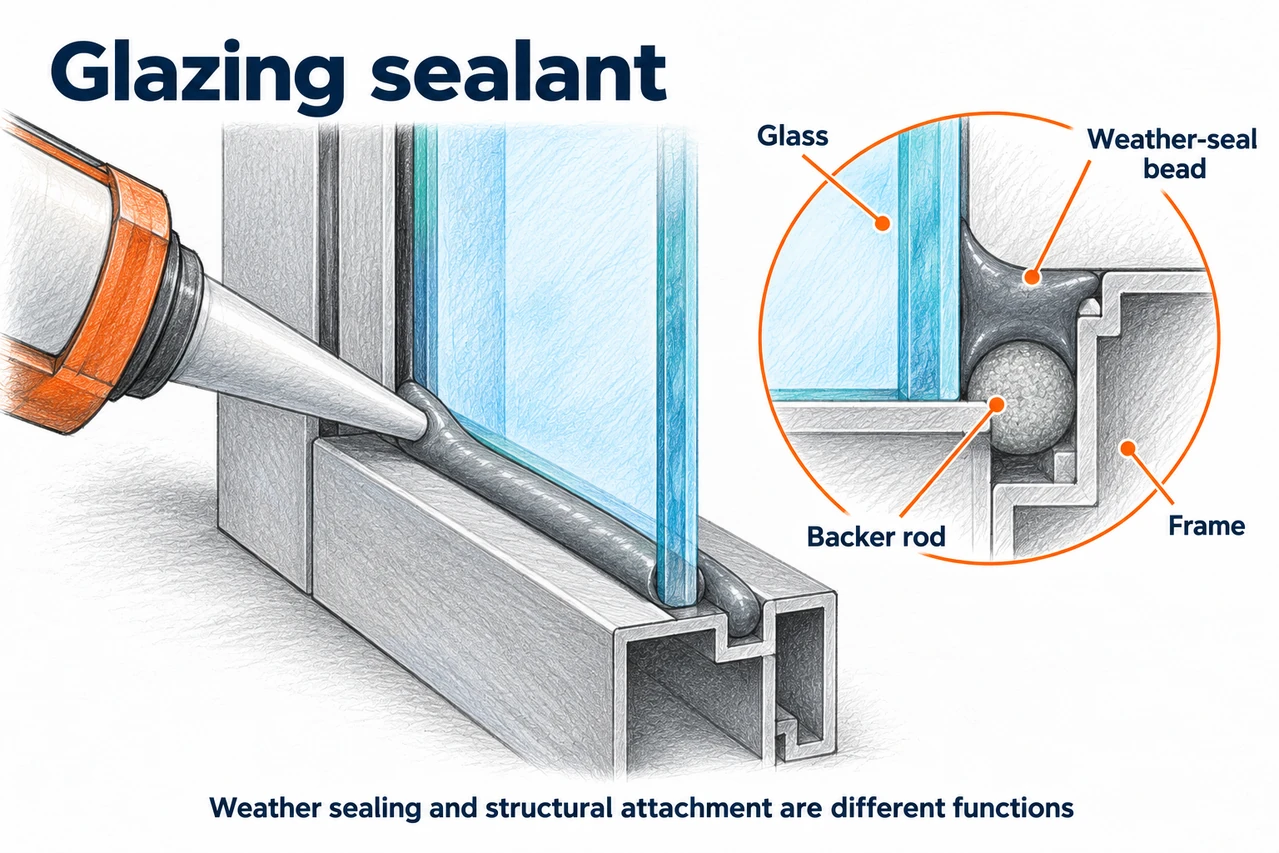
Glazing sealant
A field- or factory-applied material used to seal glazing joints and, only when specifically designed and approved, to provide structural attachment.
Glazing systems and specialty applications

Glazing system
The complete combination of glass or other glazing material, frame, supports, seals, fasteners, accessories, and interfaces that provides a required building function.
Glazing systems and specialty applications
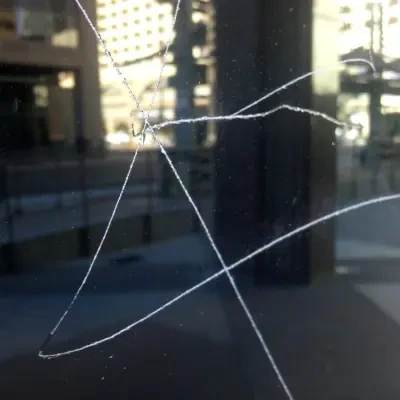
Gouge
A visibly pronounced groove created by concentrated mechanical contact that removes or displaces surface material.
Damage categories and surface conditions
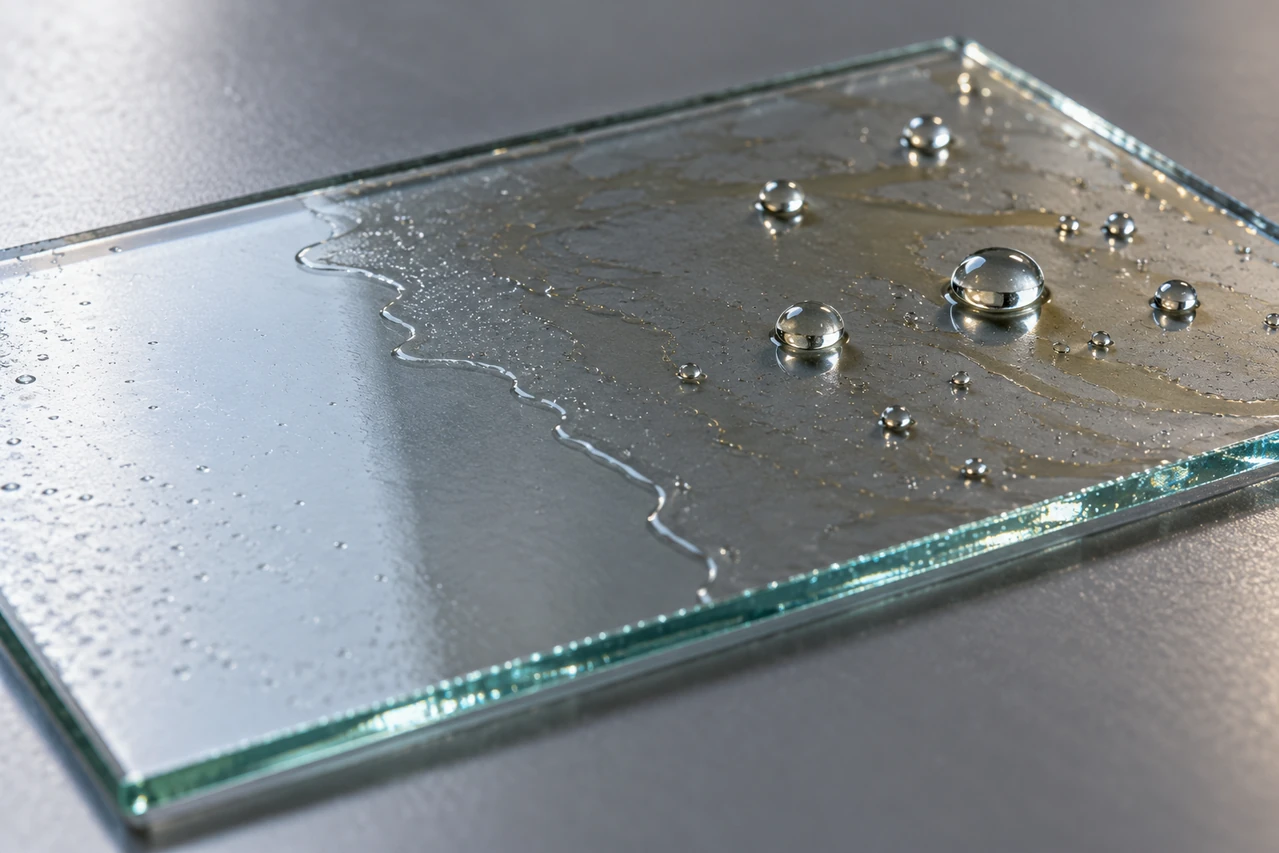
Grease or oil contamination
A hydrophobic residue from lubricants, skin oils, food oils, machinery, sealants, or other oily materials transferred to glass.
Deposits and contamination

Grinding
A material-removal process in which abrasive particles under load cut, plow, deform, or fracture the glass surface.
Restoration processes and safety
H

Hard-water deposit
Mineral-rich material deposited on exposed glass as mineral-bearing water evaporates. It remains a surface deposit only when controlled removal exposes clean glass with no modeled micro-texture (SC-0).
Glass foundations

Hard-water spotting
A pattern of discrete drying marks associated with mineral-bearing water droplets on glass.
Deposits and contamination
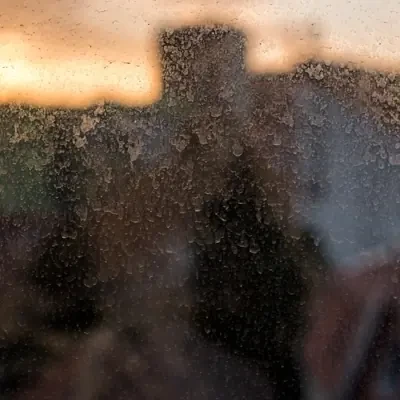
Hard-water staining
A persistent film, veil, or discoloration associated with mineral-bearing water that remains after a controlled reveal while the truly clean glass substrate remains non-relief (SC-0).
Deposits and contamination
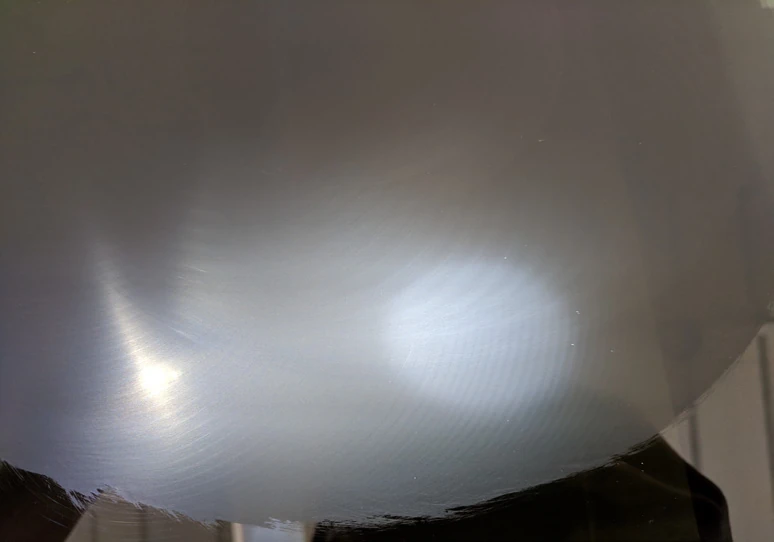
Haze
A cloudy or veiled appearance caused by light scattering from material on a surface, surface roughness, internal features, moisture, or optical effects.
Deposits and contamination
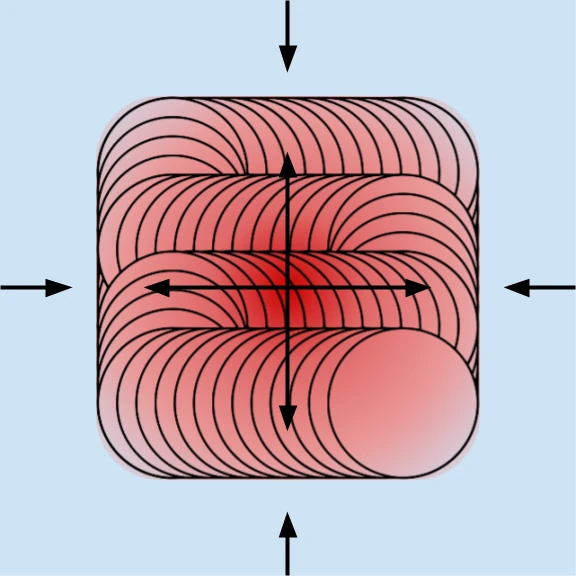
Heat generation
Production of thermal energy at the tool, pad, slurry, and glass interface through friction, deformation, fluid behavior, and machine losses.
Restoration processes and safety
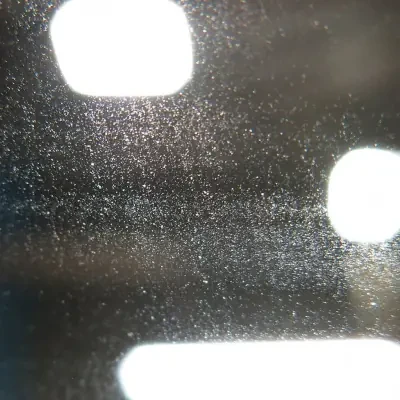
Heat haze
A GlassRenu Category 1 surface contaminant that presents as a faint cloudy or whitish haze on the exposed glass surface.
Damage categories and surface conditions
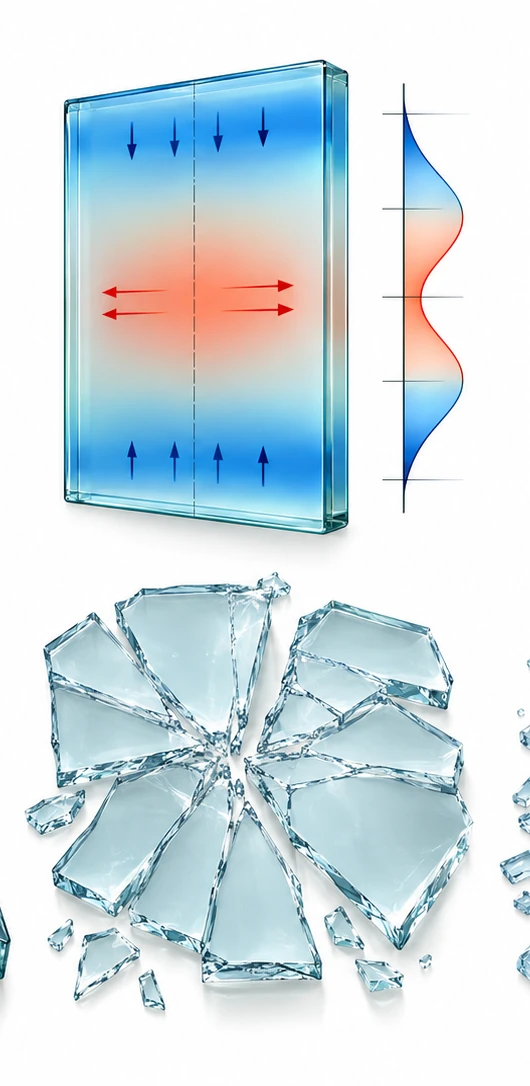
Heat-strengthened glass
Flat glass reheated and cooled to create more surface compression than annealed glass but less than fully tempered glass.
Glass foundations
Heat-treatment identification
Determination of whether glass is annealed, heat-strengthened, or fully tempered using available records, marks, instruments, and qualified interpretation.
Inspection and repair decisions
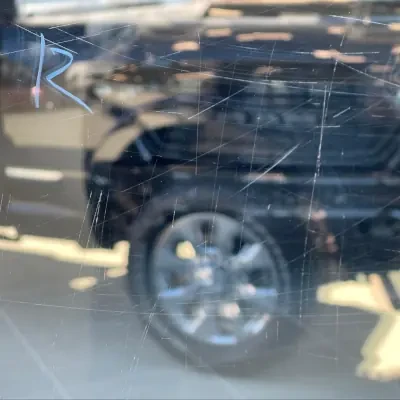
Heavy scratch
A proposed GlassRenu term for a pronounced scratch requiring substantial controlled material removal relative to the approved restoration process.
Damage categories and surface conditions
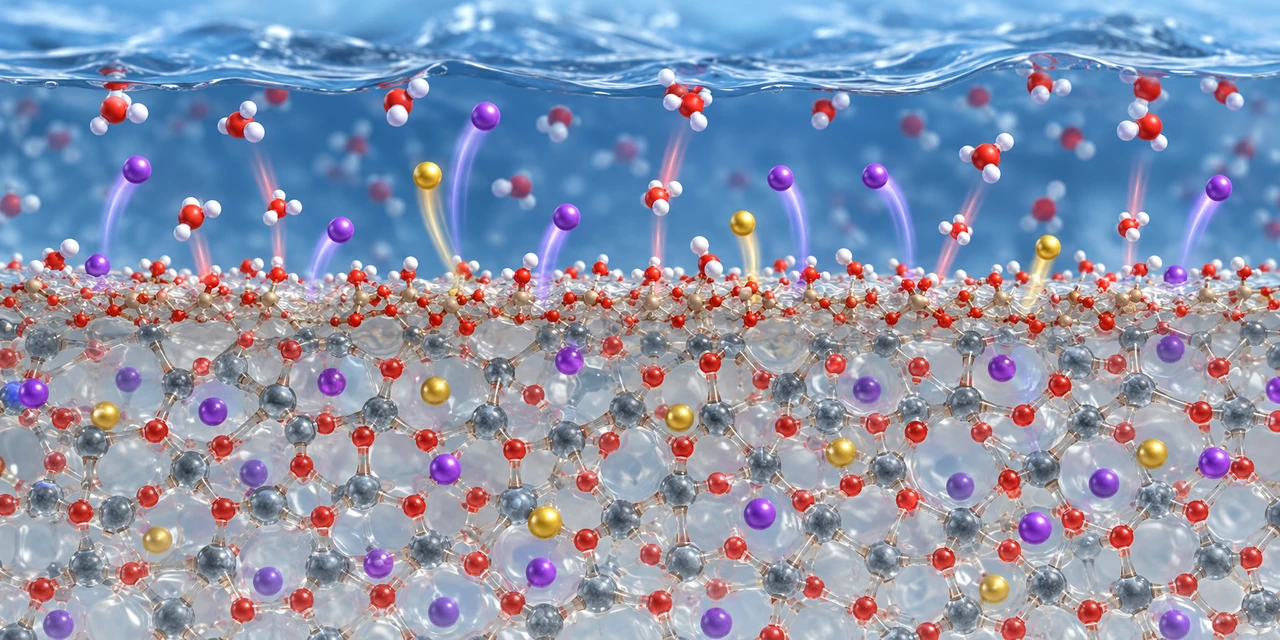
Hydrated silica layer
A water-containing, silica-rich altered layer that can remain after more soluble glass constituents are removed or reorganized near the surface.
Deposits and contamination
Hydrolytic resistance
A measure of how well glass resists the release of soluble constituents when exposed to water under a specified test method.
Deposits and contamination
Hydrophobic contamination
A thin contaminating layer that reduces how readily water spreads across a glass surface, often causing beading or uneven wetting.
Deposits and contamination
I
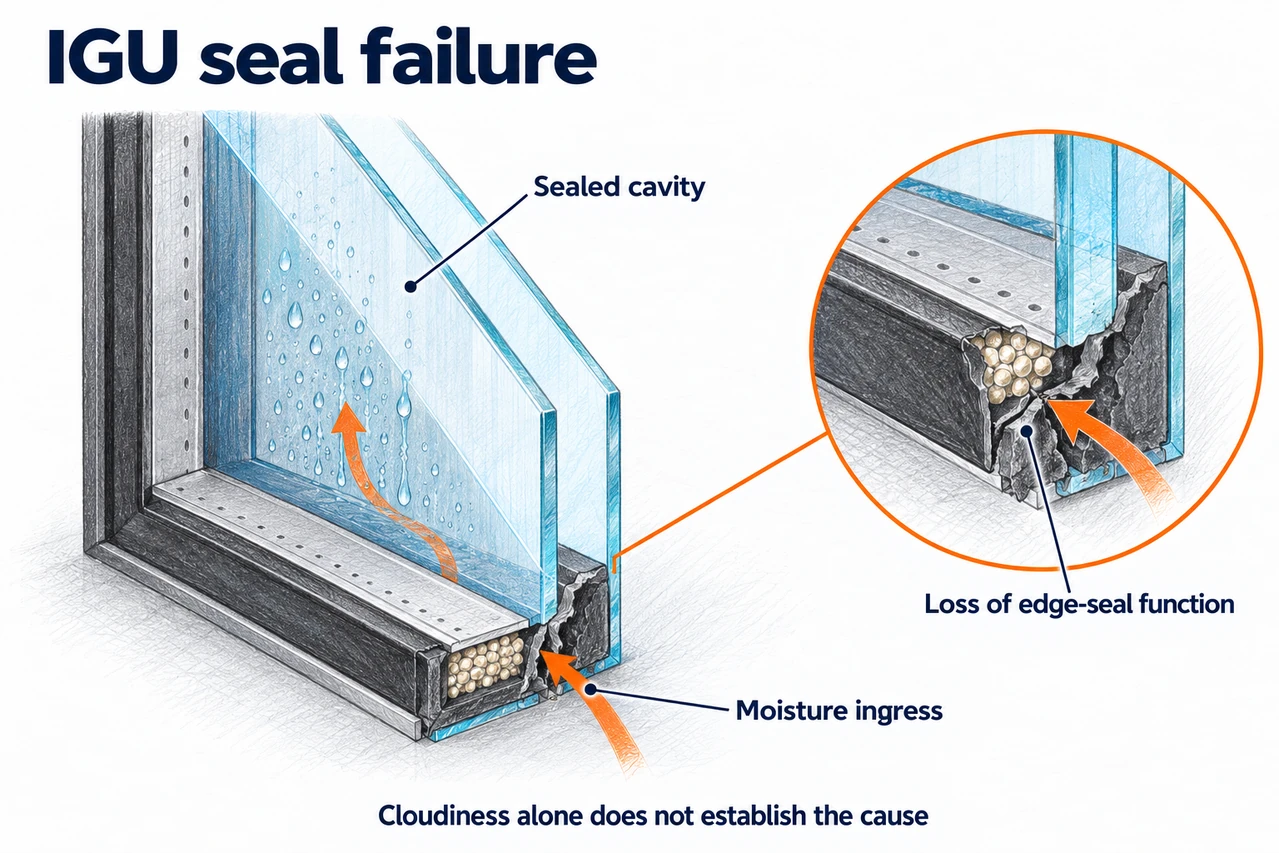
IGU seal failure
Loss of one or more required edge-seal functions in an insulating glass unit, potentially allowing excessive moisture or gas exchange, fogging, contamination, displacement, or loss of durability.
Glazing systems and specialty applications

Inspection protocol
A written sequence defining preparation, viewing conditions, instruments, observations, measurements, photographs, decisions, and records for an inspection.
Inspection and repair decisions
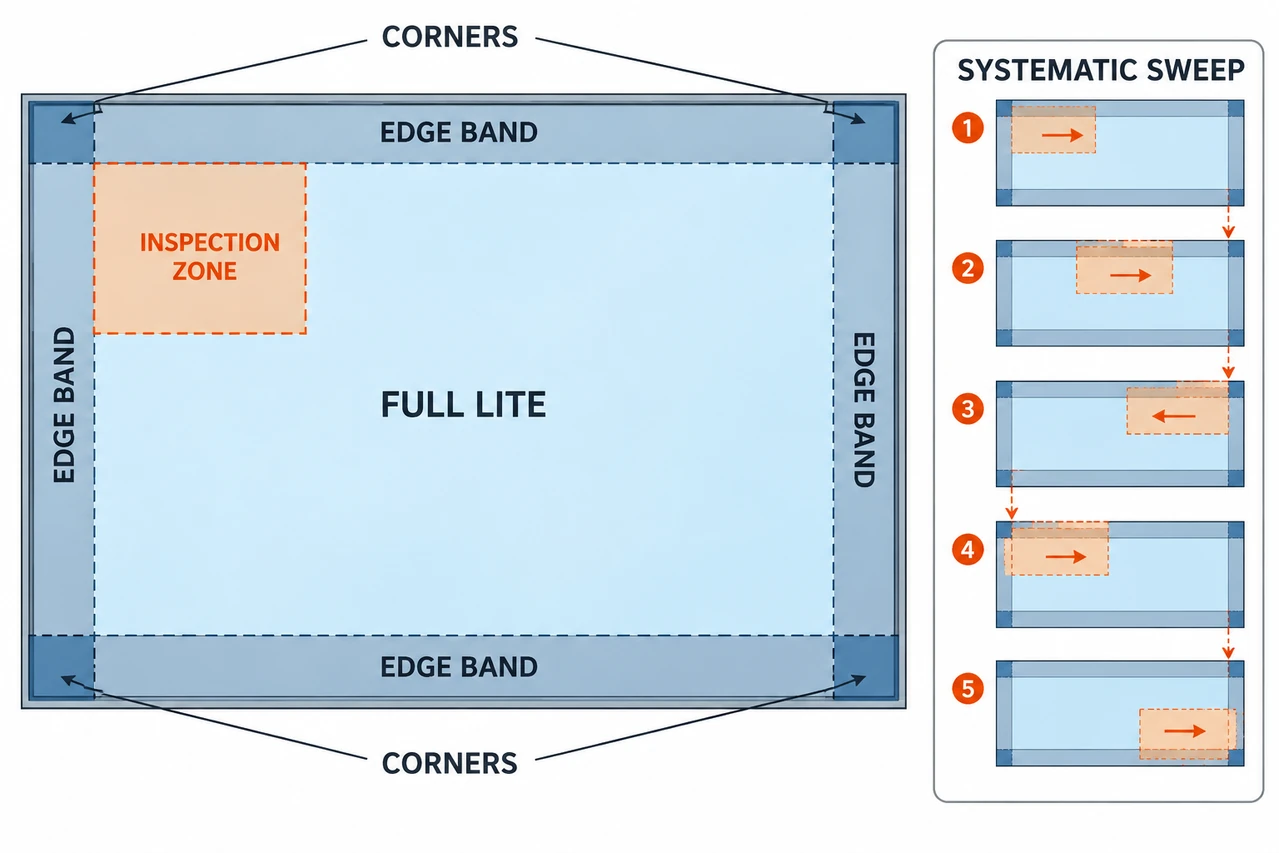
Inspection zone
A defined part of a glass lite evaluated under a particular rule, such as a central viewing area, edge area, or restoration work area.
Inspection and repair decisions
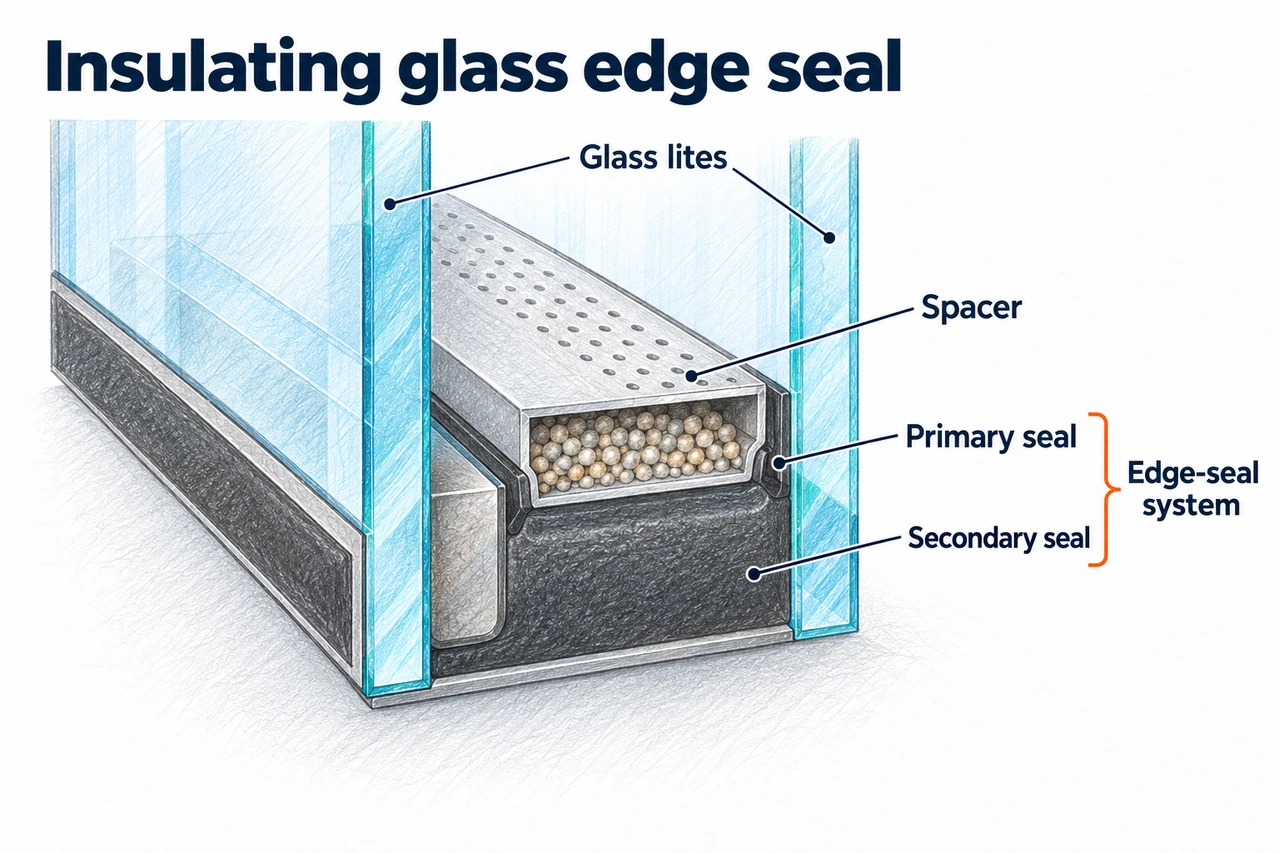
Insulating glass edge seal
The perimeter sealing system that joins the lites and spacer of an insulating glass unit and limits moisture or gas exchange while maintaining the cavity.
Glazing systems and specialty applications
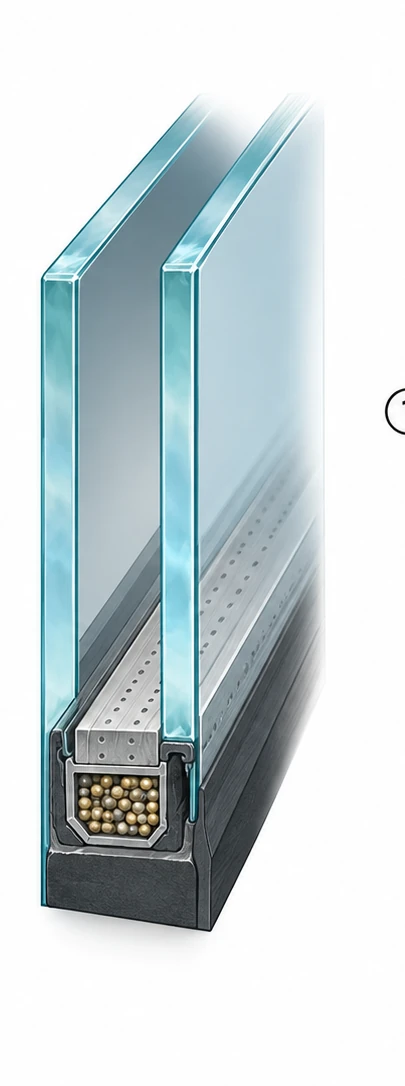
Insulating glass unit (IGU)
A sealed glazing assembly containing two or more lites separated by one or more spaces, commonly with spacers and sealed edges.
Glass foundations
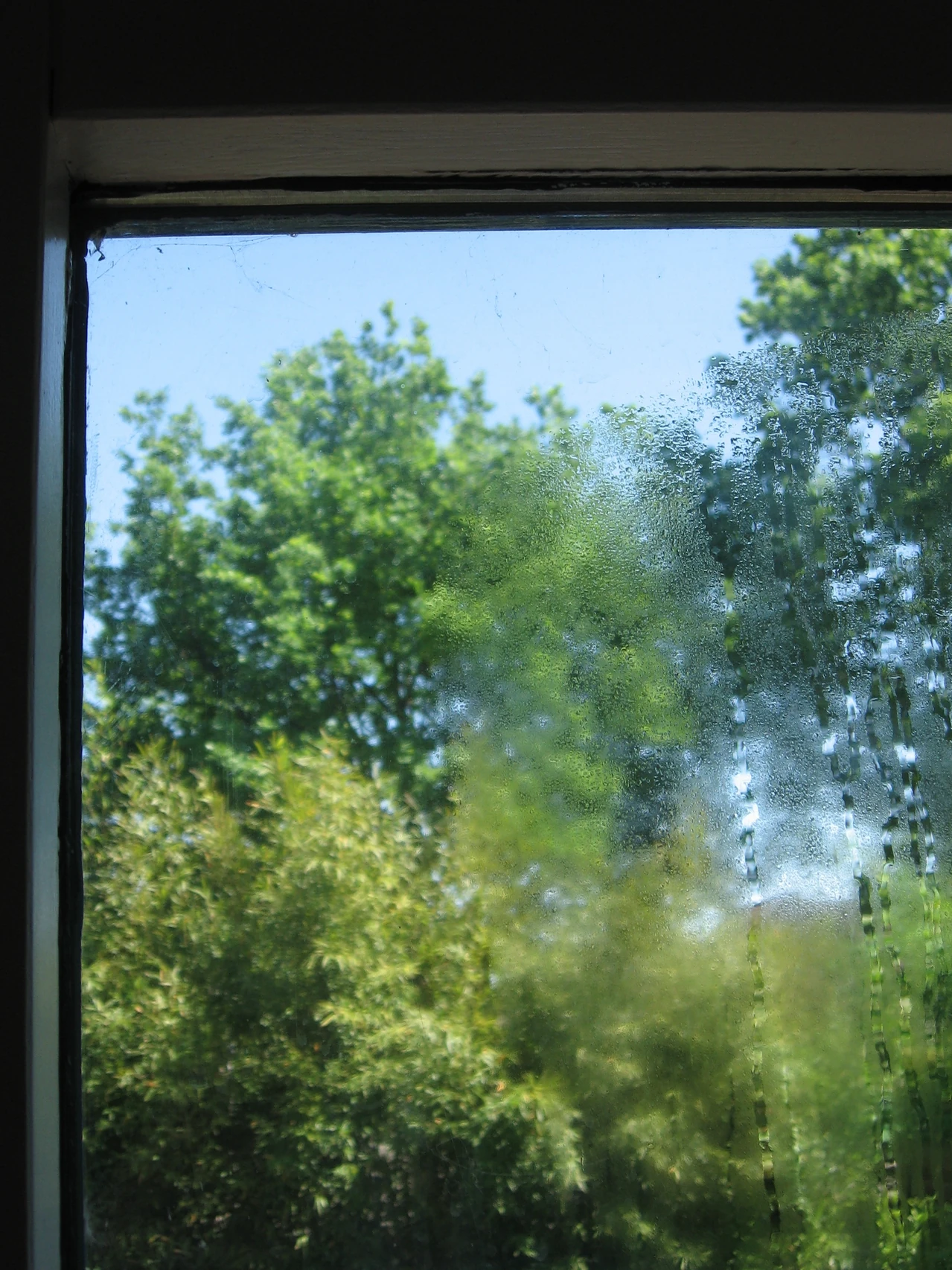
Internal condensation
Liquid water, frost, or visible moisture forming on a surface inside a nominally sealed glazing cavity rather than on an exposed room-side or weather-side surface.
Glazing systems and specialty applications
Ion exchange
A surface reaction in which ions in glass are replaced by different ions from a contacting liquid, commonly involving alkali ions in the glass and hydrogen-containing species from water.
Deposits and contamination
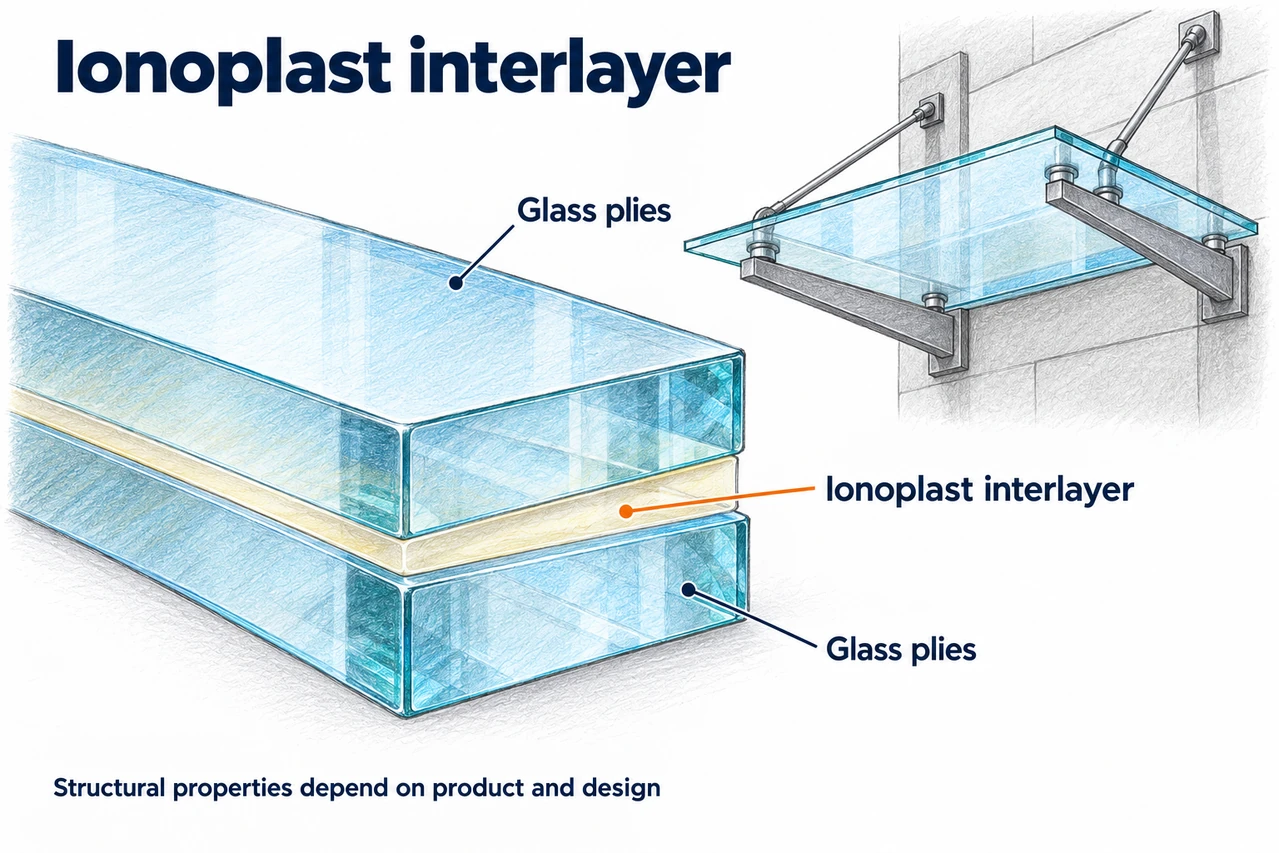
Ionoplast interlayer
An ionomer-based structural interlayer used in selected laminated glass constructions where its specified stiffness, strength, clarity, edge stability, or post-breakage behavior is required.
Glazing systems and specialty applications
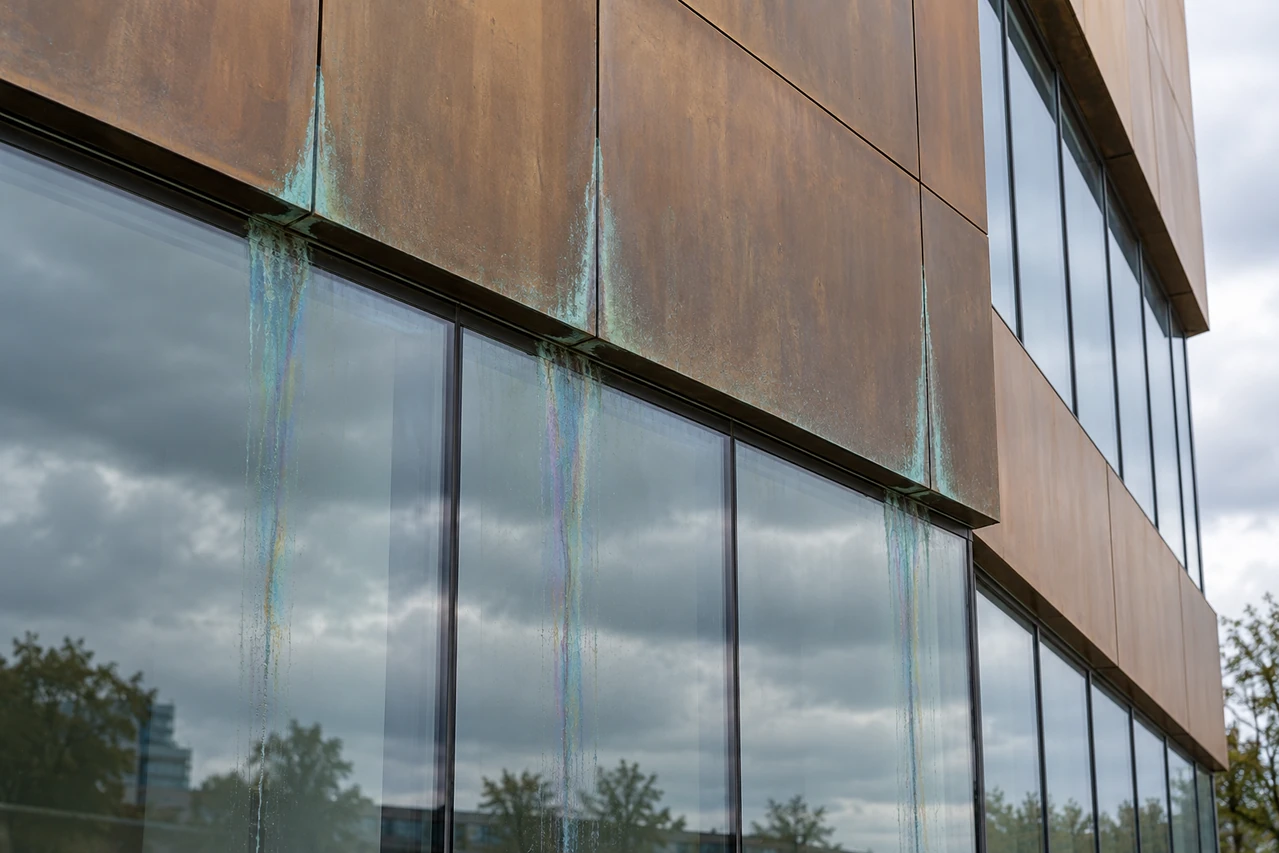
Iridescent weathering
Rainbow-like color produced when thin altered layers on weathered glass interfere with reflected or transmitted light.
Deposits and contamination
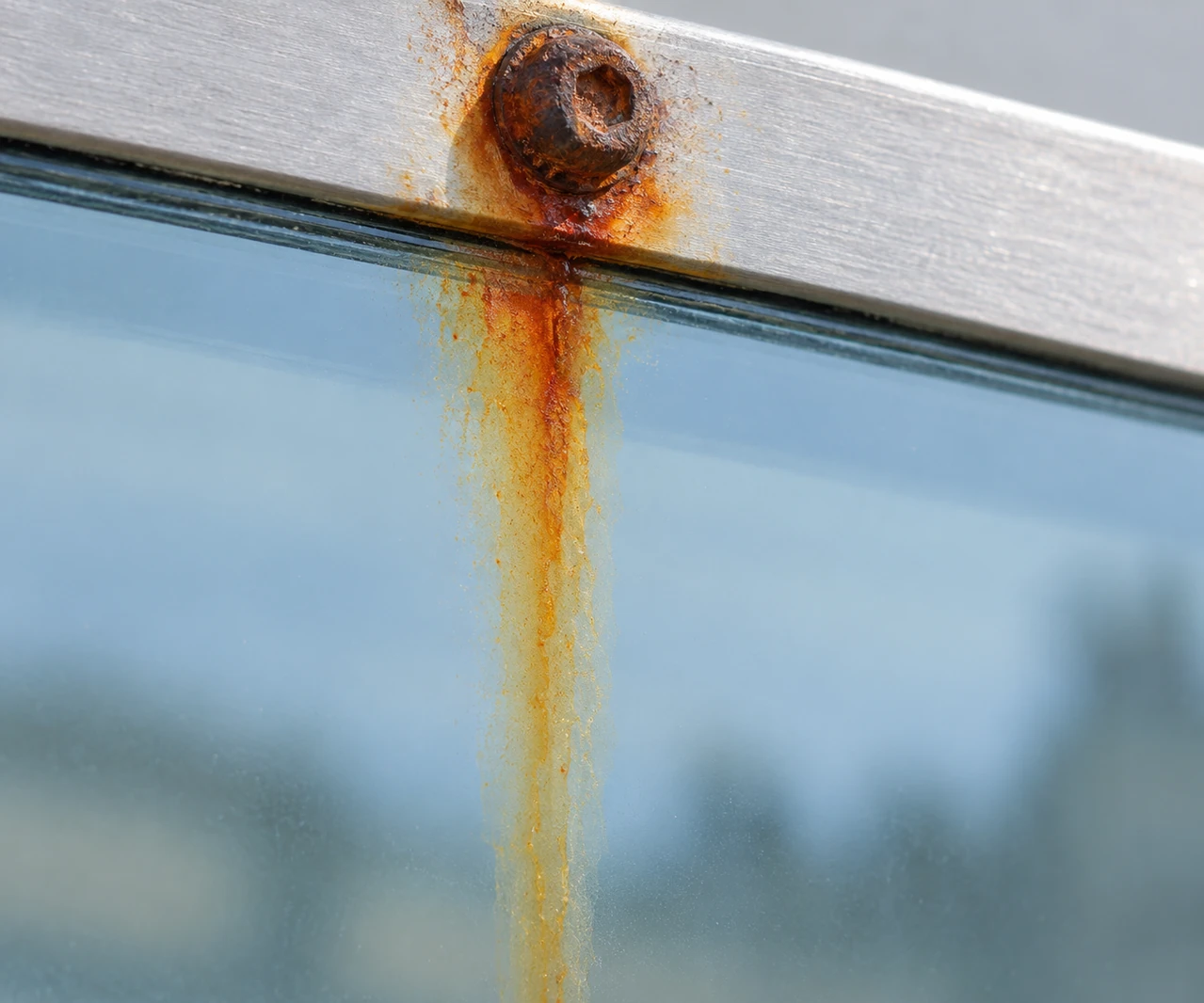
Iron or rust staining
Orange, red, brown, or yellow discoloration associated with iron-bearing material or iron corrosion products on glass.
Deposits and contamination
J
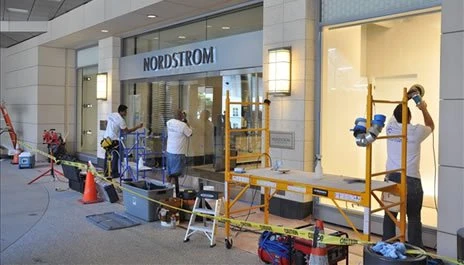
Job hazard assessment
A documented evaluation of site, task, equipment, material, ergonomic, electrical, chemical, particle, access, public, and environmental hazards before and during work.
Restoration processes and safety
L
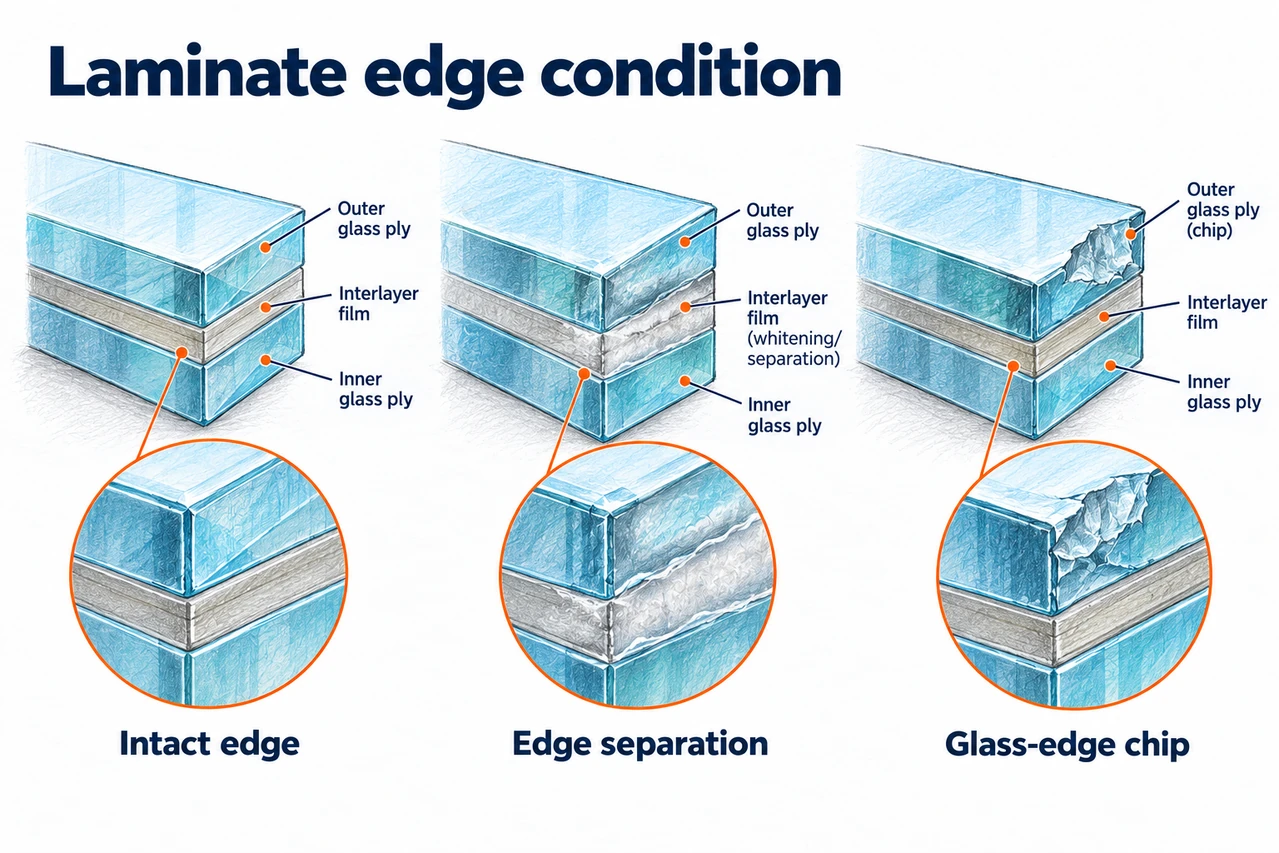
Laminate edge condition
The documented state of the exposed or concealed perimeter of laminated glass, including adhesion, moisture effects, contamination, chips, cracks, sealants, gaskets, tapes, and interlayer exposure.
Glazing systems and specialty applications
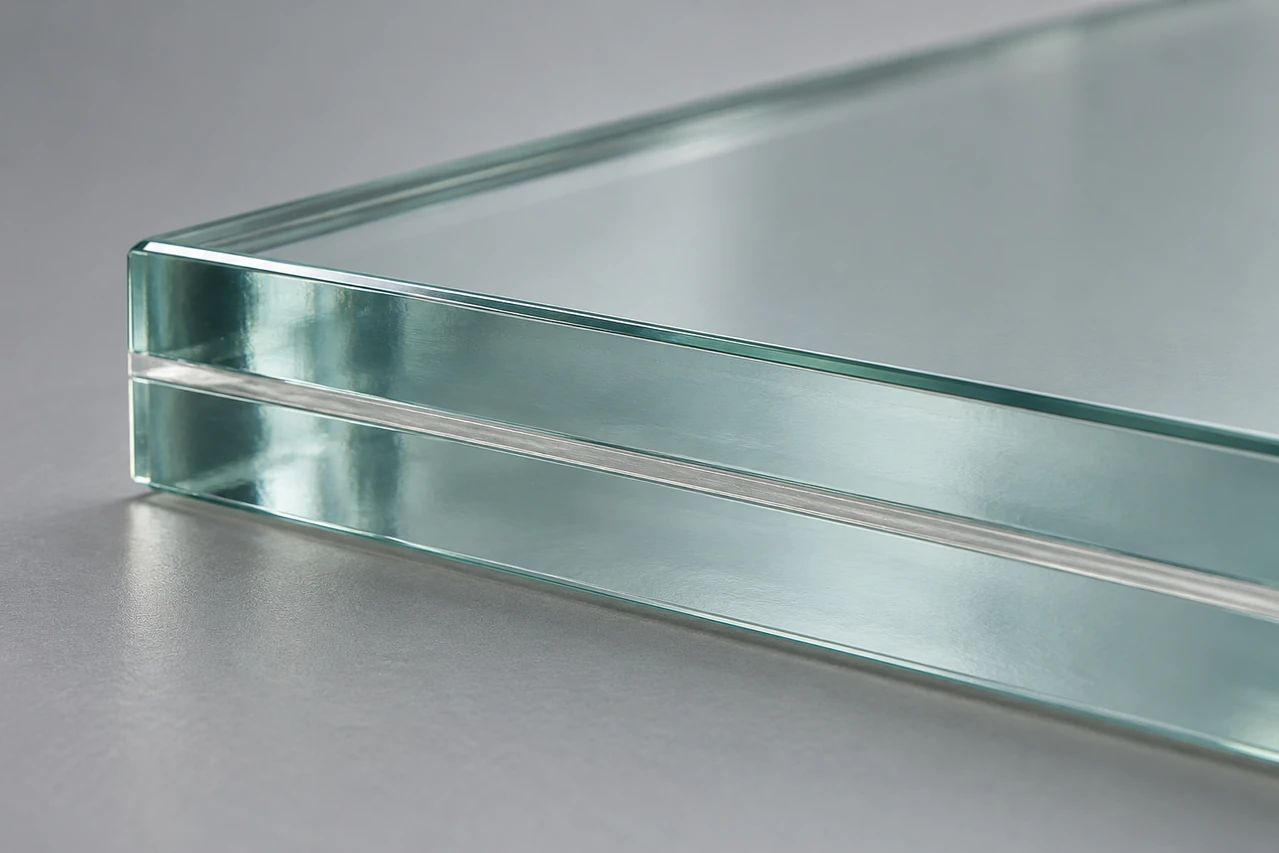
Laminated glass
Two or more glass plies bonded by one or more interlayers so fragments can be retained and the assembly can provide selected safety, security, acoustic, or other performance.
Glass foundations
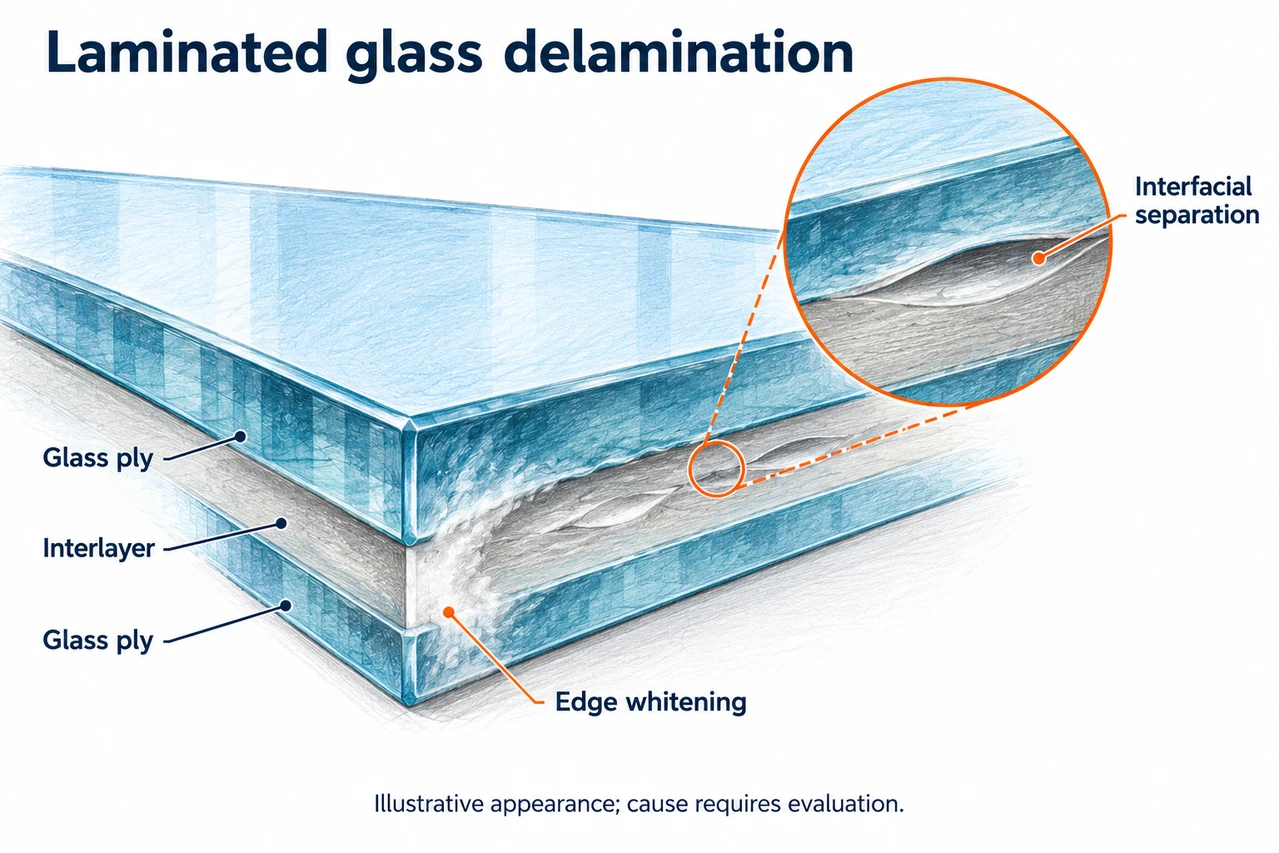
Laminated glass delamination
A visible or functional loss of adhesion or cohesion within a laminated-glass construction, often appearing as separation, bubbles, clouding, whitening, or edge growth.
Glazing systems and specialty applications
Laminated glass interlayer
A polymeric or other bonding layer between glass plies that contributes adhesion, fragment retention, optical, acoustic, structural, security, or other specified performance.
Glazing systems and specialty applications
Leaching
Preferential removal of soluble glass constituents into a contacting liquid, leaving the near-surface composition different from the original glass.
Deposits and contamination
Lead Time
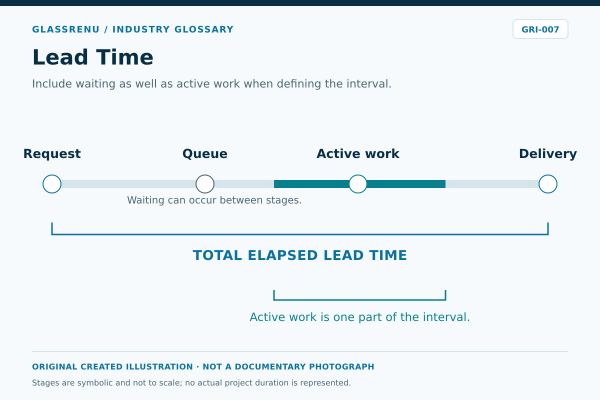
The elapsed time between defined start and finish events, such as placing an order and receiving the required product or completing the requested work.
Industry operations and project delivery
Light graffiti scratch
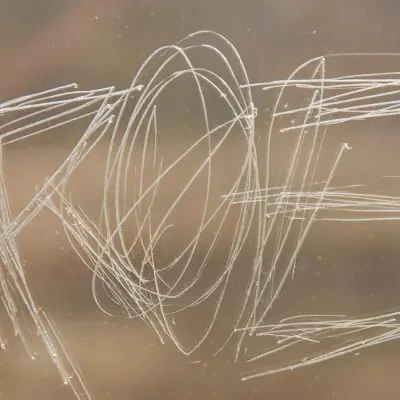
A proposed GlassRenu class for deliberate scratched vandalism that falls within the approved lower-intensity graffiti restoration route.
Damage categories and surface conditions
Lighting condition
The documented source, direction, intensity, diffusion, and ambient context of light used during inspection.
Inspection and repair decisions
Linear blemish
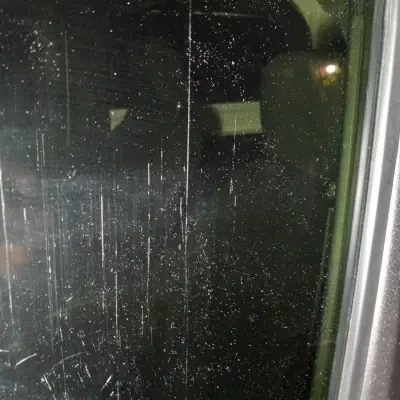
An elongated visible feature, such as a scratch or streak, evaluated by length, width, intensity, location, and the applicable inspection method.
Damage categories and surface conditions

Localized distortion
Optical distortion concentrated in a limited area rather than distributed across the full lite or in a regular manufacturing pattern.
Damage categories and surface conditions
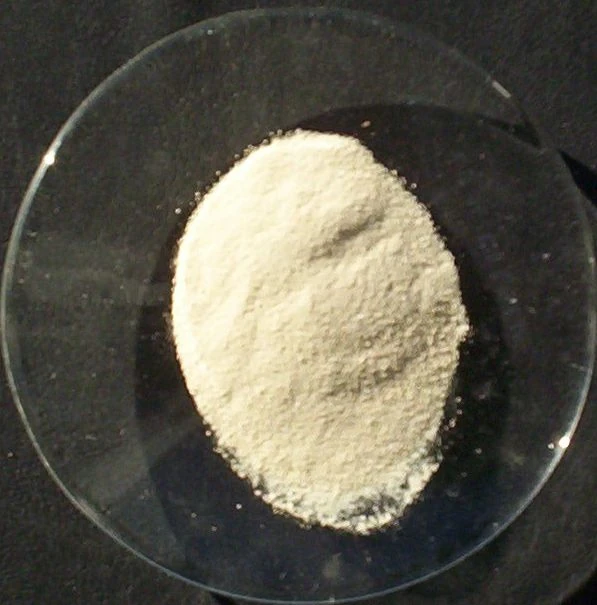
Loose abrasive
Abrasive particles supplied free in a powder, paste, suspension, or slurry rather than fixed to a disc, belt, or wheel.
Restoration processes and safety
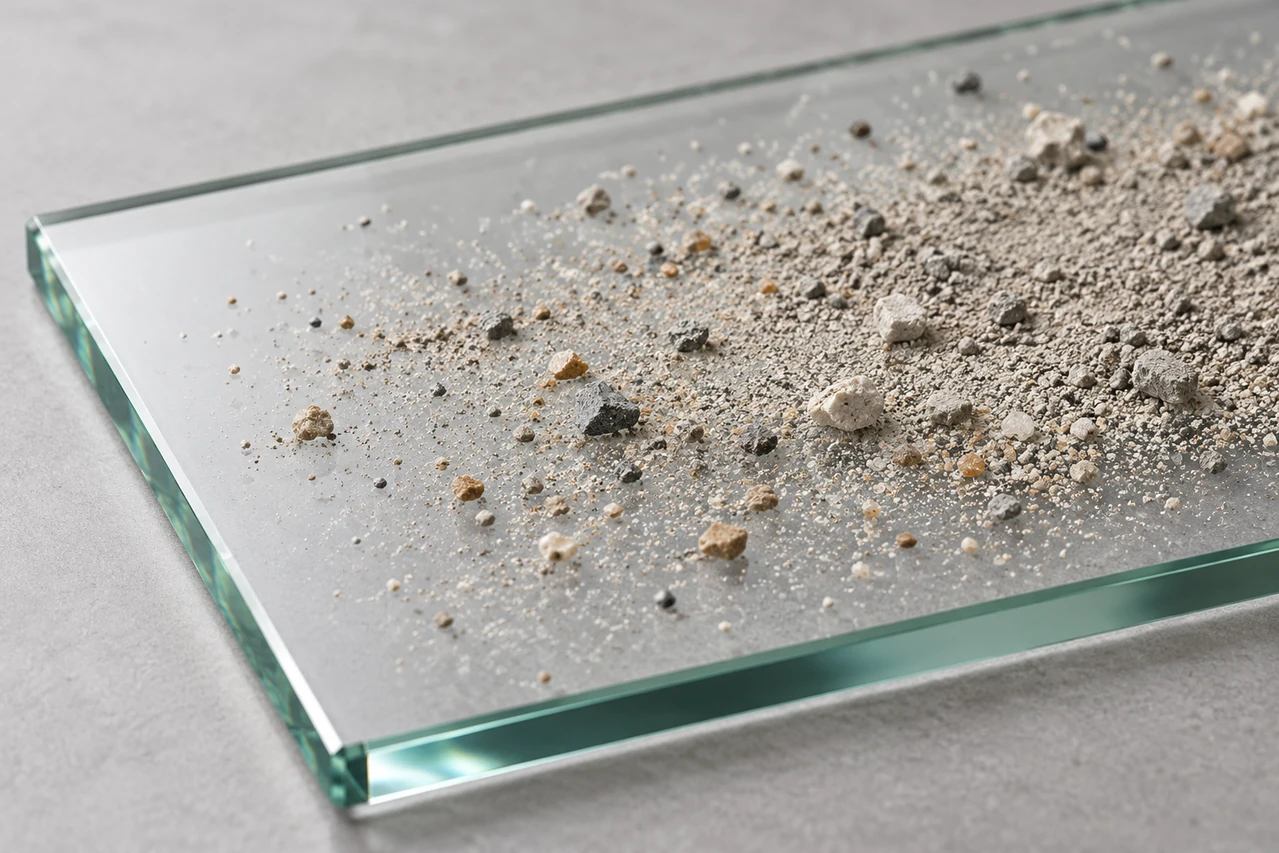
Loose particulate
Discrete particles resting on a surface without a strong bond to it, such as dust, grit, sand, or construction debris.
Deposits and contamination
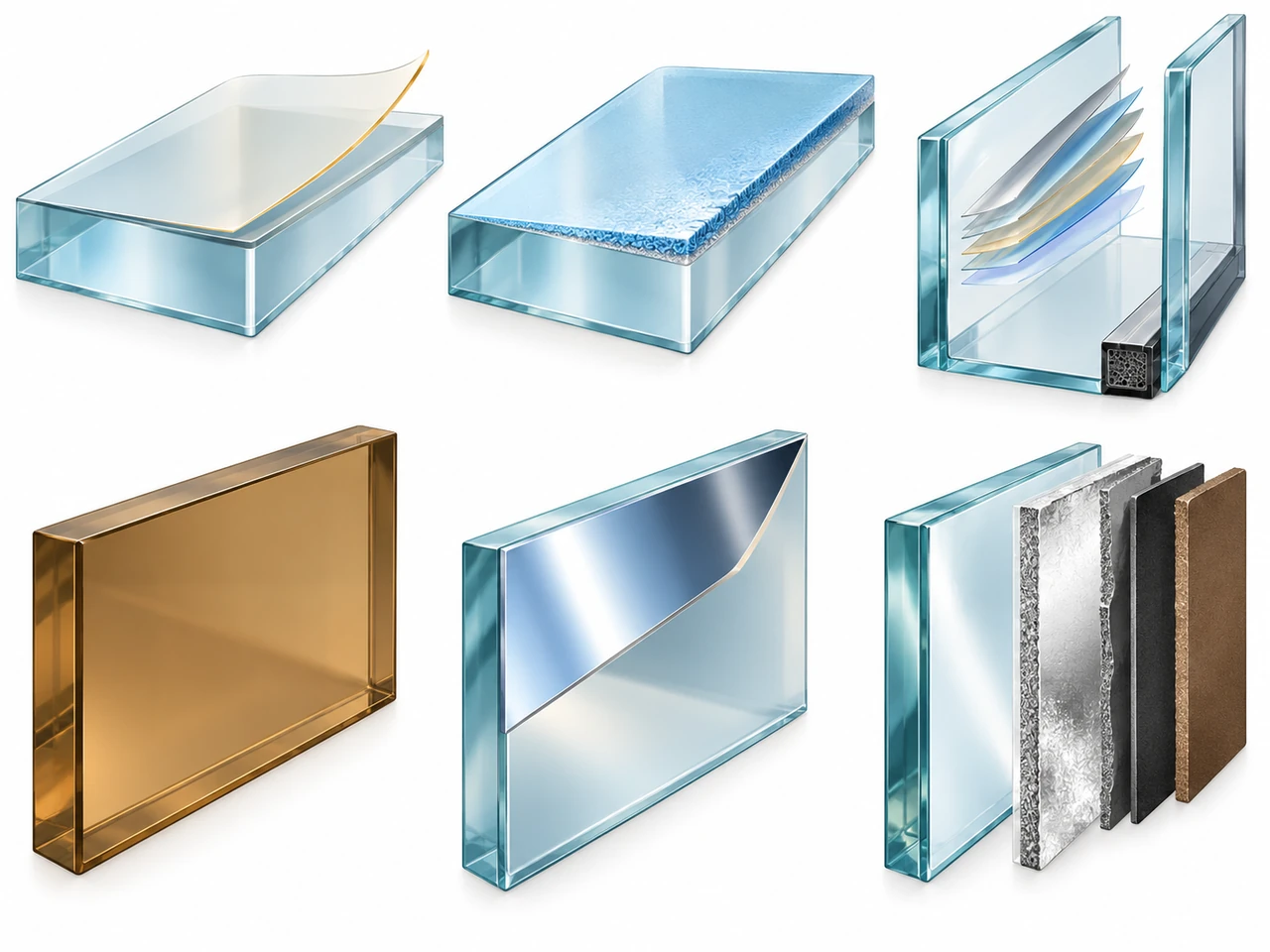
Low-emissivity coating
A thin coating designed to reduce long-wave radiant heat transfer while preserving selected visible-light and solar-performance characteristics.
Glass foundations
M

Magnification
An optical or digital enlargement used to examine features smaller than can be characterized reliably with unaided vision.
Inspection and repair decisions
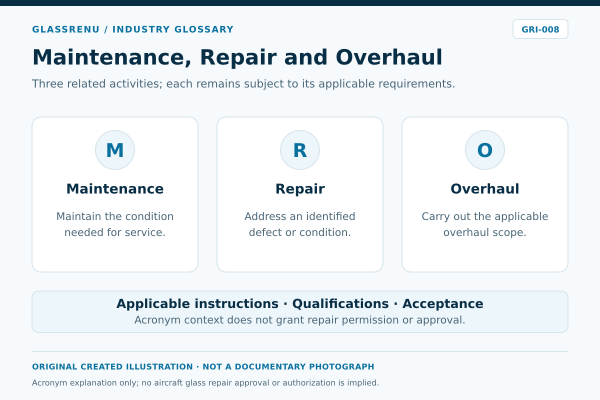
Maintenance, Repair and Overhaul
A collective term used for maintenance, repair and overhaul activities, especially in the aviation maintenance-provider context.
Industry operations and project delivery
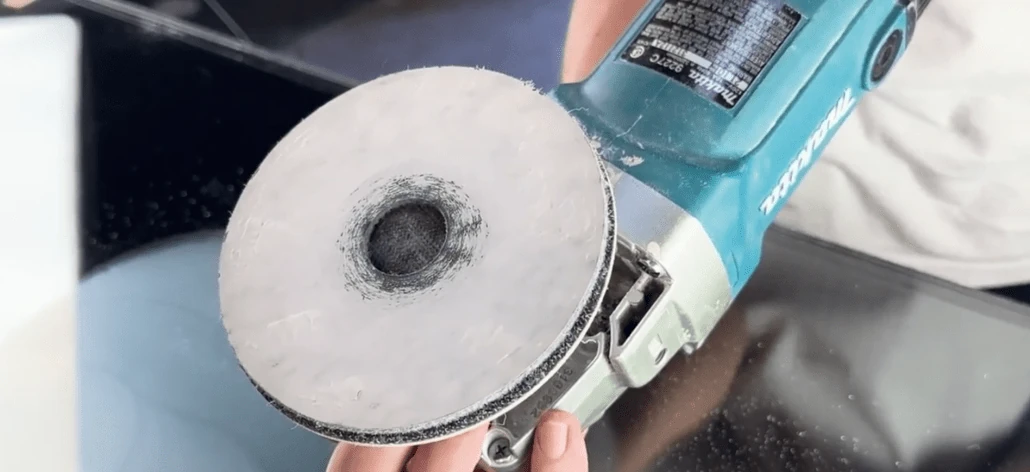
Material removal
The physical loss of glass or another surface layer during abrasion, grinding, polishing, chemical action, or a combined process.
Restoration processes and safety
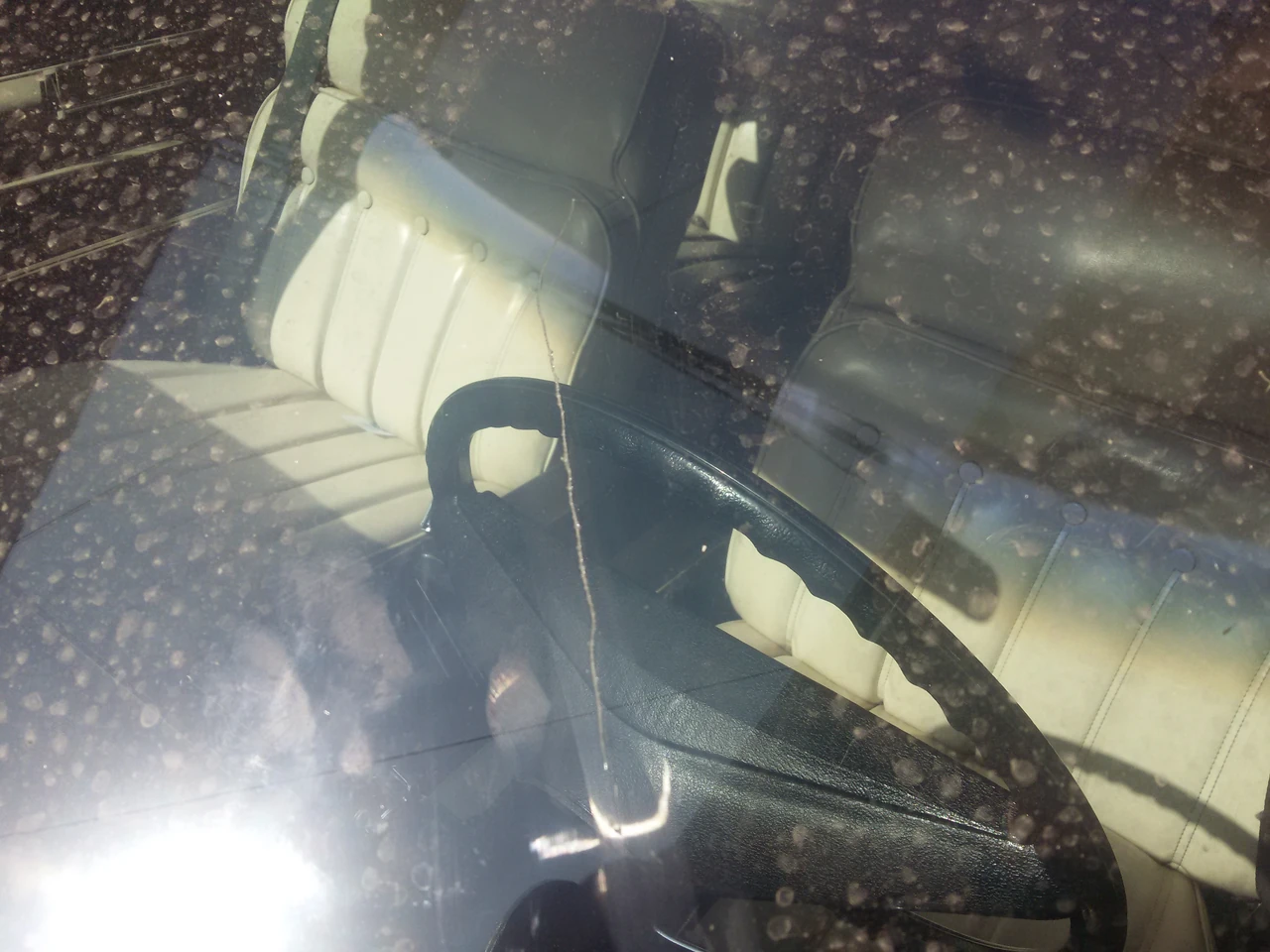
Material removal depth
The vertical amount of surface material removed relative to a documented original or surrounding reference plane.
Restoration processes and safety
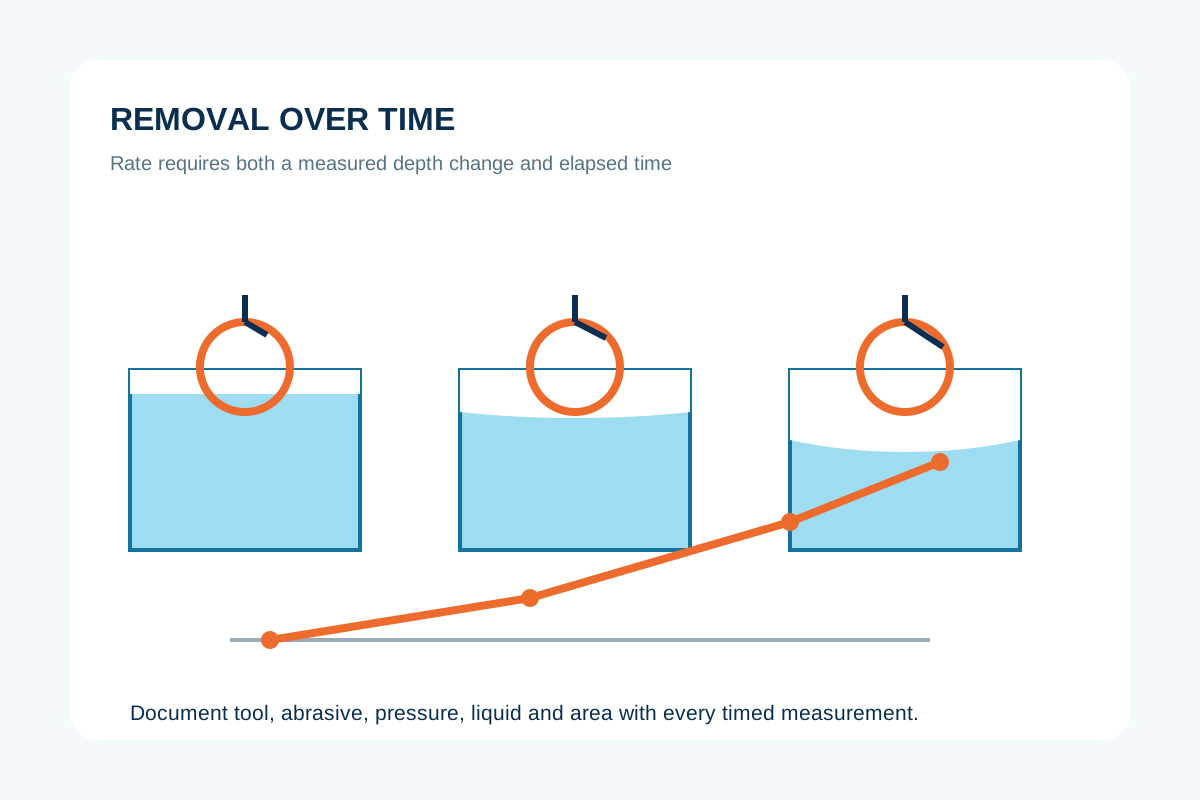
Material removal rate
The amount of material removed per unit time, area, path length, or another explicitly stated basis under defined process conditions.
Restoration processes and safety
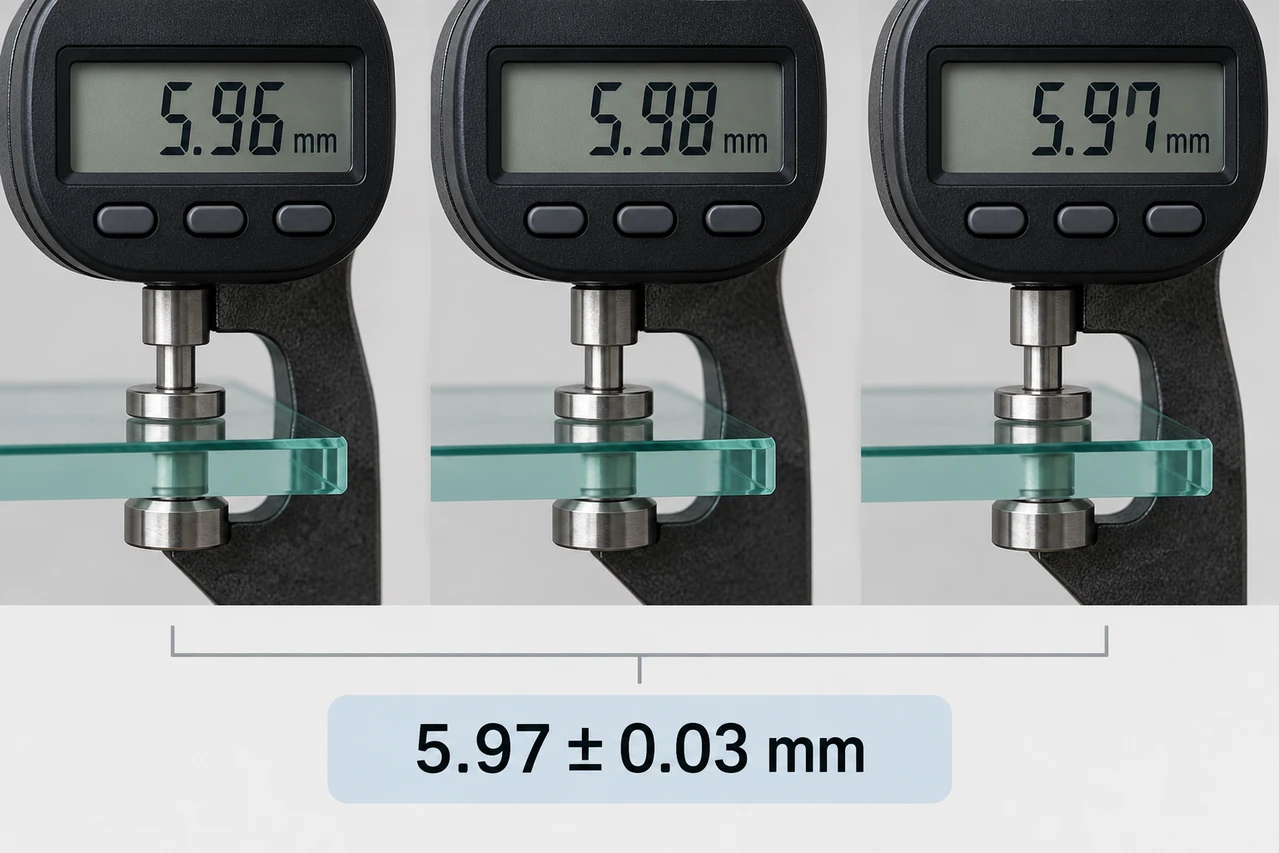
Measurement uncertainty
A quantified expression of the doubt associated with a measurement result, considering instrument, method, operator, environment, resolution, calibration, and other influences.
Inspection and repair decisions
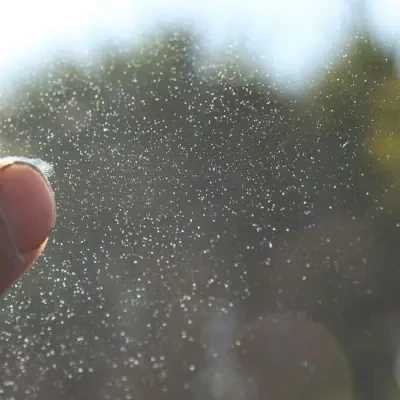
Media-blast damage
A distributed field of pits, roughness, or frosting produced when abrasive particles propelled by air, water, or another carrier strike glass.
Damage categories and surface conditions
Metal staining
Discoloration associated with metal or metal compounds deposited on or reacting at a glass surface.
Deposits and contamination
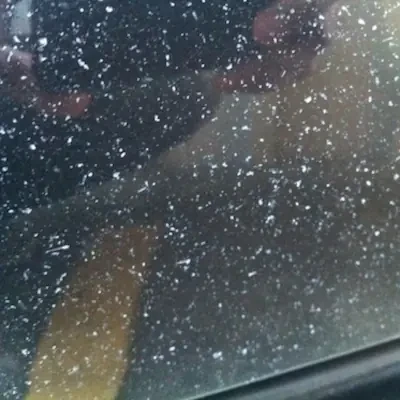
Metallic grinding debris damage
Pits, embedded particles, discoloration, or cracks produced when hot metal fragments from grinding or cutting strike glass.
Damage categories and surface conditions
Metallic rub
A mark produced when metal contacts and moves across glass, transferring metal, scratching the surface, or doing both.
Damage categories and surface conditions
Mineral scale
A solid mineral accumulation formed when dissolved constituents precipitate from water or become concentrated during heating or evaporation.
Deposits and contamination
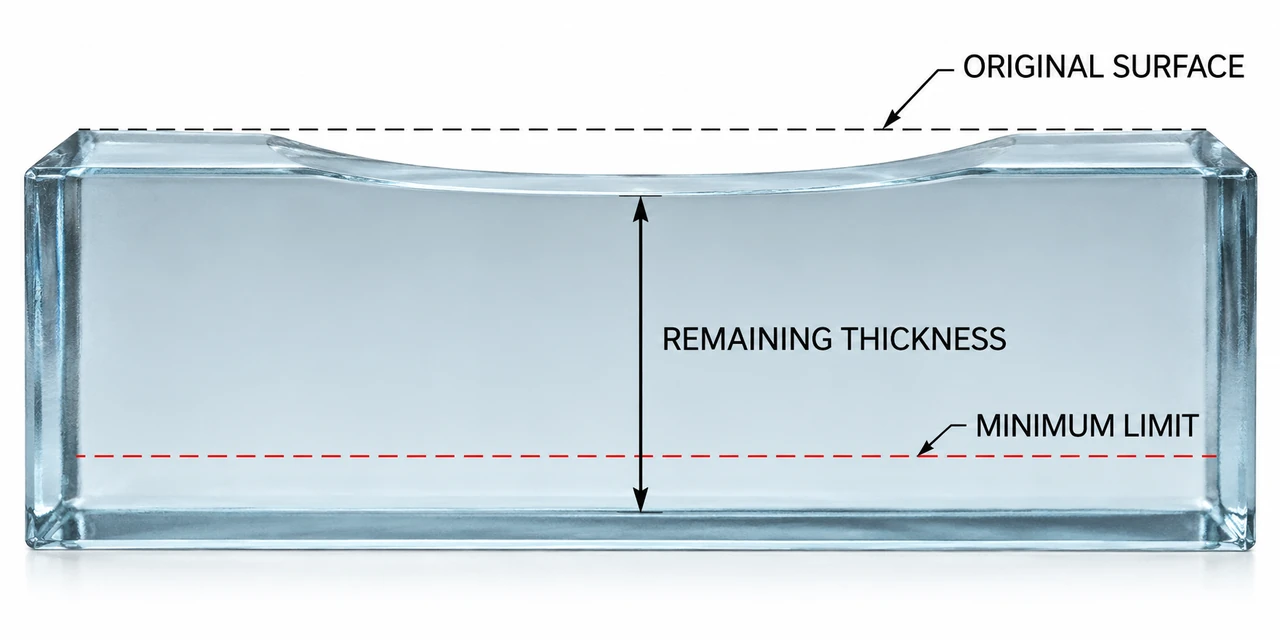
Minimum remaining thickness
The lowest permitted remaining thickness established for a particular product, location, load, treatment, and decision authority.
Inspection and repair decisions
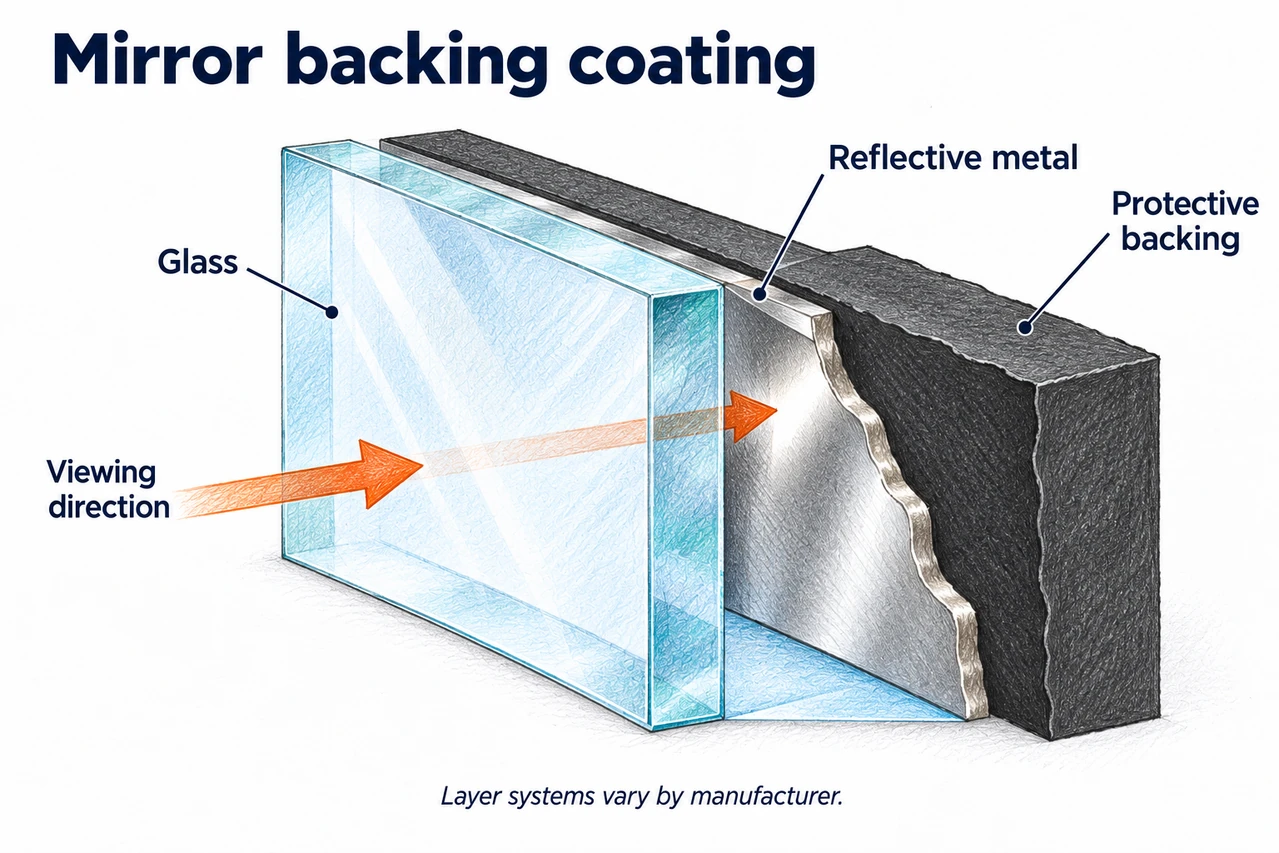
Mirror backing coating
The reflective metal layer and protective coating system applied to the rear surface of a conventional silvered flat glass mirror.
Glazing systems and specialty applications
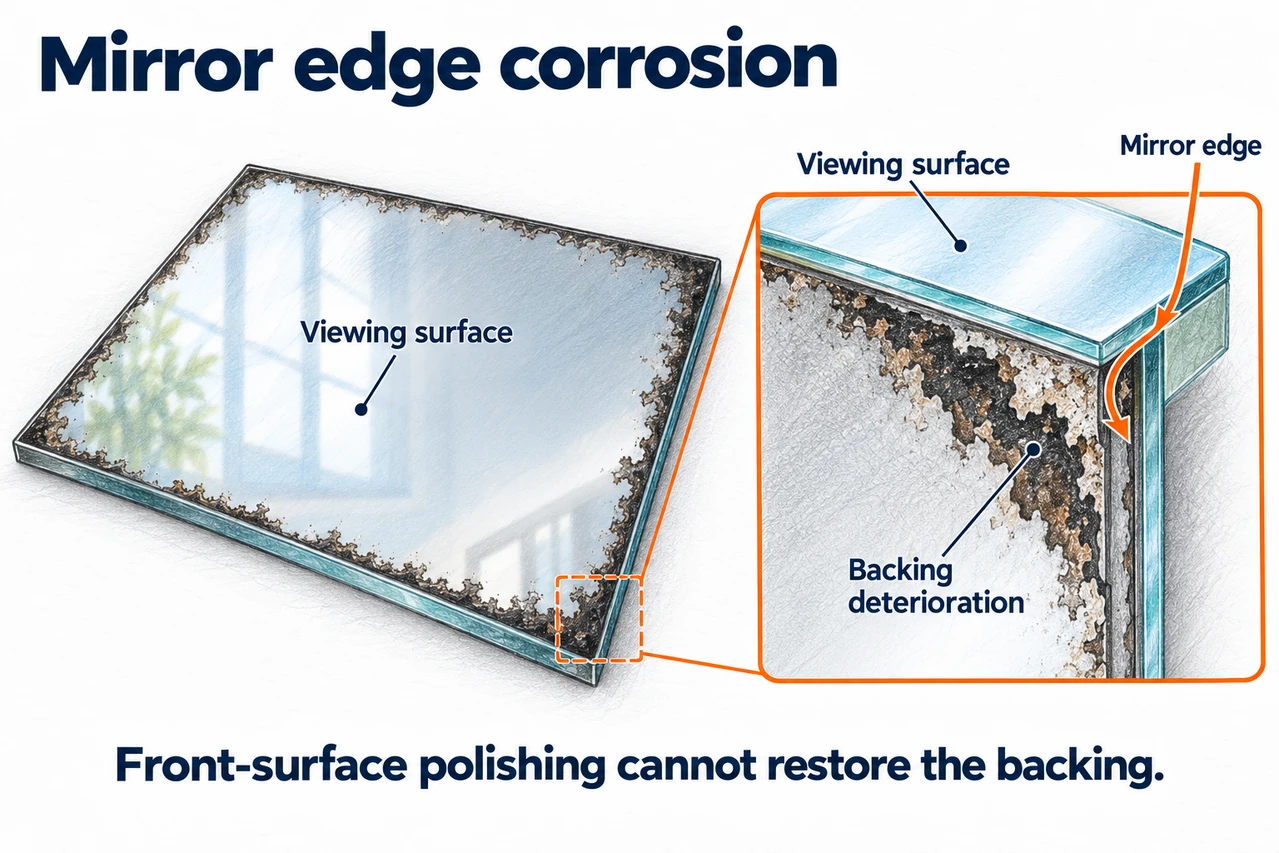
Mirror edge corrosion
Deterioration of a mirror's reflective or protective coating beginning at or near an edge, often visible as darkening, spotting, loss of reflectance, or creeping damage.
Glazing systems and specialty applications
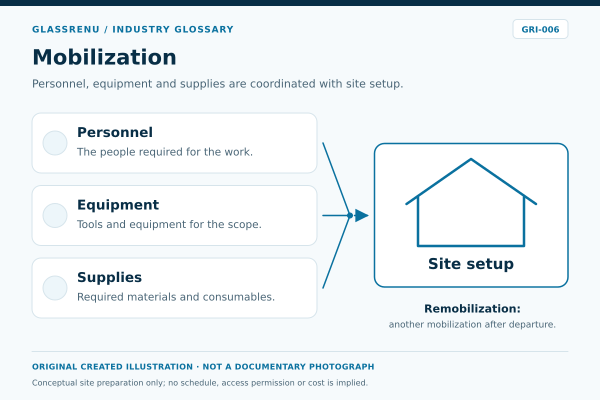
Mobilization
The movement of personnel, equipment and supplies to a work site and the setup needed to perform the planned work.
Industry operations and project delivery
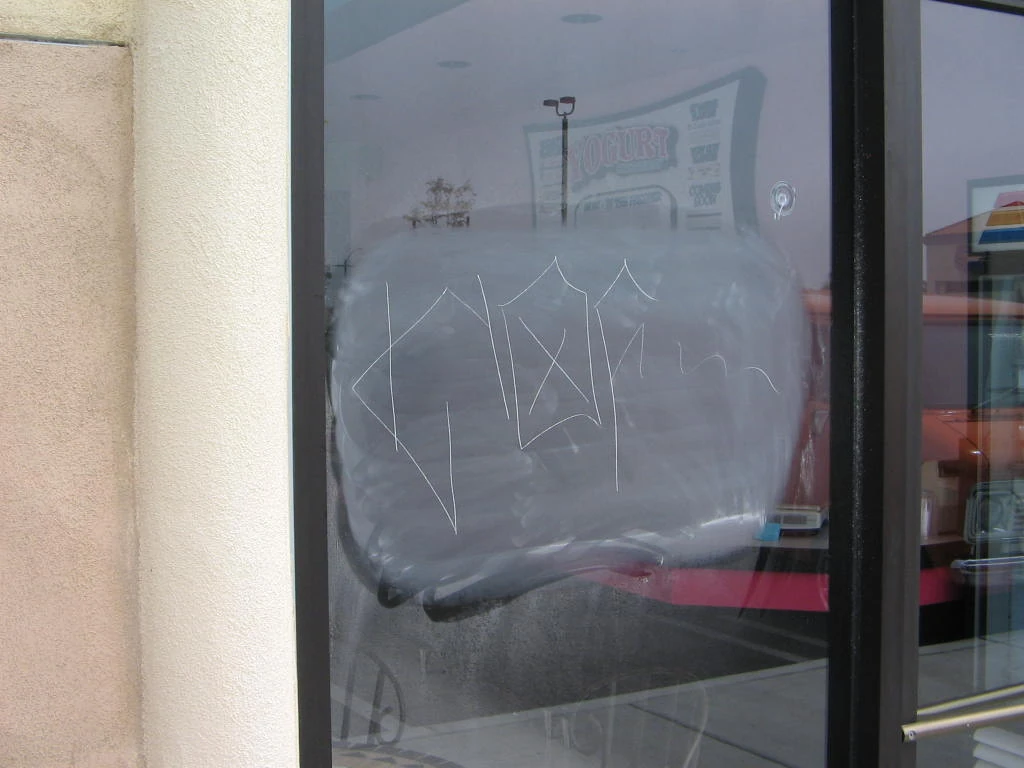
Mockup
A representative sample, panel, or project area produced with the proposed materials and workmanship for review and approval as a quality reference.
Inspection and repair decisions
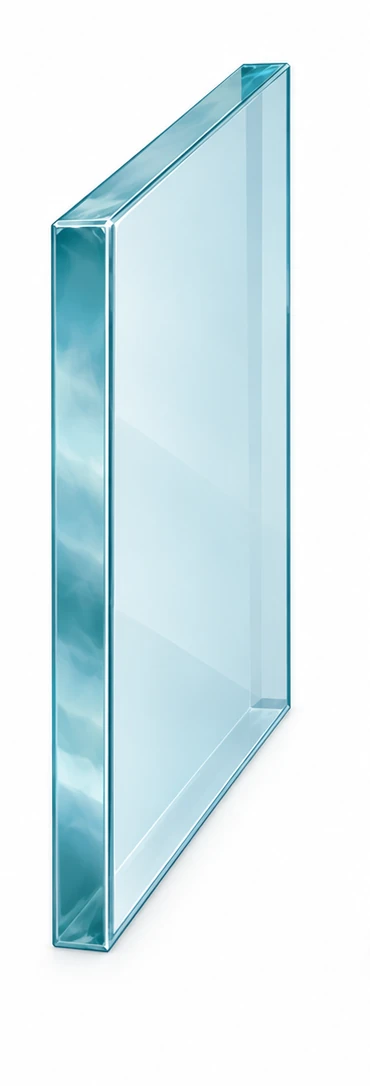
Monolithic glass
A glazing construction consisting of one lite of glass rather than multiple plies or sealed panes assembled together.
Glass foundations
N
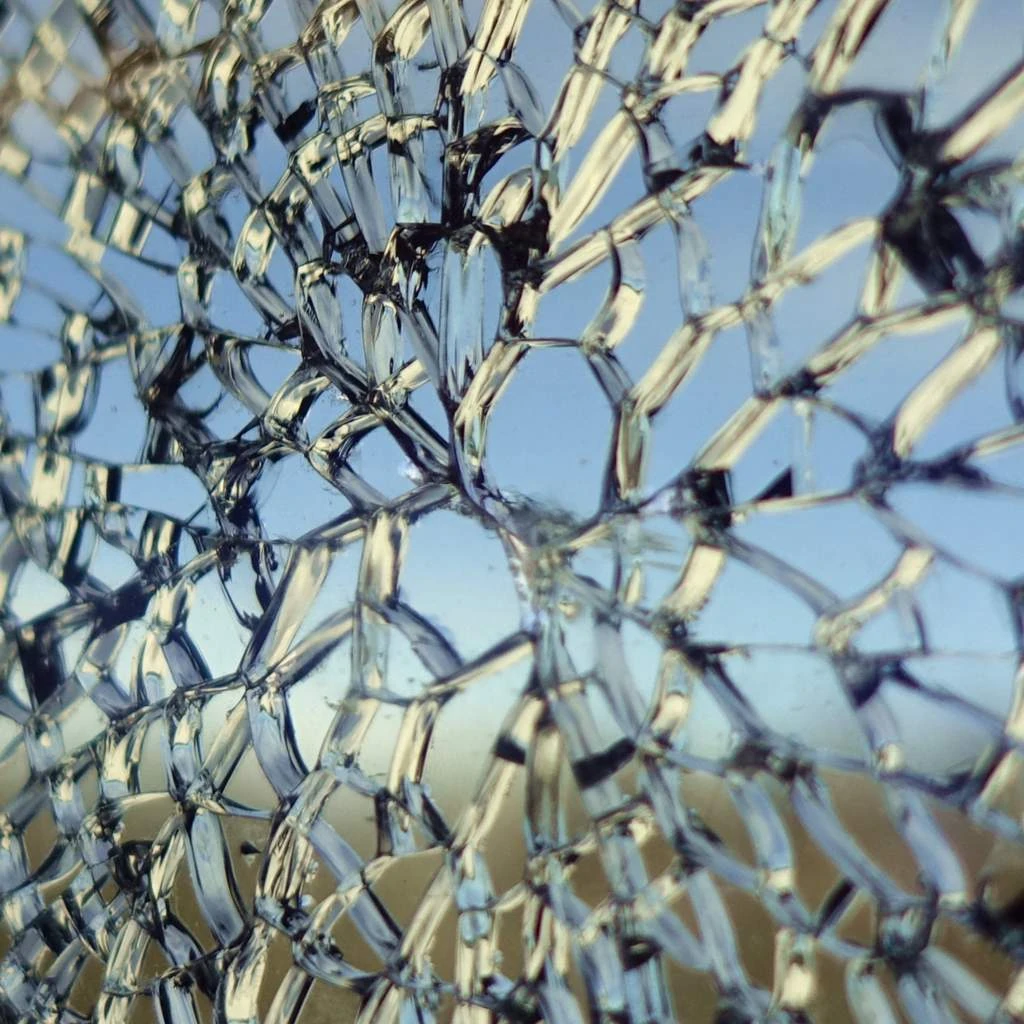
Nickel sulfide inclusion
A rare nickel-sulfur particle that can be present in float glass and, in some fully tempered lites, can contribute to delayed spontaneous breakage.
Glass foundations
O
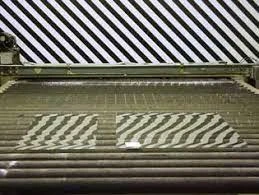
Optical distortion
A change in the apparent shape or position of an image viewed through or reflected by glass due to variations in flatness, curvature, thickness, refractive properties, assembly, or installation.
Damage categories and surface conditions
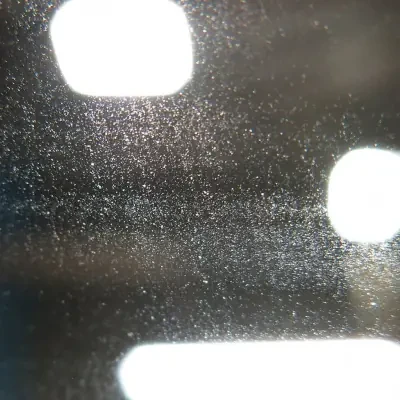
Organic contamination
Surface contamination made of carbon-containing material such as oils, greases, adhesives, sealant components, biological material, smoke residue, or fingerprints.
Deposits and contamination
P
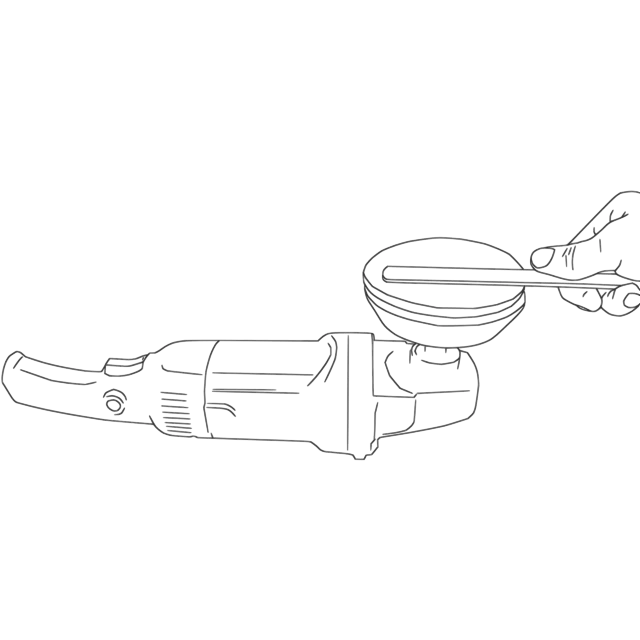
Pad conditioning
A controlled preparation or maintenance action intended to restore a polishing pad's usable surface texture, fiber exposure, cleanliness, or slurry distribution.
Restoration processes and safety
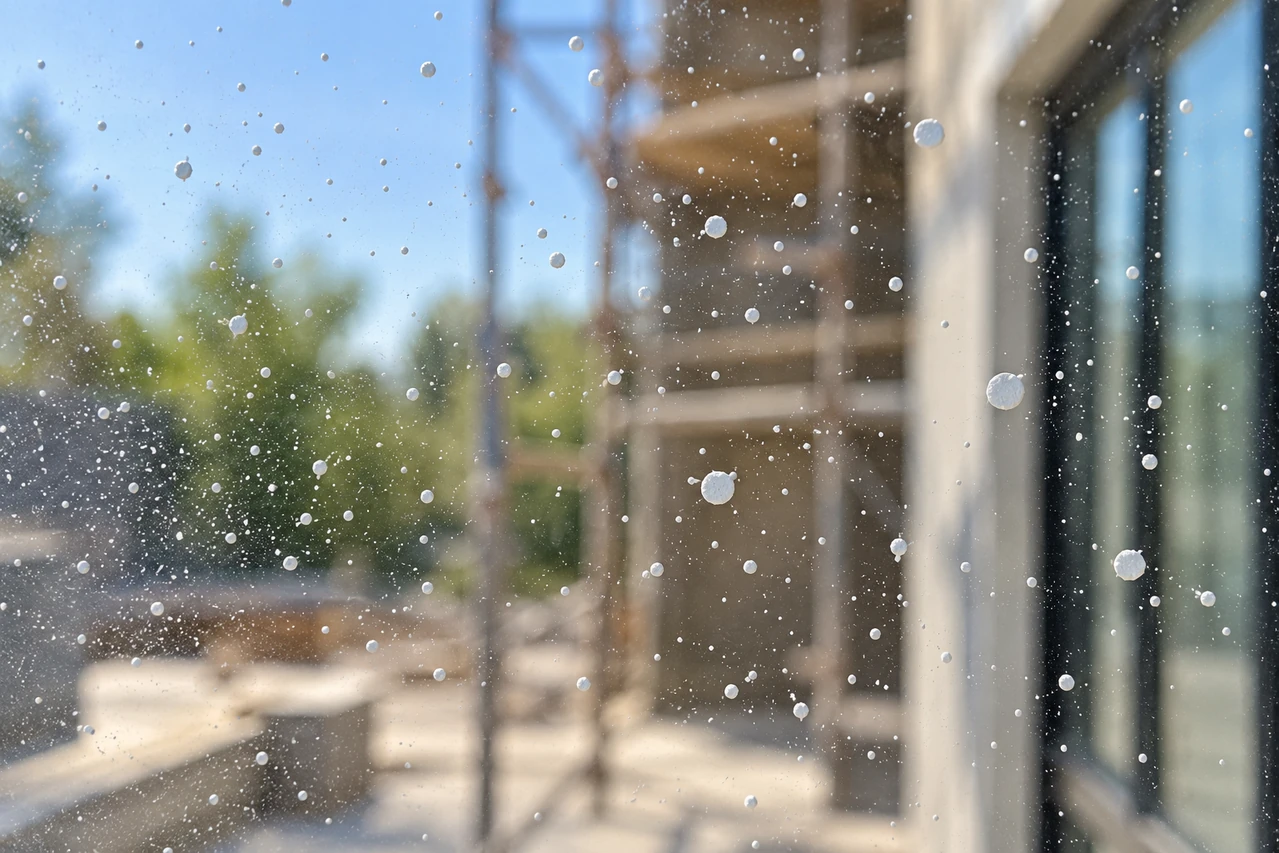
Paint overspray
Fine droplets or particles of paint deposited unintentionally on glass during spraying or nearby coating work.
Deposits and contamination

Pass overlap
The portion of one tool path intentionally covered again by the next adjacent path, stated as a distance or percentage of working width.
Restoration processes and safety
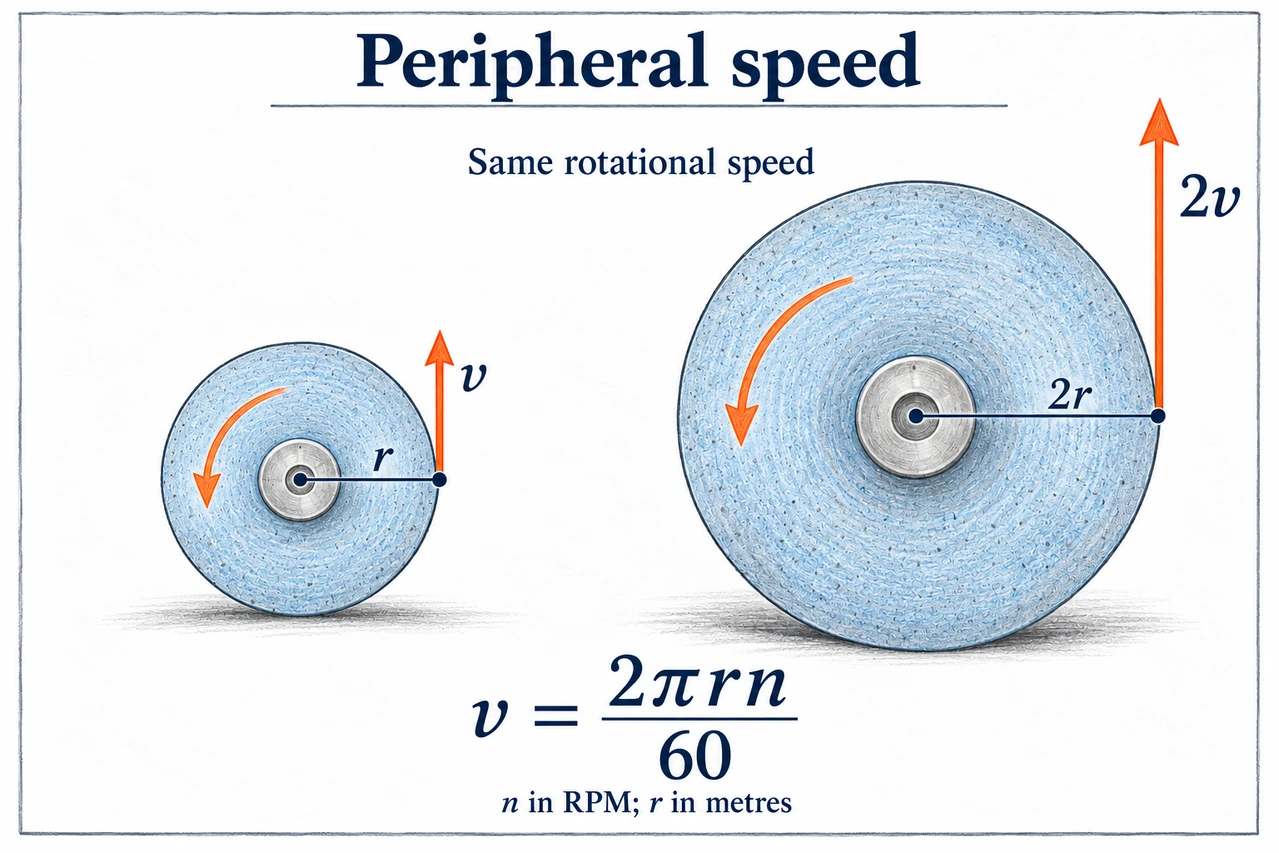
Peripheral speed
The linear speed of a point on the circumference of a rotating disc, determined by rotational speed and effective diameter.
Restoration processes and safety
Permanent glass marking
A durable marking intended to remain on the glass and communicate product, certification, or traceability information. Examples can include a tempering or safety-glazing bug, manufacturer designation, certification mark, standard reference, production date, lot code, or serial number.
Inspection and repair decisions
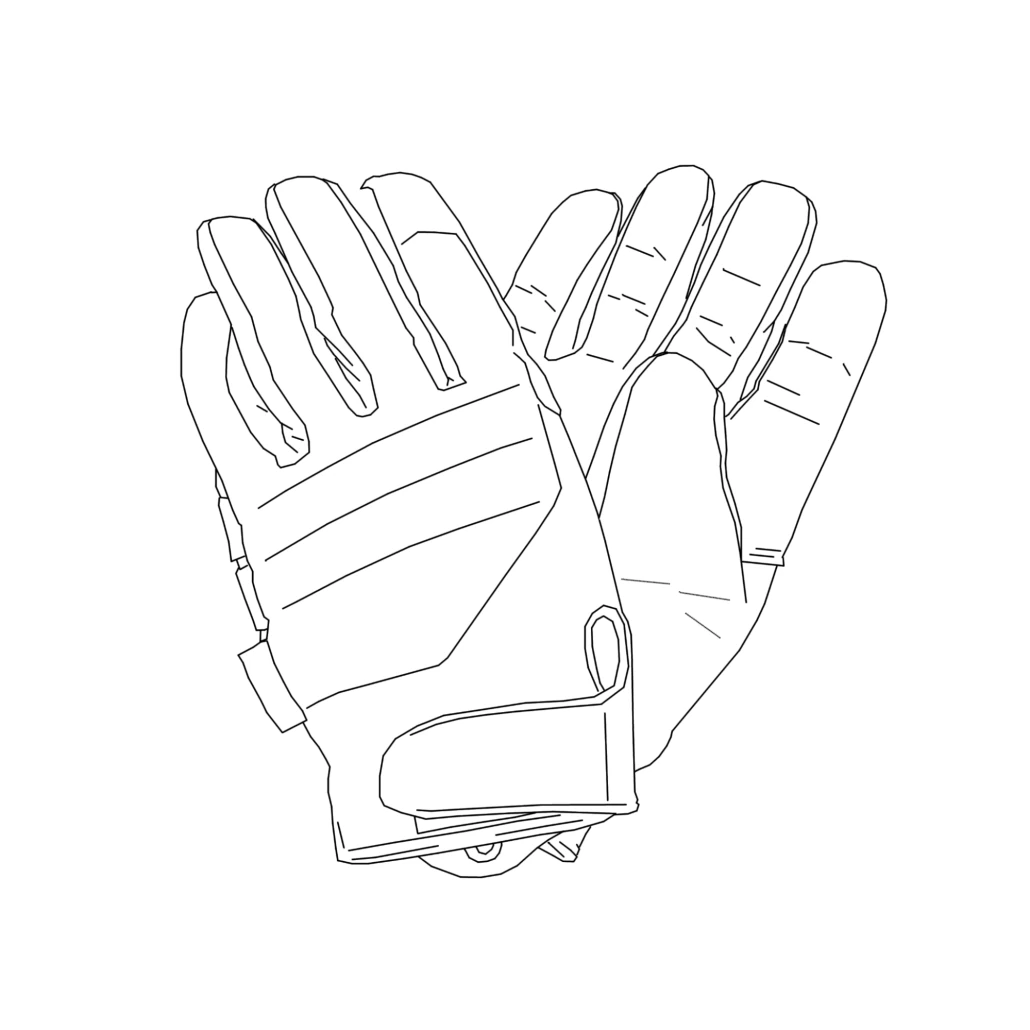
Personal protective equipment
Wearable equipment selected to reduce exposure to hazards that remain after feasible engineering and administrative controls.
Restoration processes and safety
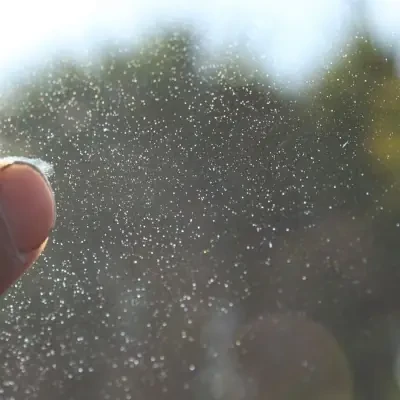
Pitting
Localized loss or disruption of surface material that produces small depressions or cavities in glass or a coating.
Deposits and contamination
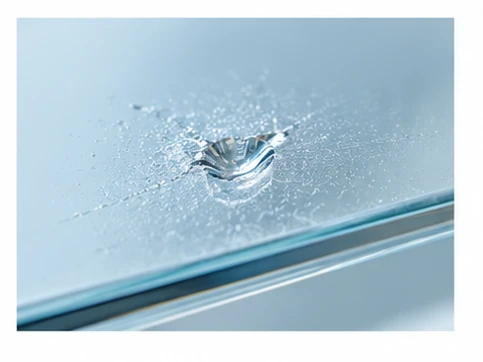
Point blemish
A localized blemish whose dimensions are small enough that it is evaluated primarily as a point-like feature under the applicable product standard.
Damage categories and surface conditions
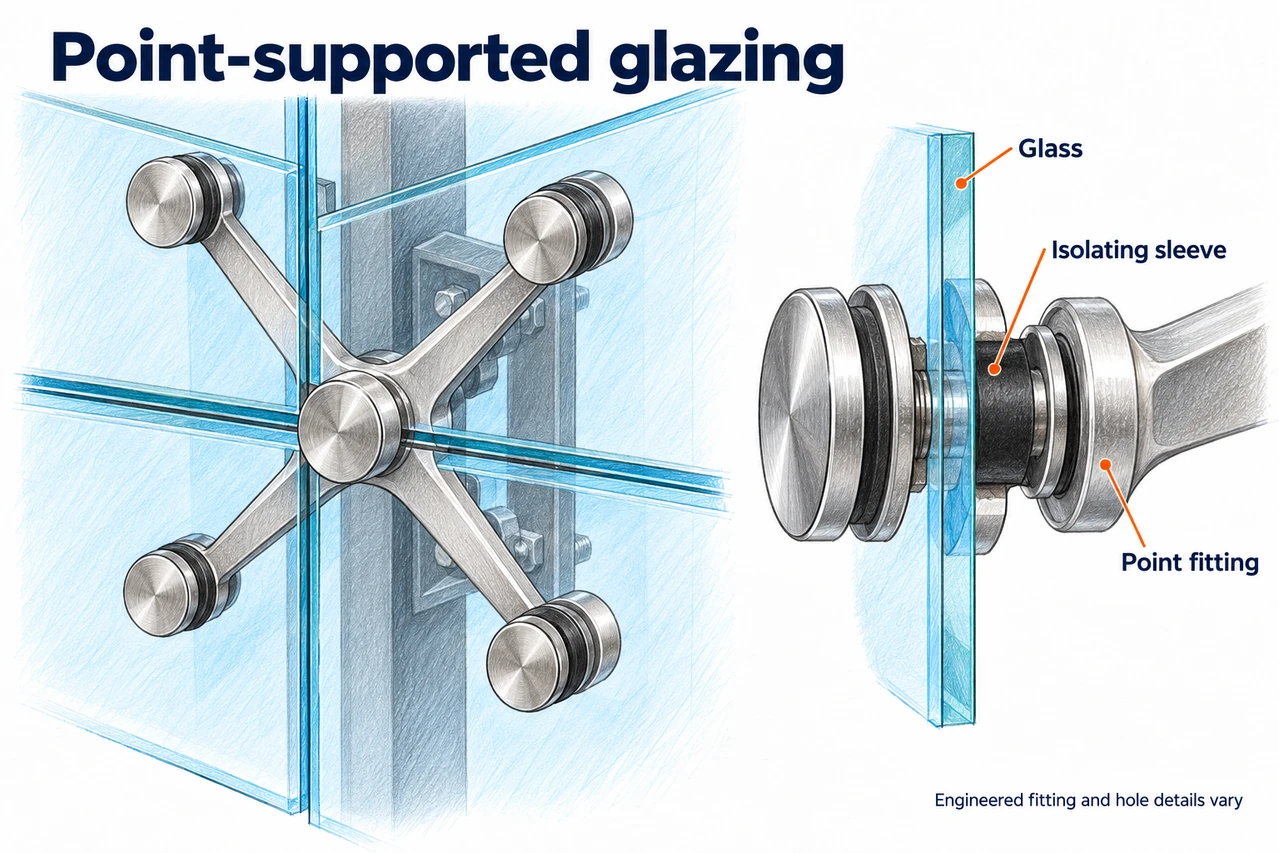
Point-supported glazing
A glazing system in which discrete fittings, bolts, clamps, or connectors support glass at localized points rather than continuously along conventional framed edges.
Glazing systems and specialty applications
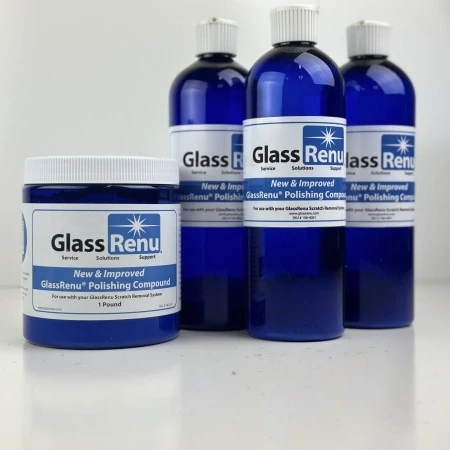
Polishing compound
A formulated material applied with a polishing tool to refine glass, commonly containing fine particles in a liquid or paste with additional ingredients.
Restoration processes and safety
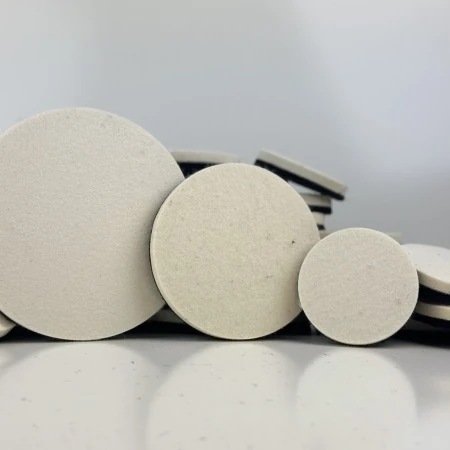
Polishing pad
A compliant contact tool that carries and distributes polishing compound over the glass surface.
Restoration processes and safety
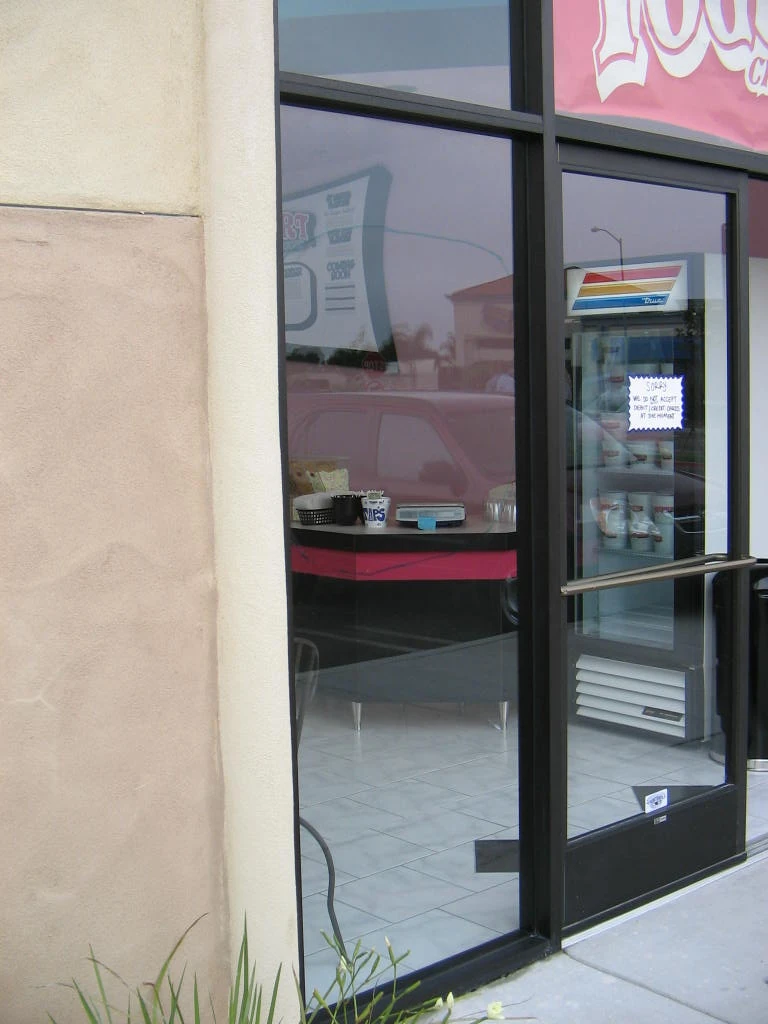
Post-restoration verification
A documented final evaluation comparing completed work with the baseline, approved test or mockup, and agreed acceptance criteria.
Inspection and repair decisions
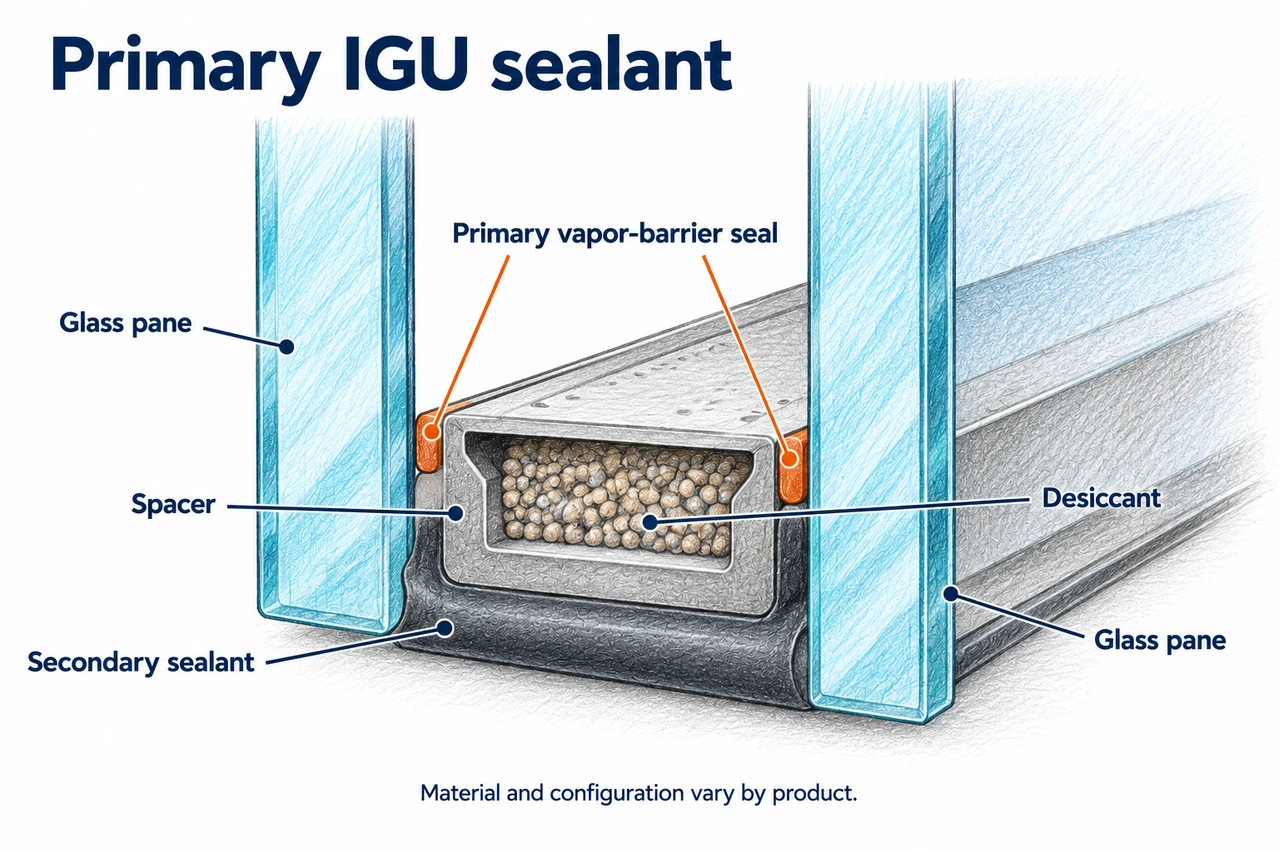
Primary IGU sealant
The innermost edge-seal material in many dual-seal insulating glass units, commonly serving as the principal moisture- and gas-vapor barrier between spacer and glass.
Glazing systems and specialty applications

Process pass
One controlled traversal of the working tool across a defined path or area under stated settings.
Restoration processes and safety
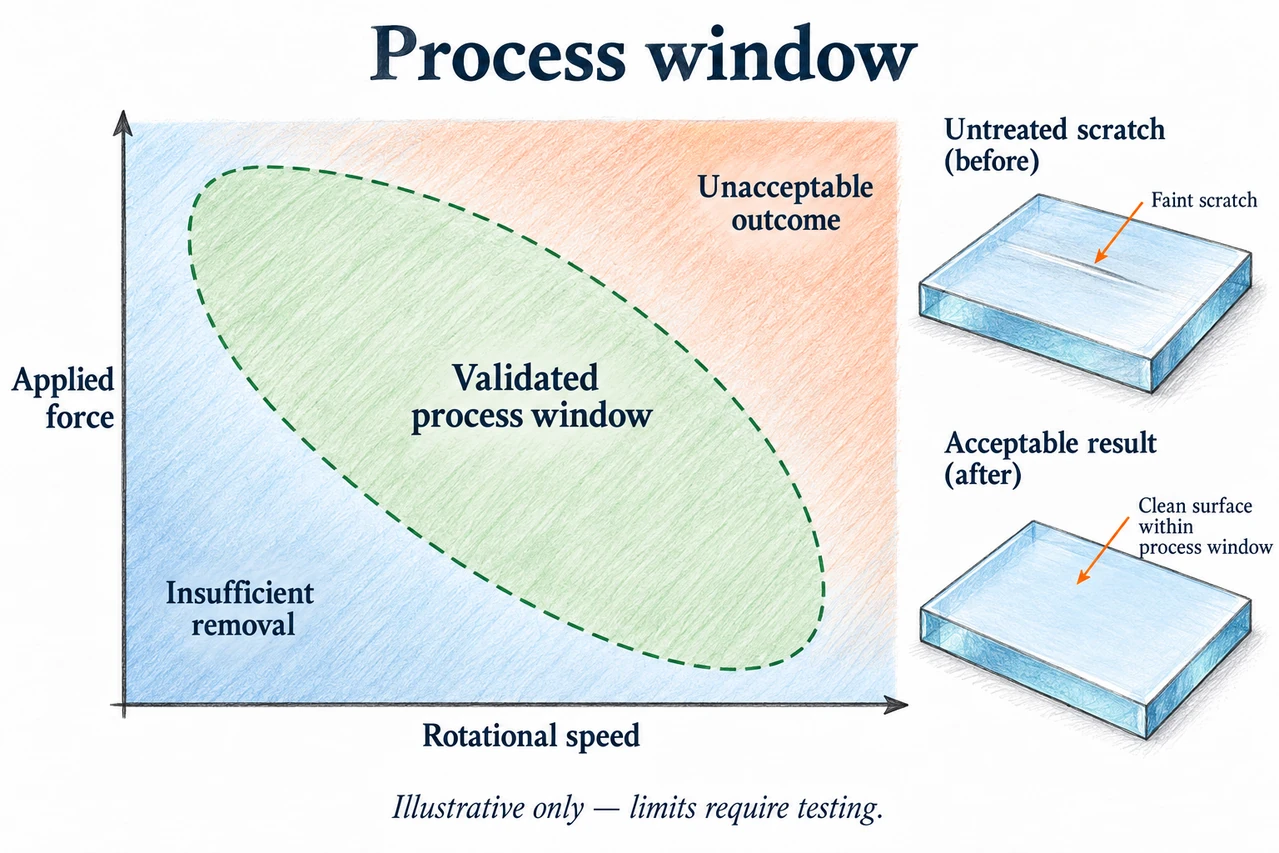
Process window
The validated range of interacting process conditions within which a defined glass, damage, tool, and stage can meet its intended result without unacceptable harm.
Restoration processes and safety
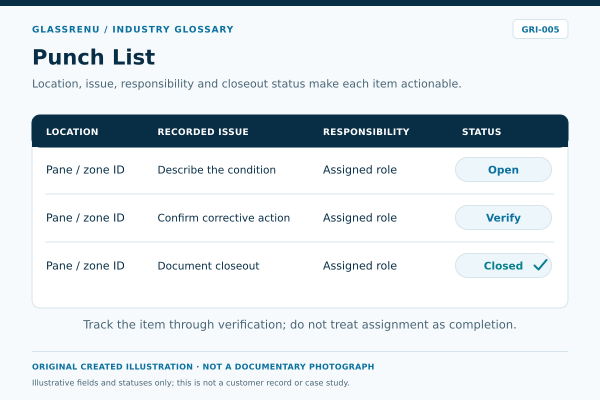
Punch List
A tracked set of outstanding or corrective project items, recording where an issue occurs, who is responsible and how it is resolved or closed.
Industry operations and project delivery
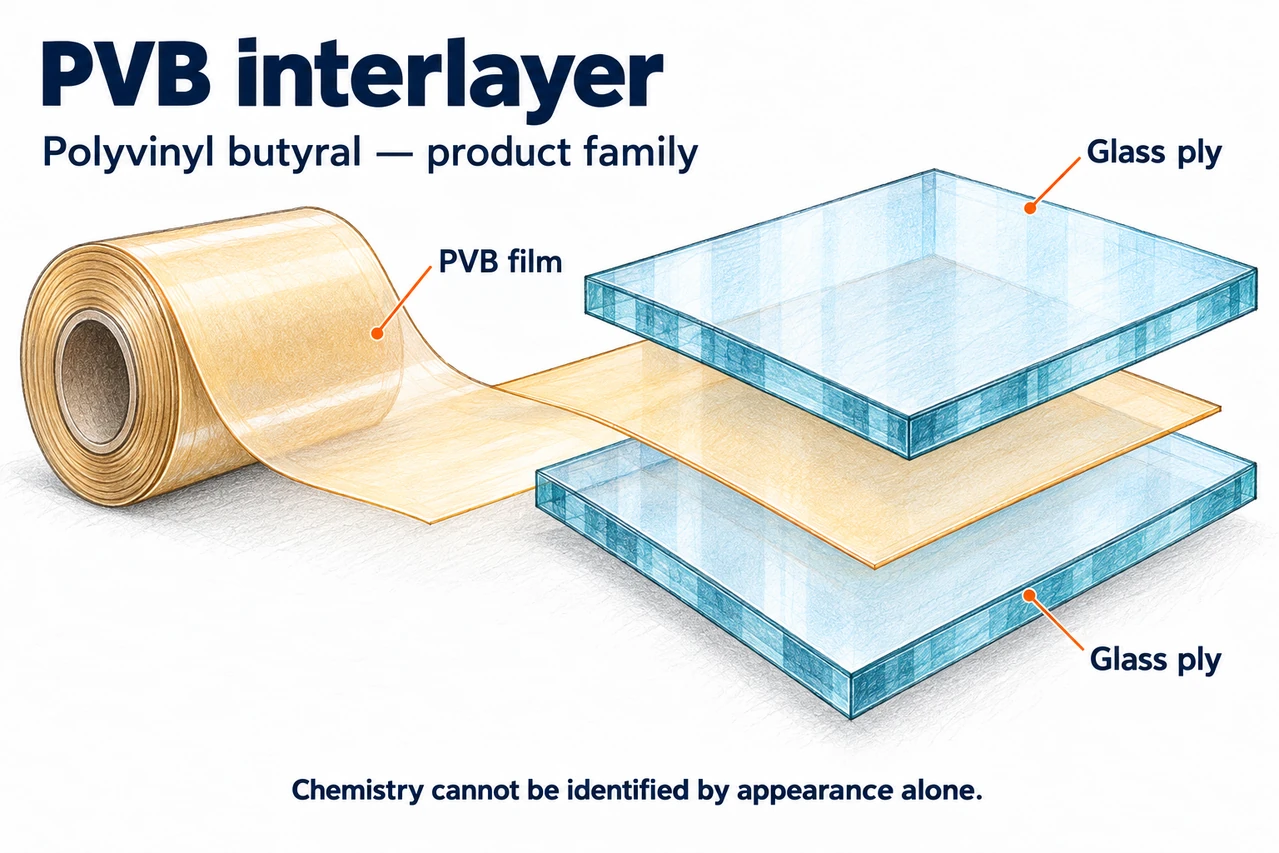
PVB interlayer
A polyvinyl butyral-based film formulated for bonding glass plies in laminated safety and other architectural glazing products.
Glazing systems and specialty applications

Pyrolytic coating
A coating formed on hot glass through a high-temperature deposition process, often during float-glass manufacture.
Glass foundations
R
Raking light
Light directed at a shallow angle across a surface so small height, texture, gloss, and scratch differences cast highlights or shadows.
Inspection and repair decisions
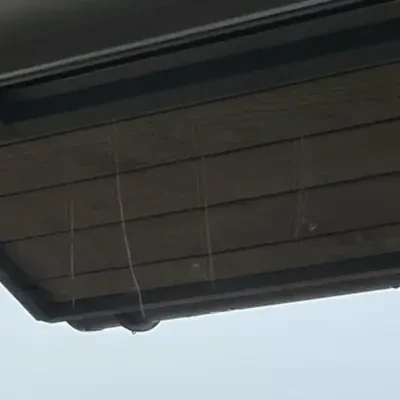
Razor-blade scratch
A linear mark associated with a blade or scraper moving directly on glass or dragging trapped particles across it.
Damage categories and surface conditions
Reference scale
A known-size ruler, target, or calibrated feature placed in the same plane as photographed or measured damage.
Inspection and repair decisions

Referral criterion
A defined condition that sends a glass assessment or treatment decision to a manufacturer, engineer, conservator, glazier, laboratory, safety specialist, or other qualified party.
Inspection and repair decisions

Reflected distortion
Alteration of an image seen in reflection from a glass surface or glazing assembly.
Damage categories and surface conditions
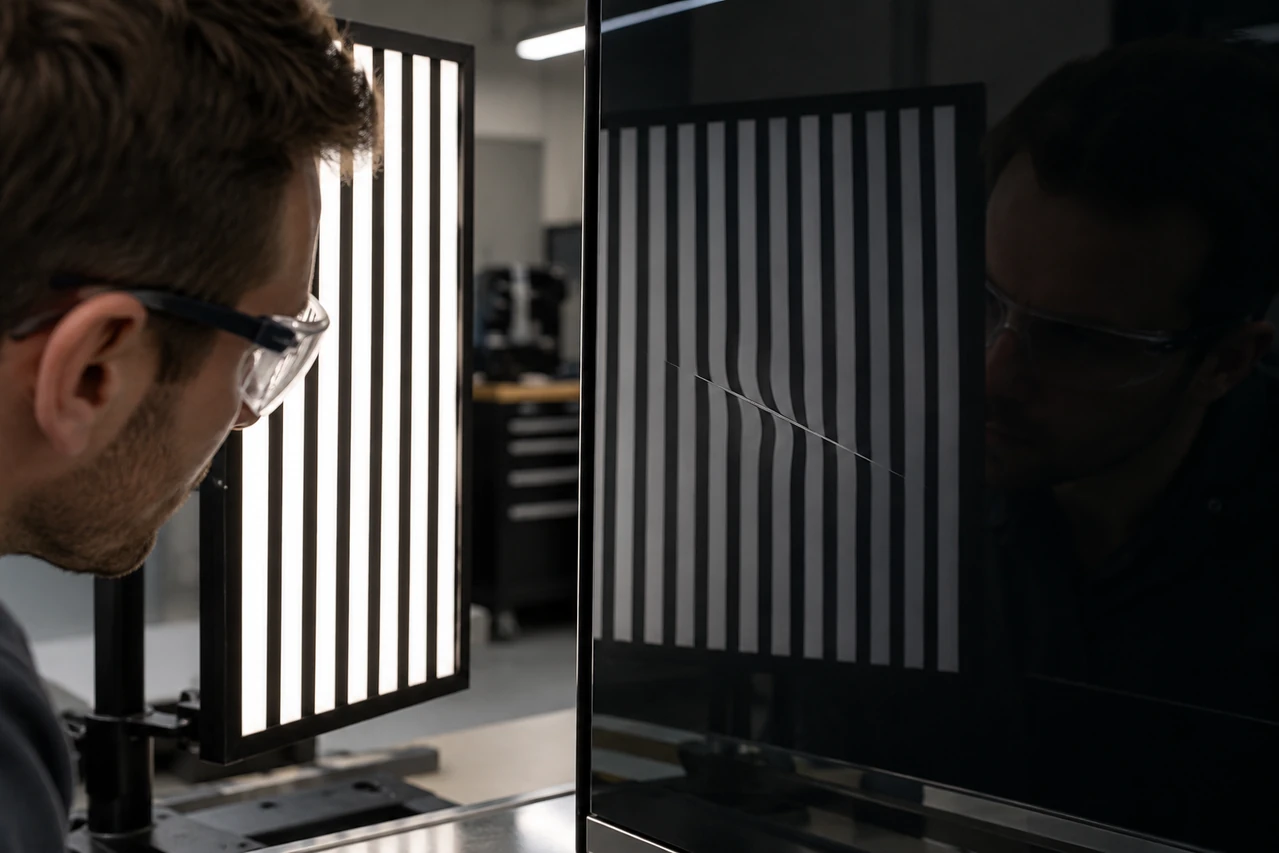
Reflected-light inspection
Evaluation of features using light and images reflected from a glass surface or glazing assembly.
Inspection and repair decisions

Reflective glass
Glass with a surface treatment designed to increase reflection and alter visible or solar-energy transmission.
Glass foundations
Remaining thickness
The measured or defensibly estimated glass thickness that remains at the thinnest part of a treated area after material removal.
Inspection and repair decisions
Repairability
The technical possibility of improving or correcting a defined glass condition to agreed criteria without unacceptable harm.
Inspection and repair decisions
Repeatability
The closeness of agreement among repeated measurements of the same quantity under the same stated method, observer, instrument, location, and short-term conditions.
Inspection and repair decisions
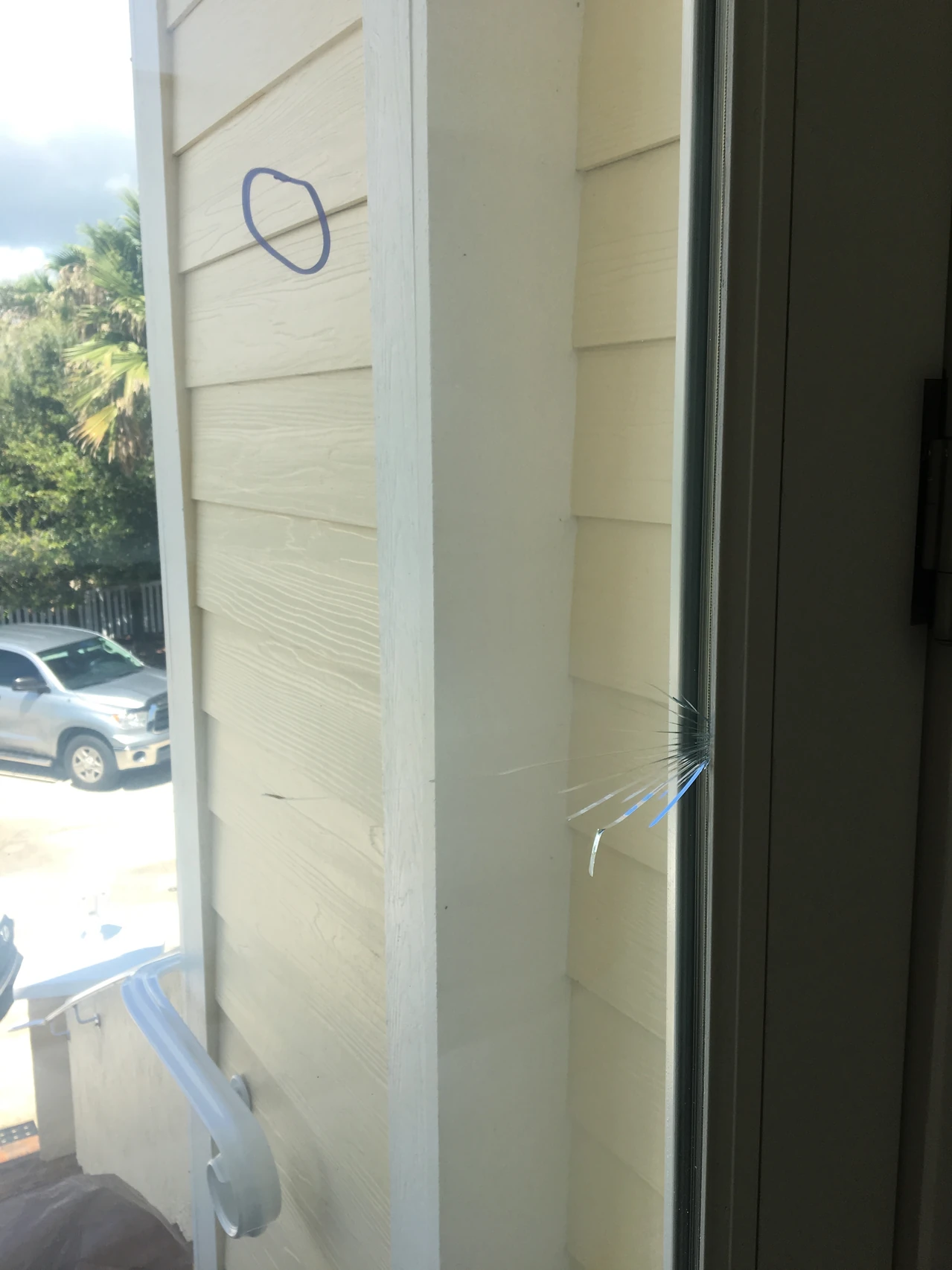
Replacement criterion
A documented condition under which replacing the lite or assembly is the recommended or required action instead of surface restoration.
Inspection and repair decisions
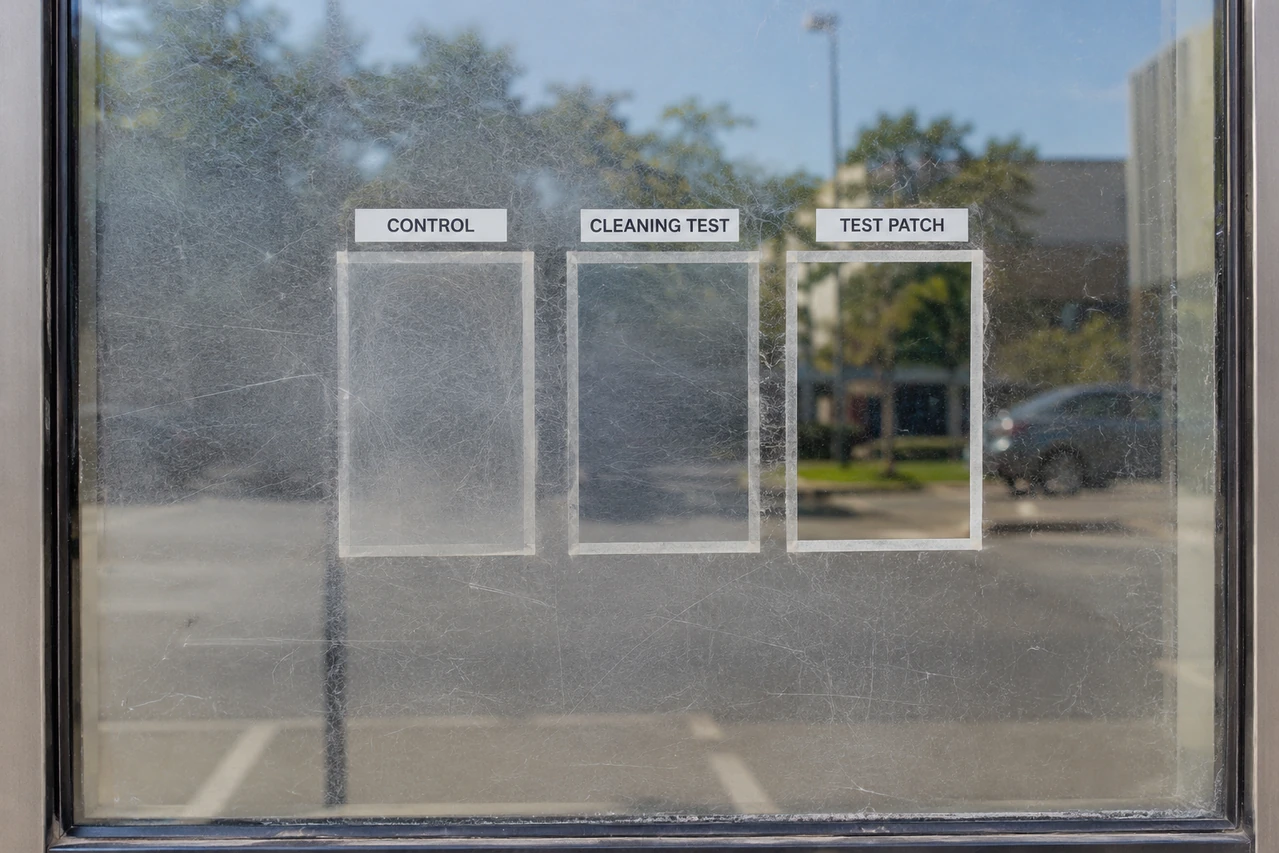
Representative test area
A selected area whose glass, damage, exposure, and proposed treatment reasonably represent the larger work scope.
Inspection and repair decisions
Residual stress
Stress that remains within glass after manufacturing, heat treatment, fabrication, assembly, or another process even when no current external load is applied.
Glass foundations
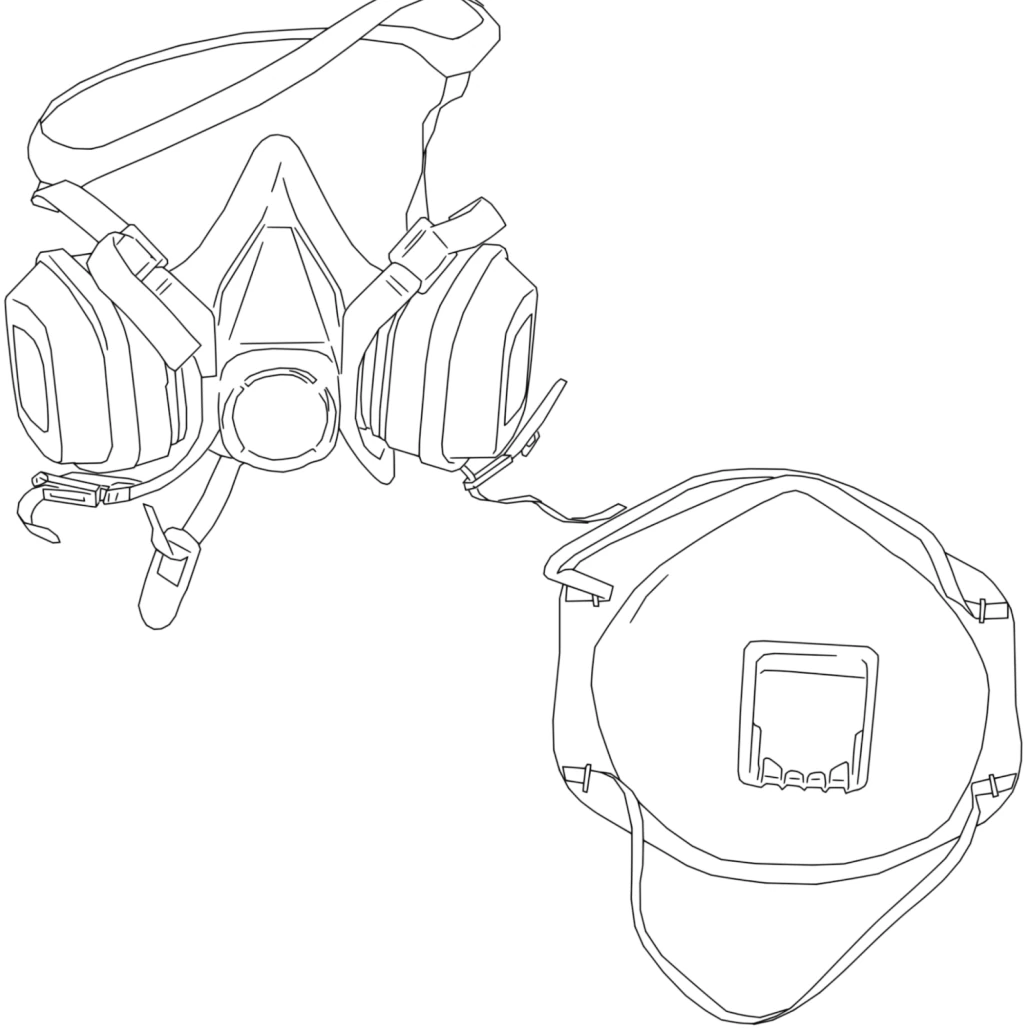
Respiratory protection
A regulated system of hazard evaluation, exposure control, respirator selection, medical evaluation, fit testing, training, use, maintenance, and program review when respirators are required.
Restoration processes and safety
Restoration feasibility
A practical evaluation of whether a proposed restoration can meet the agreed outcome given glass type, damage, access, risk, time, cost, appearance, and alternatives.
Inspection and repair decisions
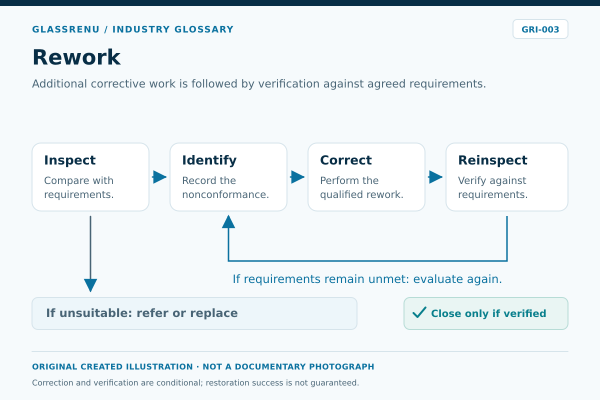
Rework
Additional processing or correction of nonconforming material or work so the specified requirements can be met.
Industry operations and project delivery
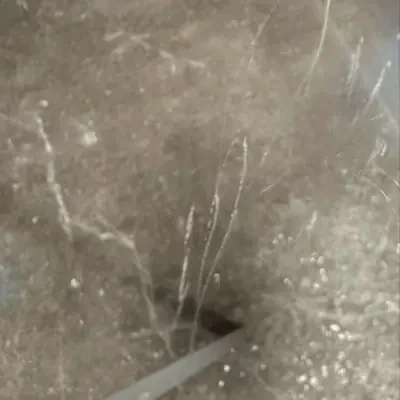
Rock or masonry impact damage
A chip, pit, scratch, or clustered surface flaw caused by rock, aggregate, mortar, masonry fragments, or similar hard debris striking or dragging across glass.
Damage categories and surface conditions
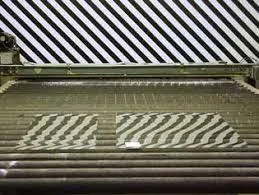
Roll-wave distortion
A repeating wave-like departure from flatness produced as softened glass travels over rollers during horizontal heat treatment.
Glass foundations
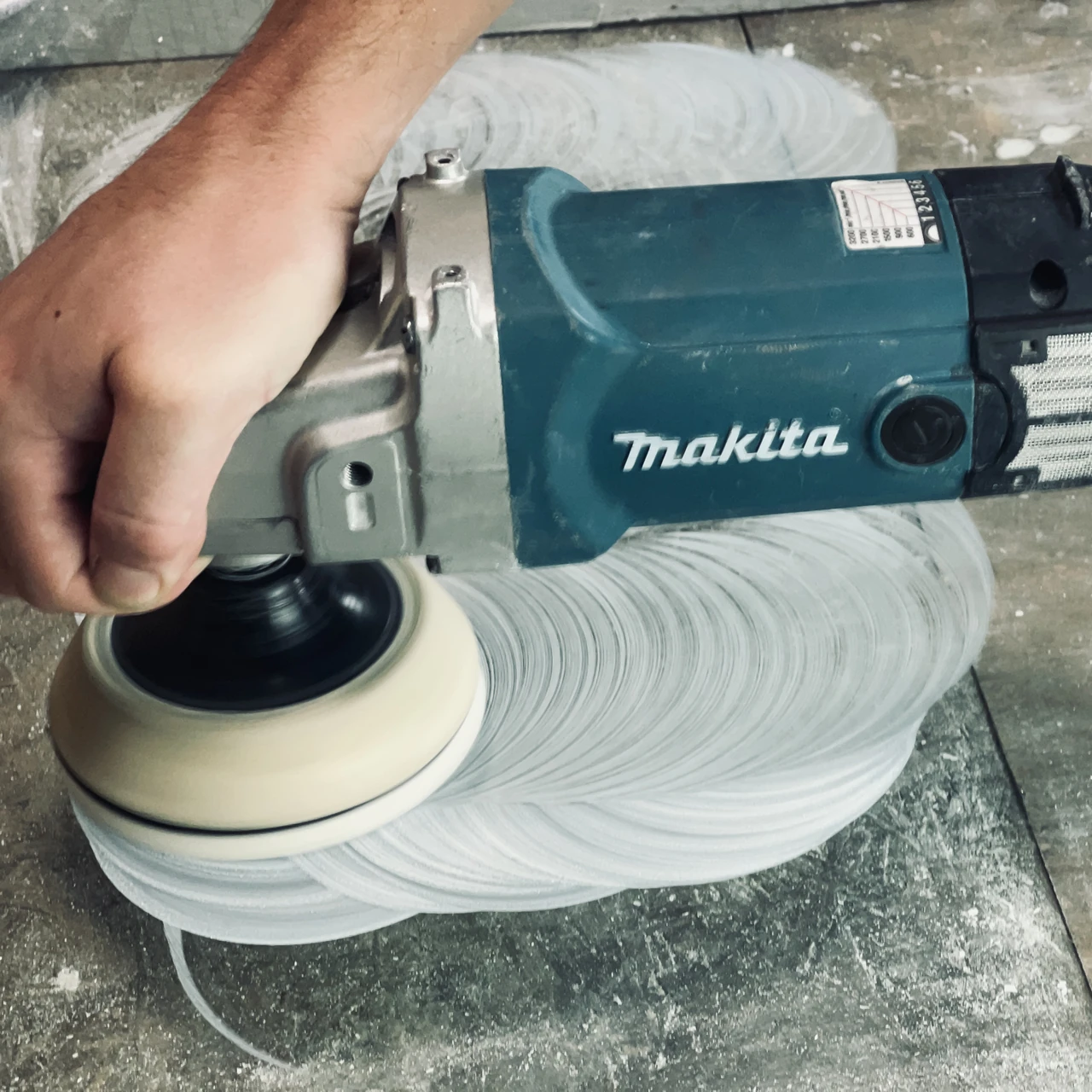
Rotational speed
The number of tool revolutions per unit time, commonly reported as revolutions per minute (RPM).
Restoration processes and safety
S
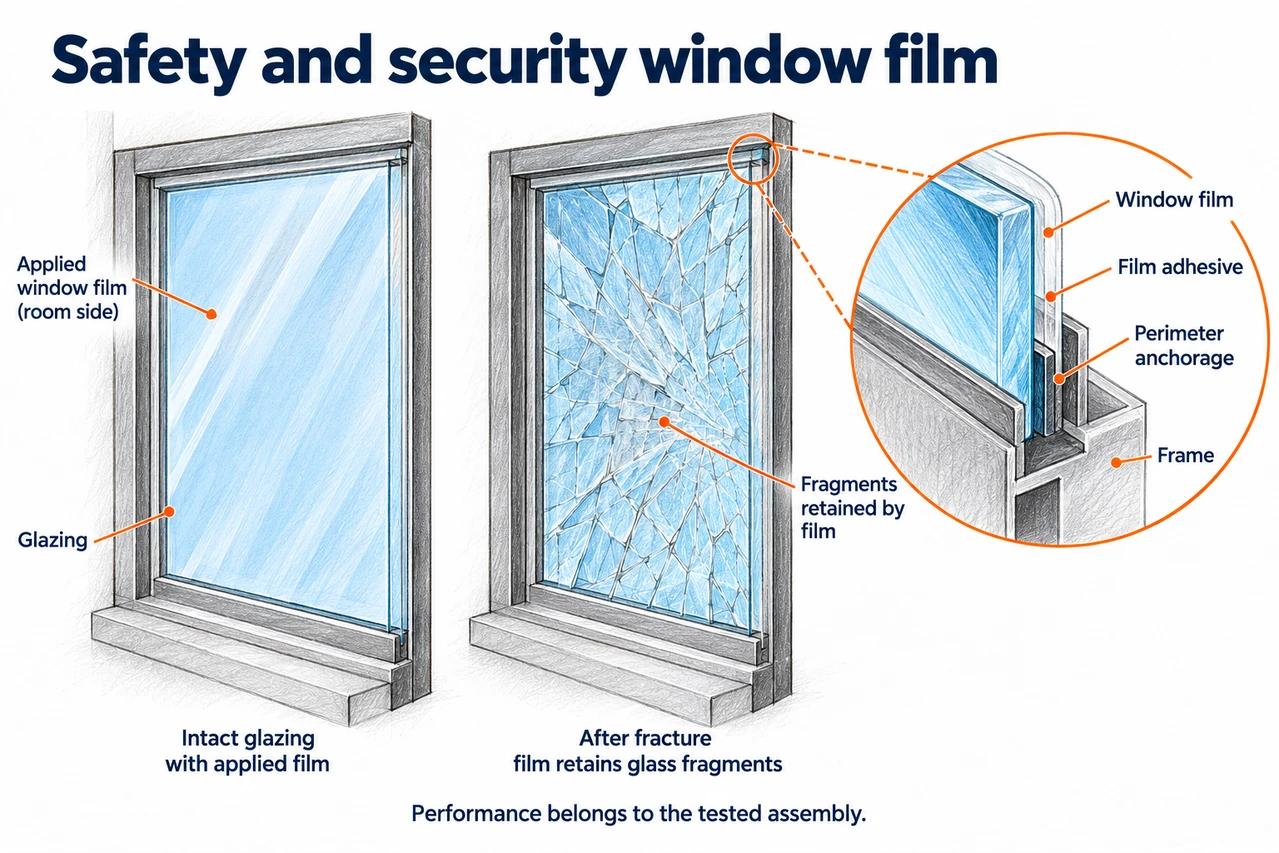
Safety and security window film
A post-applied film and, where specified, attachment system intended to improve fragment retention or tested resistance of an existing glazing assembly for defined hazards.
Glazing systems and specialty applications
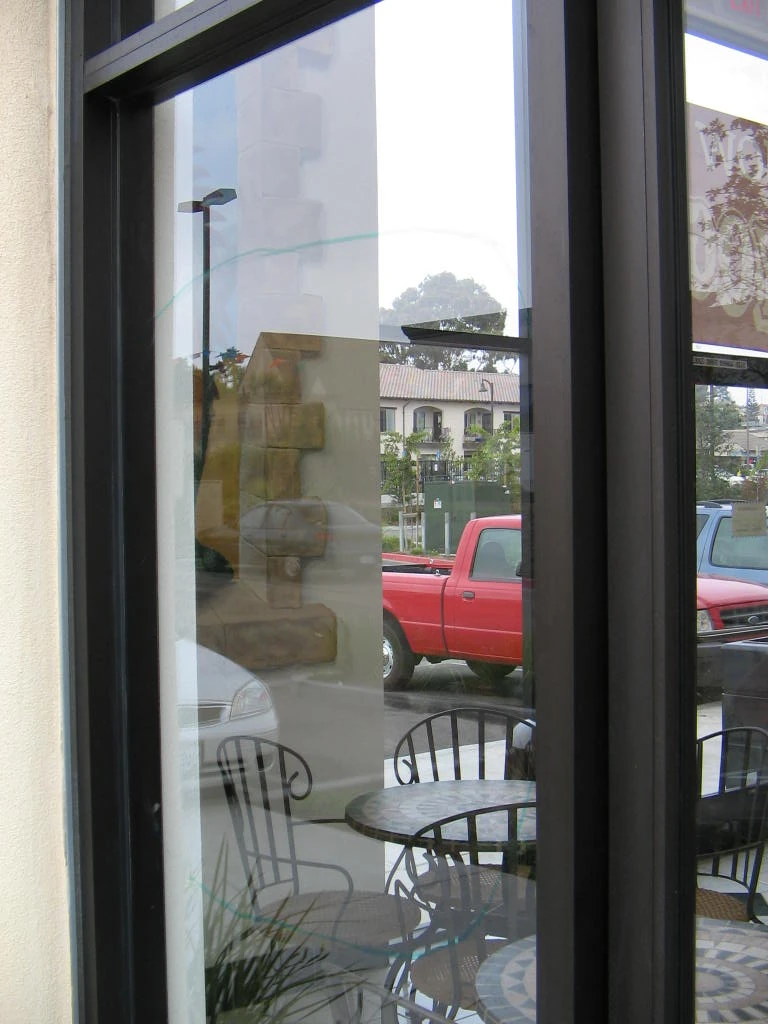
Safety glazing application
A location or product use where applicable law or code requires glazing that meets specified human-impact safety performance and identification requirements.
Glazing systems and specialty applications
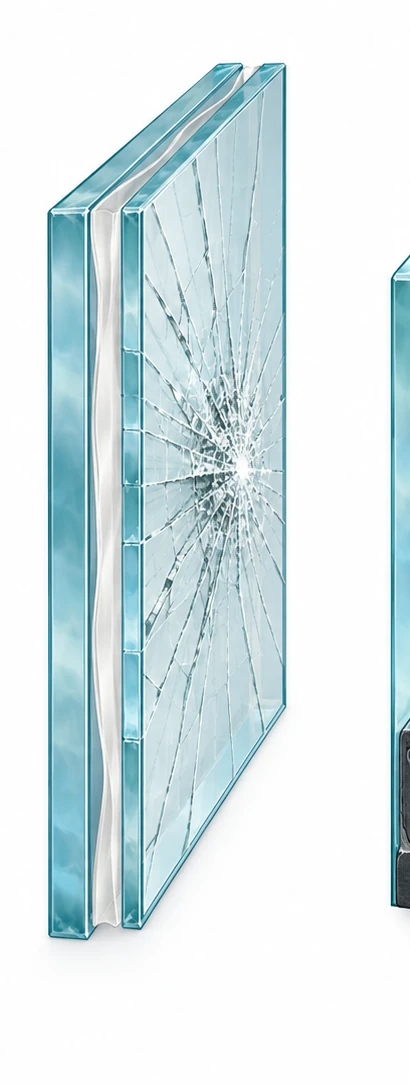
Safety glazing material
Glazing material that meets the applicable impact-safety requirements for a specified use and jurisdiction.
Glass foundations
Scrape
An elongated area of surface damage produced by sustained sliding contact that may include multiple grooves, transferred material, and edge pileup or chipping.
Damage categories and surface conditions
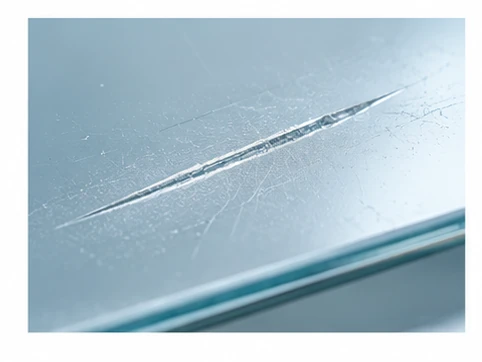
Scratch
An elongated surface-damage track produced when contact or an abrasive action displaces or removes material from glass.
Glass foundations
Scratch depth
The vertical distance from an established original or surrounding surface reference to the deepest measured part of a scratch groove.
Damage categories and surface conditions
Scratch field
An area containing many scratches whose combined distribution is more relevant than any single line.
Damage categories and surface conditions
Scratch width
The measured lateral width of a scratch at a stated surface reference, magnification, or intensity boundary.
Damage categories and surface conditions
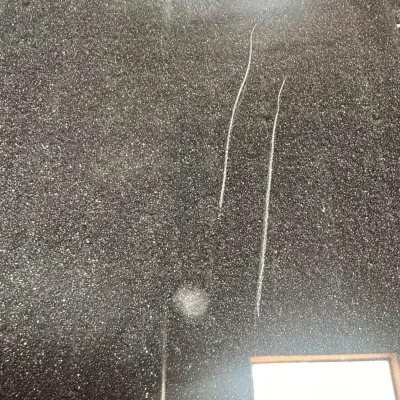
Scuff
A broad, shallow-looking rubbed area made up of fine abrasion, transferred material, gloss change, or a mixture of these effects.
Damage categories and surface conditions
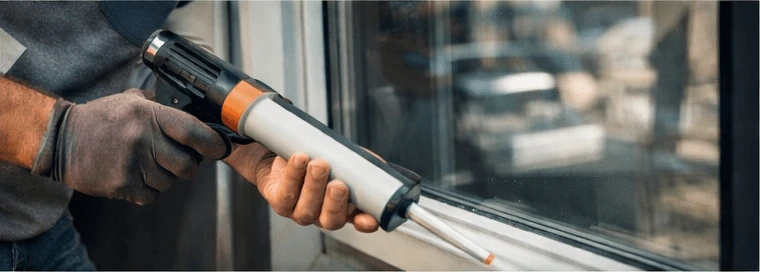
Sealant runoff
Material released from or carried across sealants, gaskets, waterproofing products, or joint compounds and deposited on glass by water or gravity.
Deposits and contamination
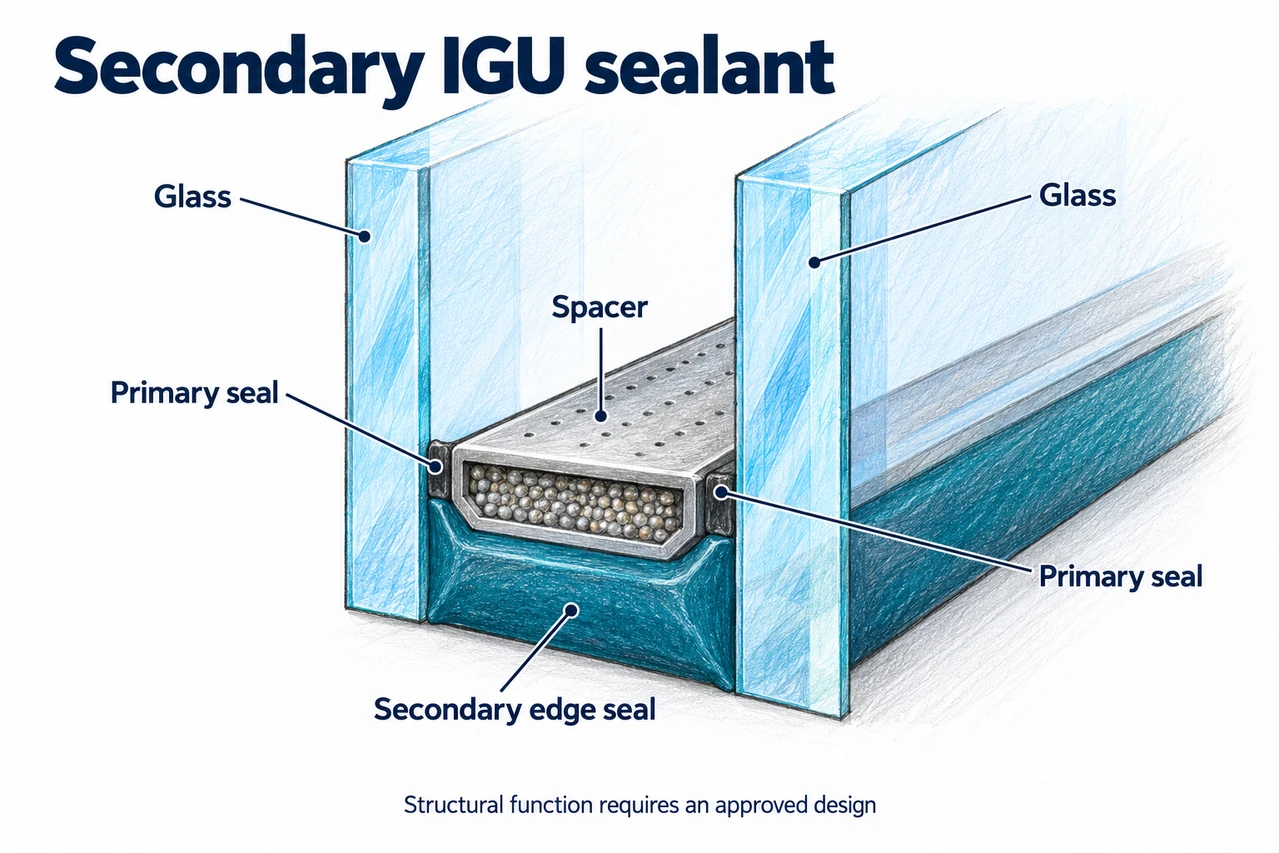
Secondary IGU sealant
The outer edge-seal material in a dual-seal insulating glass unit, used to provide durability, adhesion, mechanical restraint, and, in structural glazing, a specifically designed structural function.
Glazing systems and specialty applications
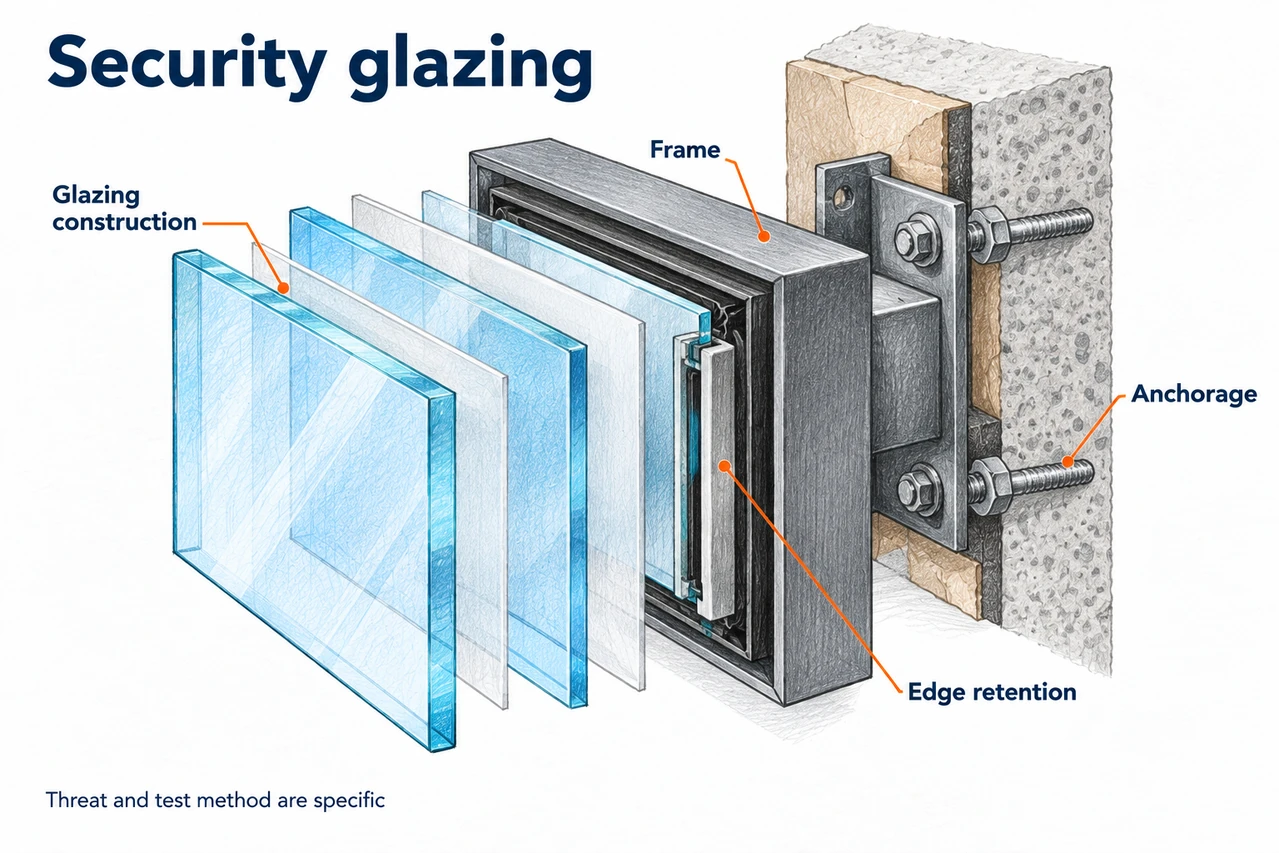
Security glazing
A glazing material or complete system designed and tested for resistance to one or more defined threats such as forced entry, ballistic impact, containment, blast, or physical attack.
Glazing systems and specialty applications
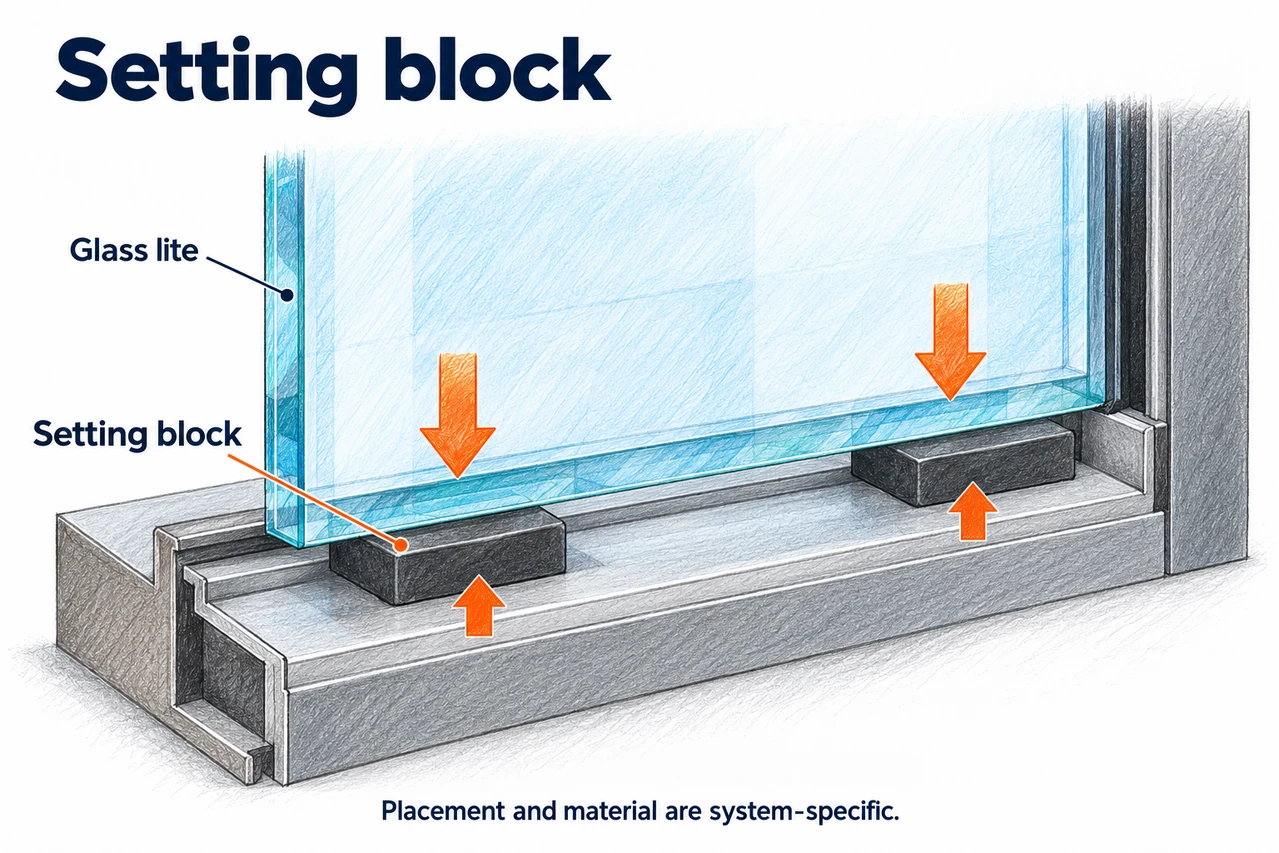
Setting block
A load-bearing glazing accessory placed beneath or at specified locations around a lite to support, position, and distribute glass weight or system loads.
Glazing systems and specialty applications
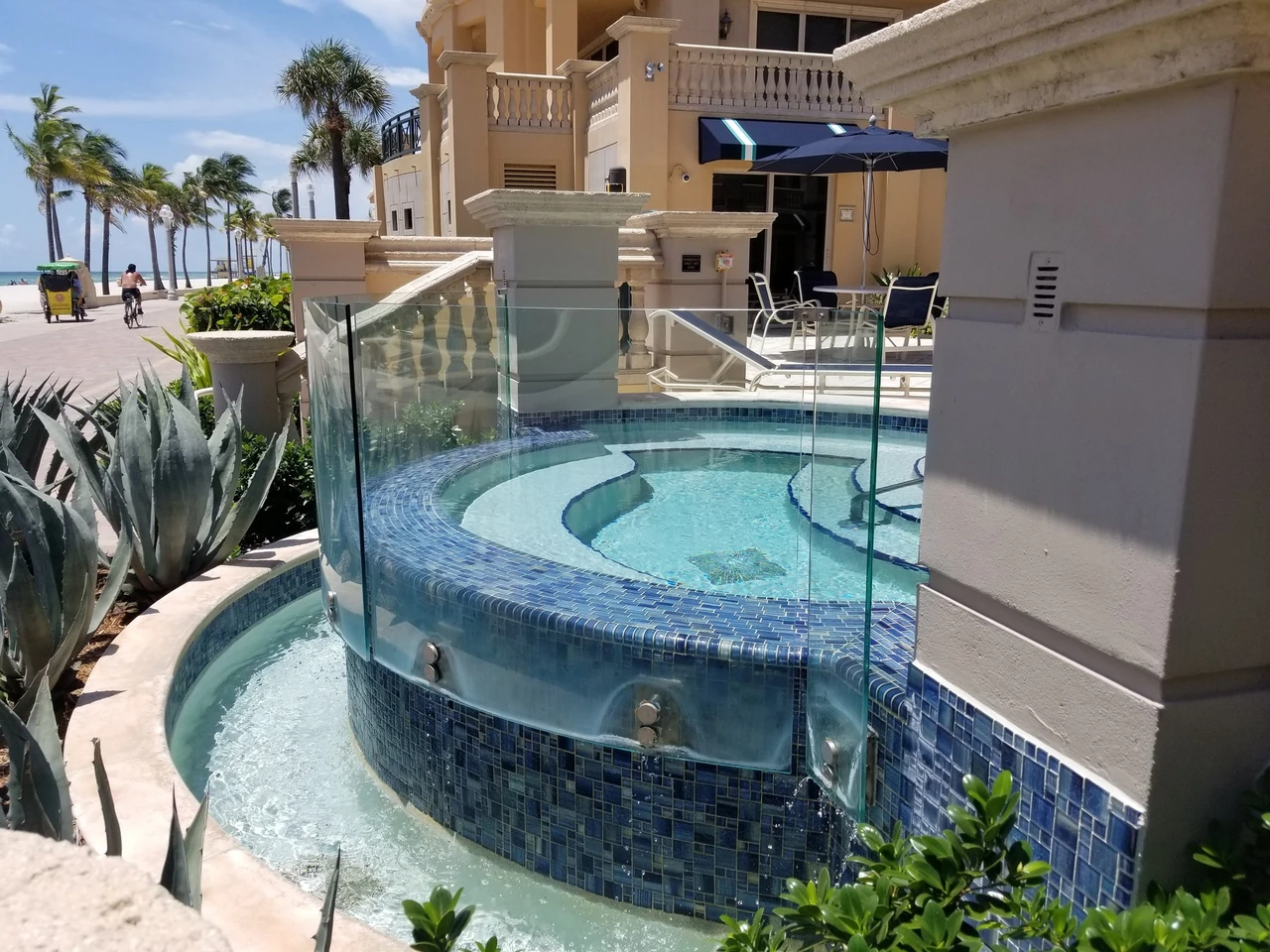
Silicate deposit
A deposit containing silicate material carried in solution or suspension and left on glass after runoff dries.
Deposits and contamination
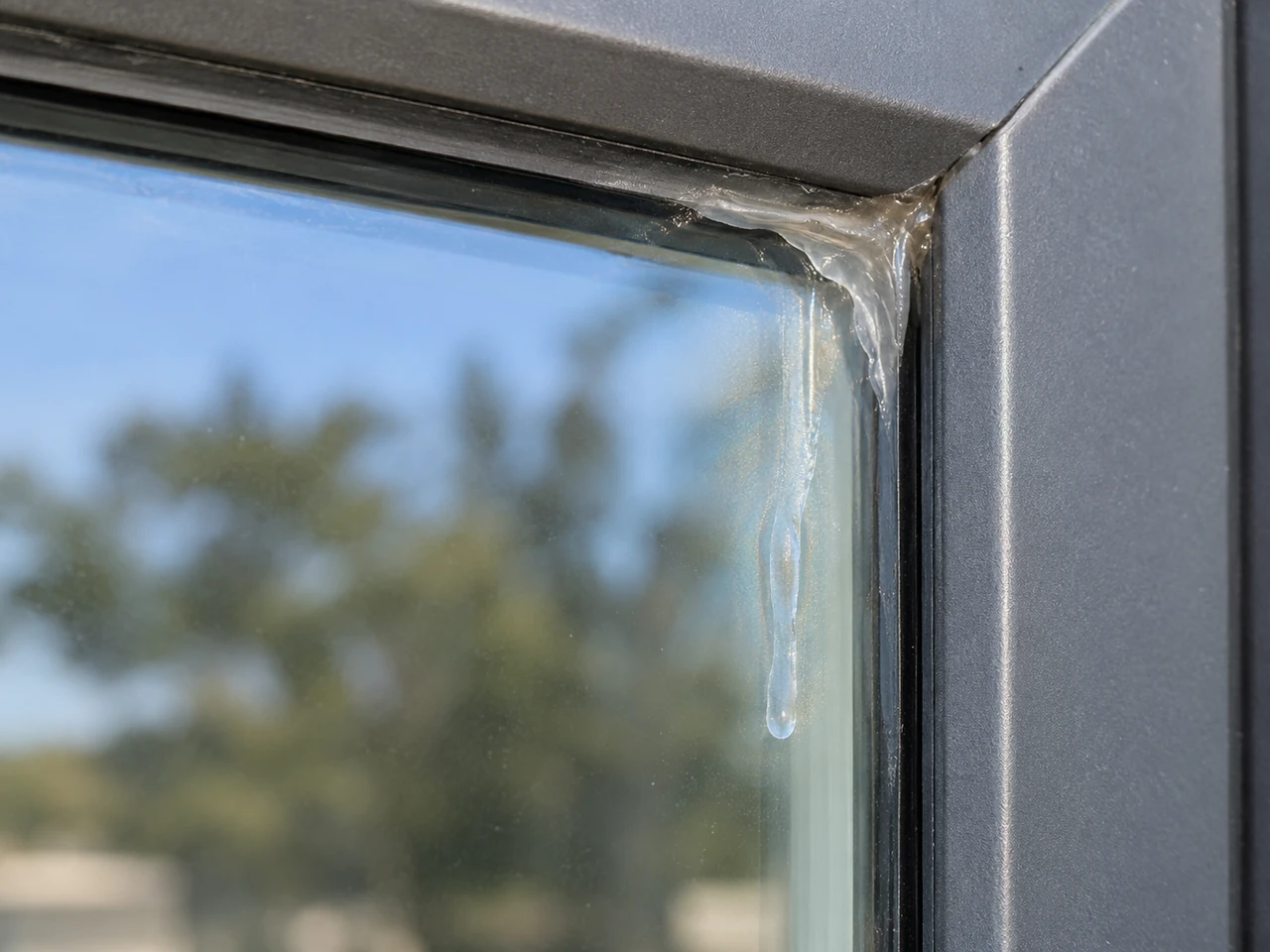
Silicone contamination
Silicone-bearing material transferred to a glass or coating surface from sealants, lubricants, gaskets, handling, or adjacent work.
Deposits and contamination
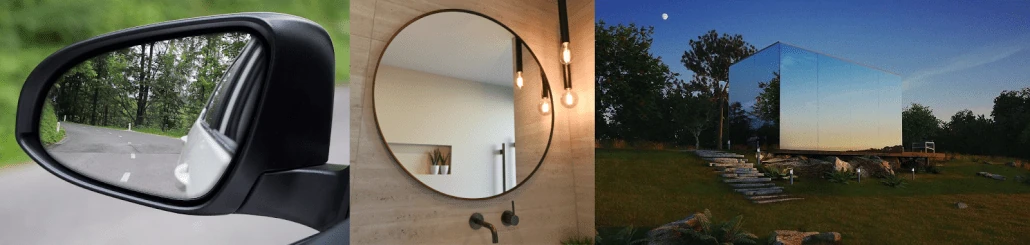
Silvered flat-glass mirror
Annealed flat glass with a reflective metallic backing, normally protected by additional backing layers for interior mirror use.
Glass foundations
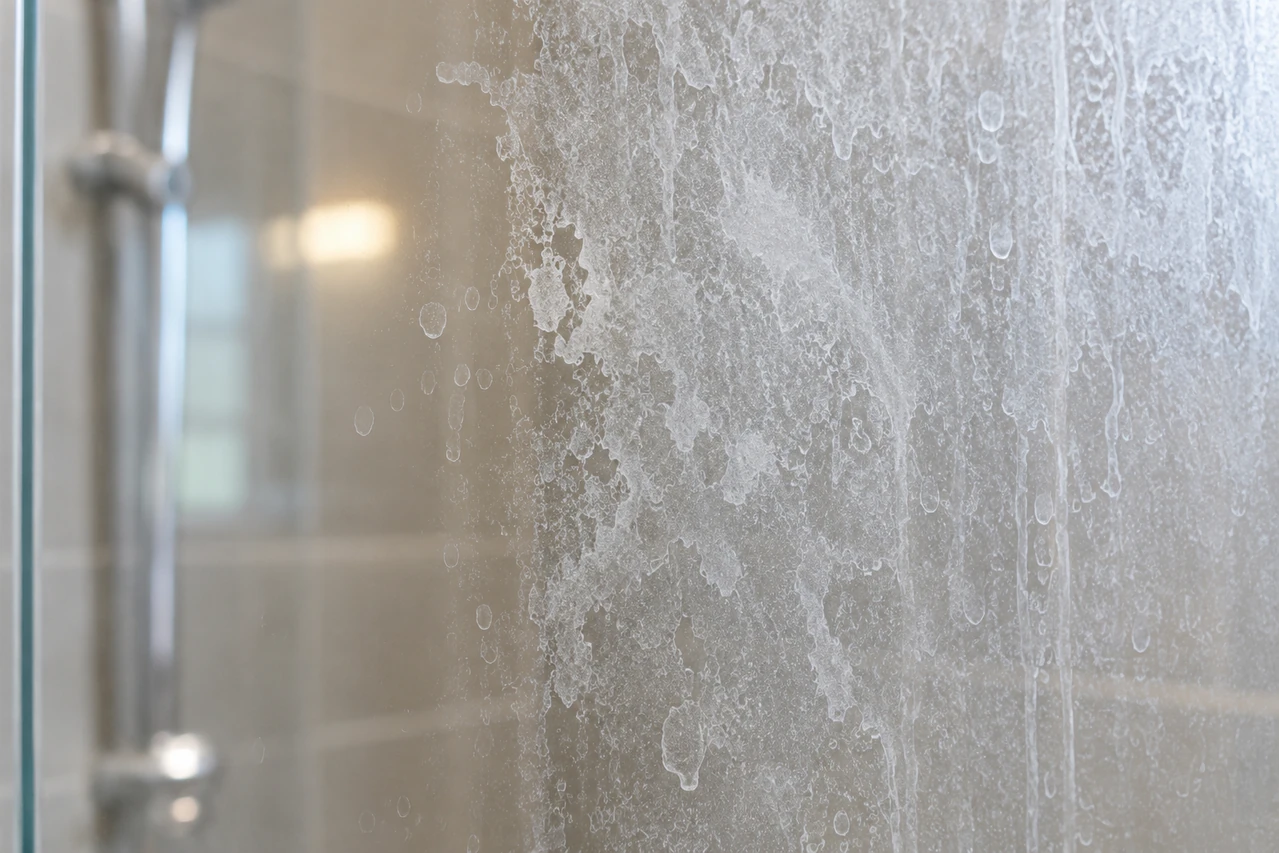
Soap scum
An insoluble or poorly soluble residue formed when soap reacts with hardness minerals and mixes with oils, soil, or other material.
Deposits and contamination
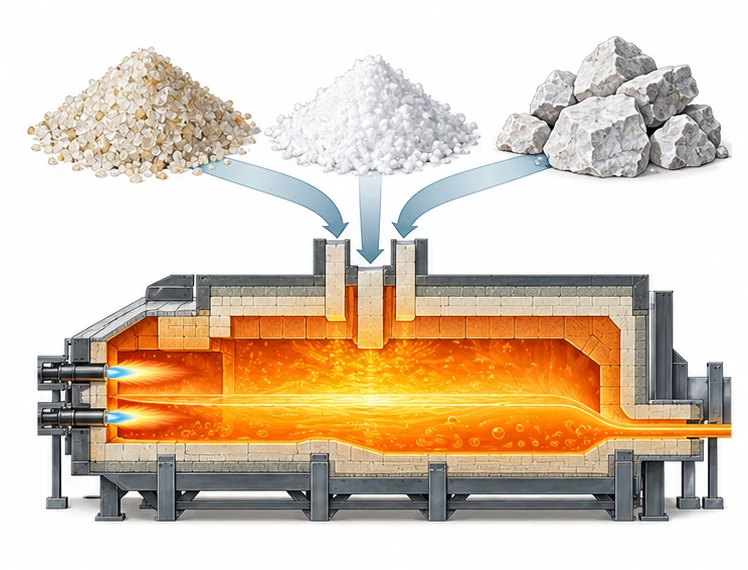
Soda-lime-silicate glass
The dominant commercial glass family made mainly from silica with sodium- and calcium-containing ingredients that make the glass practical to melt and chemically stable enough for common use.
Glass foundations
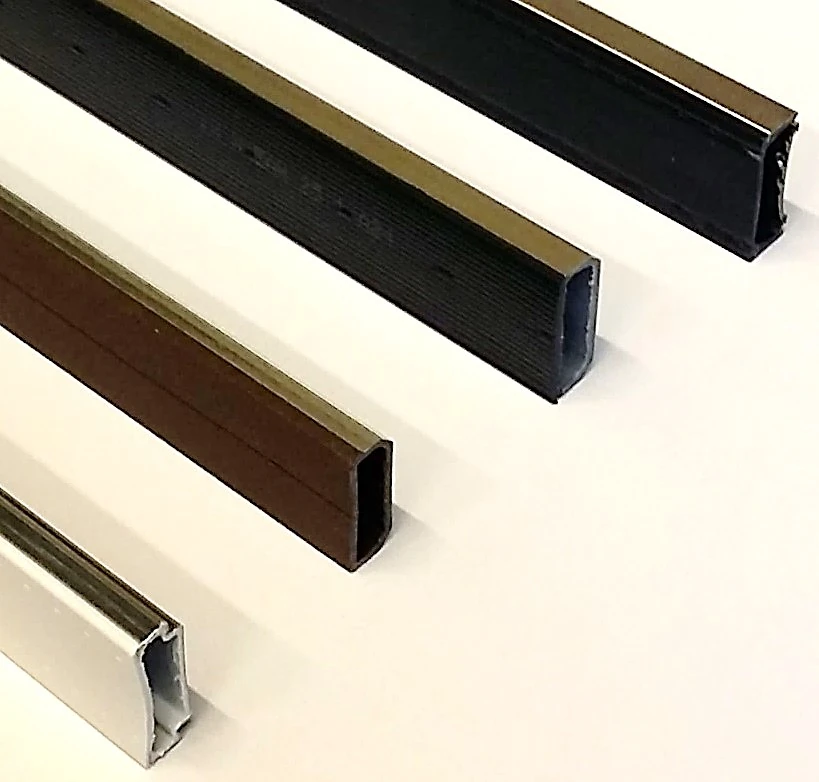
Spacer
The perimeter component that separates IGU lites and helps establish cavity width, edge-seal geometry, and often a reservoir or path for desiccant.
Glazing systems and specialty applications
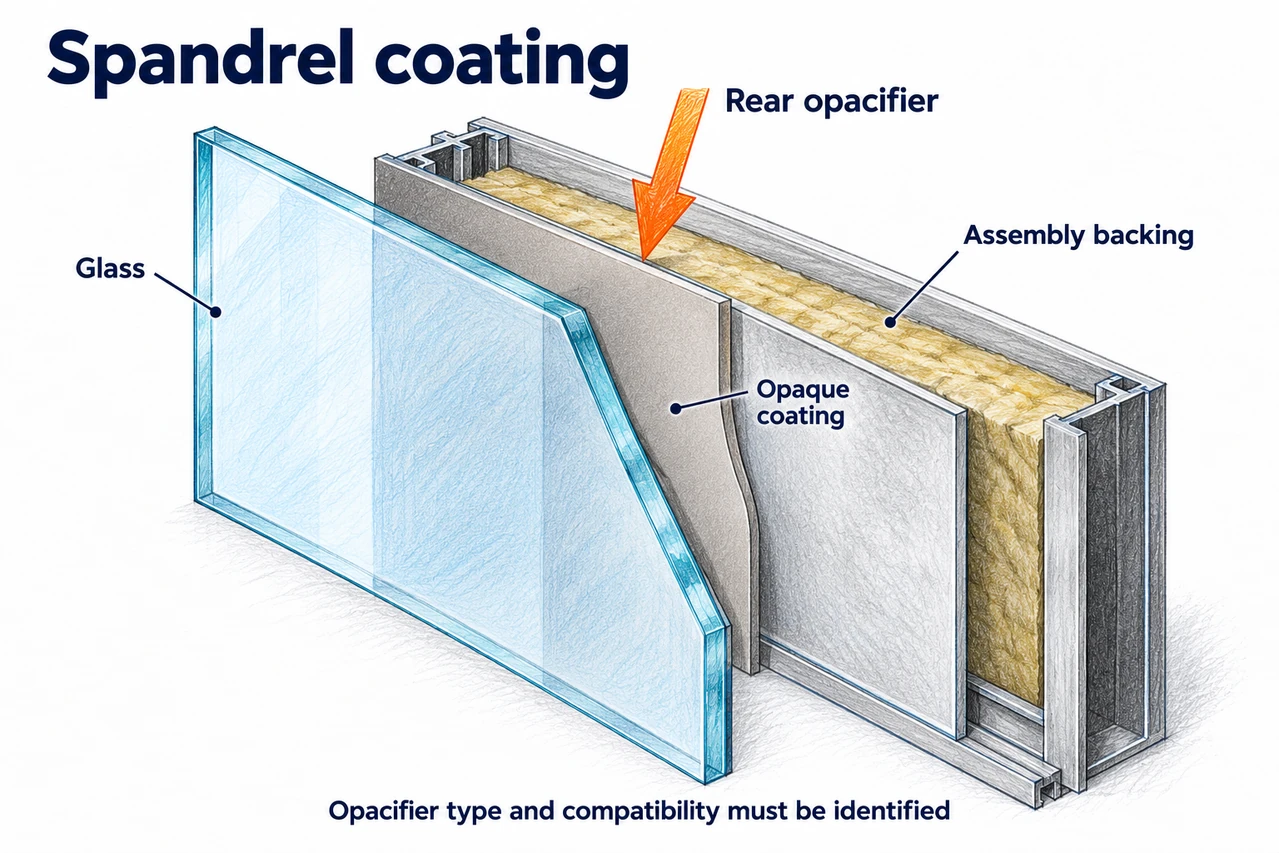
Spandrel coating
An opaque or obscuring coating or opacifier applied to glass used in spandrel or other nonvision applications.
Glazing systems and specialty applications
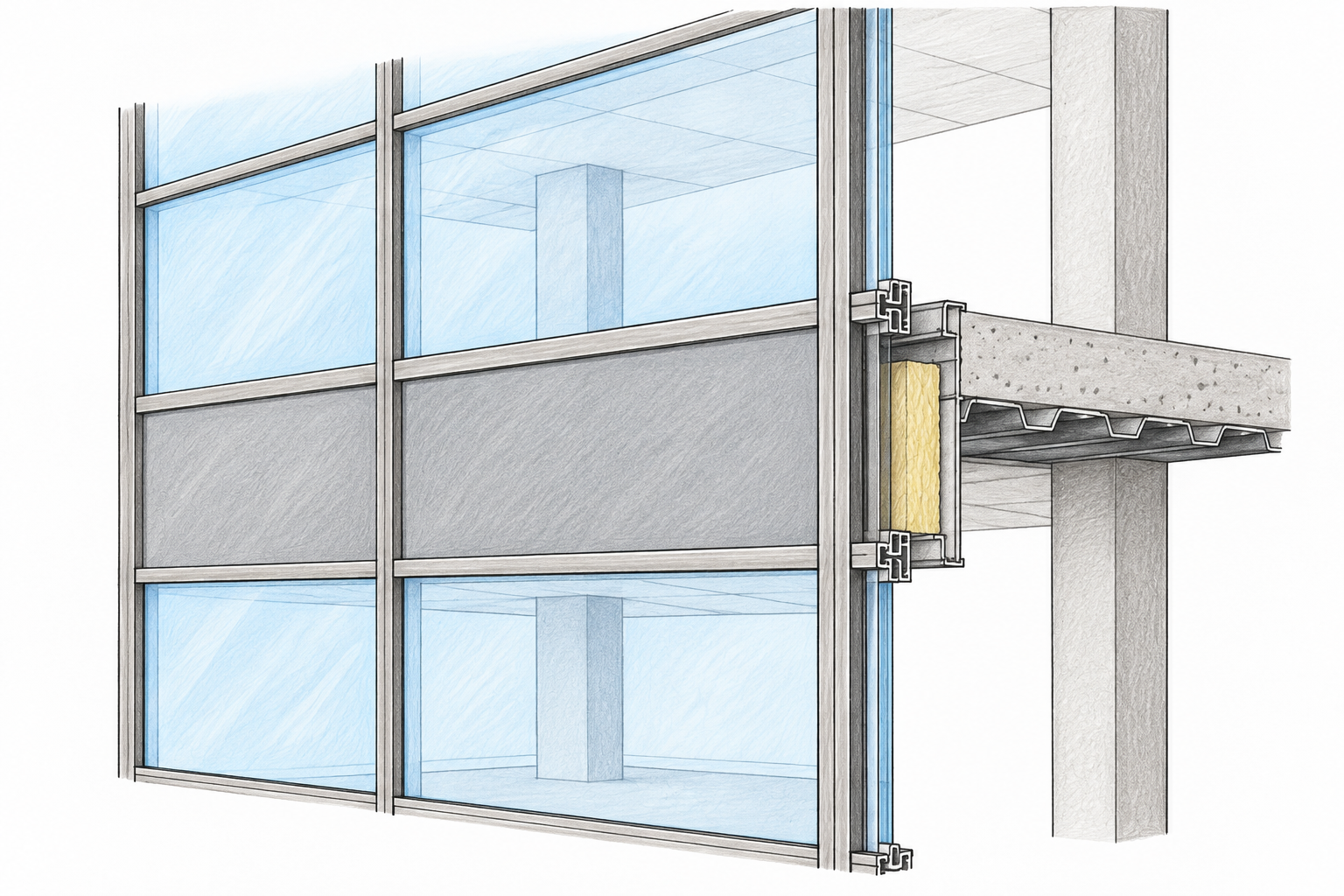
Spandrel glazing
Opaque or visually obscured glazing used in nonvision areas, commonly to conceal floor edges, columns, insulation, or other building components.
Glazing systems and specialty applications · Window & architectural glass systems
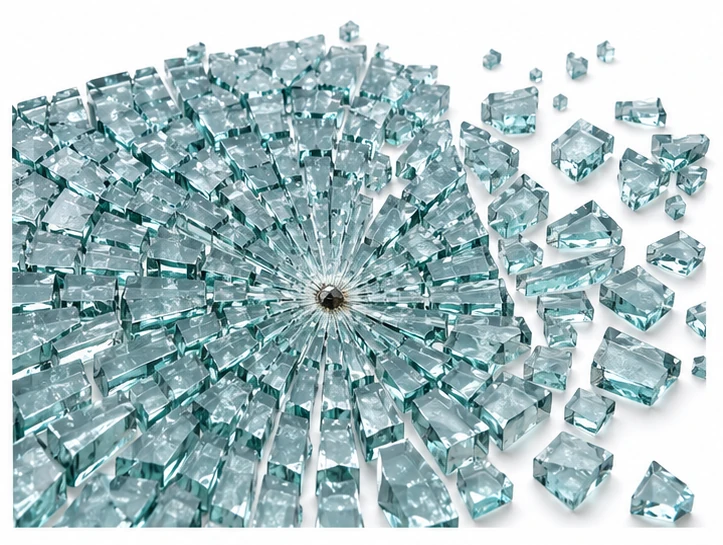
Spontaneous glass breakage
Breakage that occurs without an immediately observed impact or other obvious triggering event.
Glass foundations
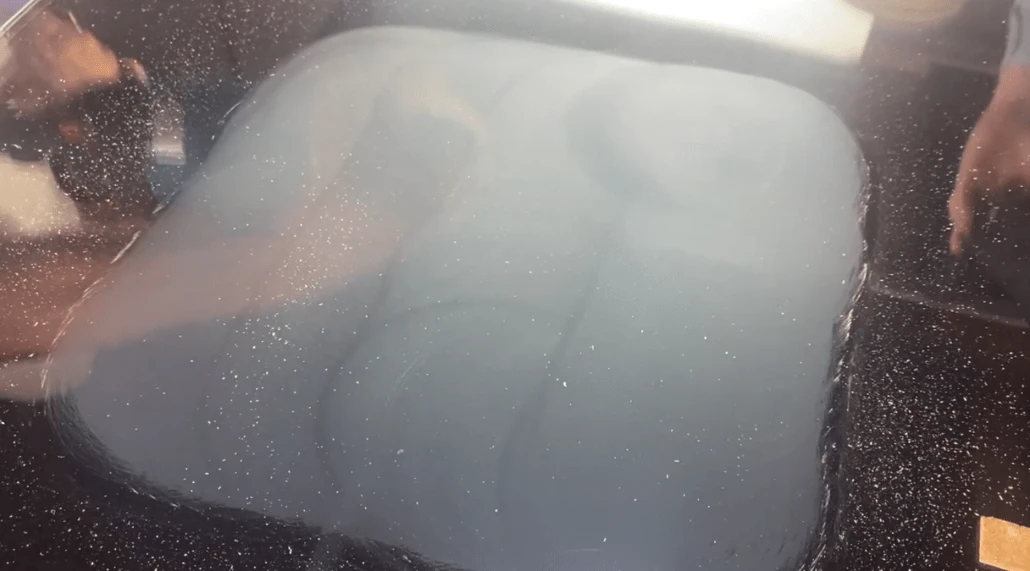
Stage progression
The controlled sequence from more aggressive damage removal through progressively finer refinement and final polishing.
Restoration processes and safety
Stain
A visible discoloration or appearance change associated with material on, in, or chemically interacting with a surface.
Deposits and contamination
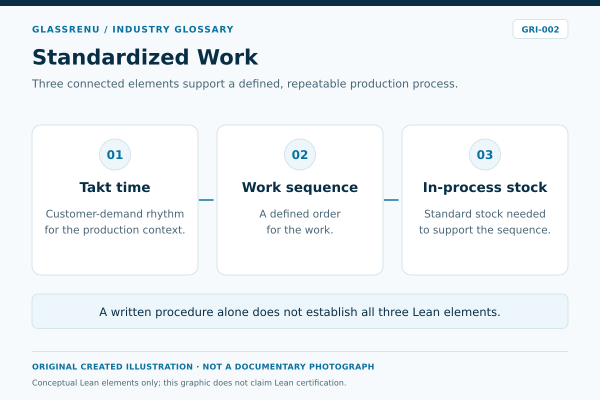
Standardized Work
In Lean production, a defined work arrangement combining takt time, the sequence of work and the standard in-process stock needed to perform that sequence.
Industry operations and project delivery
Stop-work condition
A predefined observation or event that requires work to pause immediately until the condition is evaluated and authorization to continue is documented.
Inspection and repair decisions
Structural evaluation
A qualified analysis of whether a glass lite or assembly satisfies stated load, support, safety, service, and condition requirements.
Inspection and repair decisions
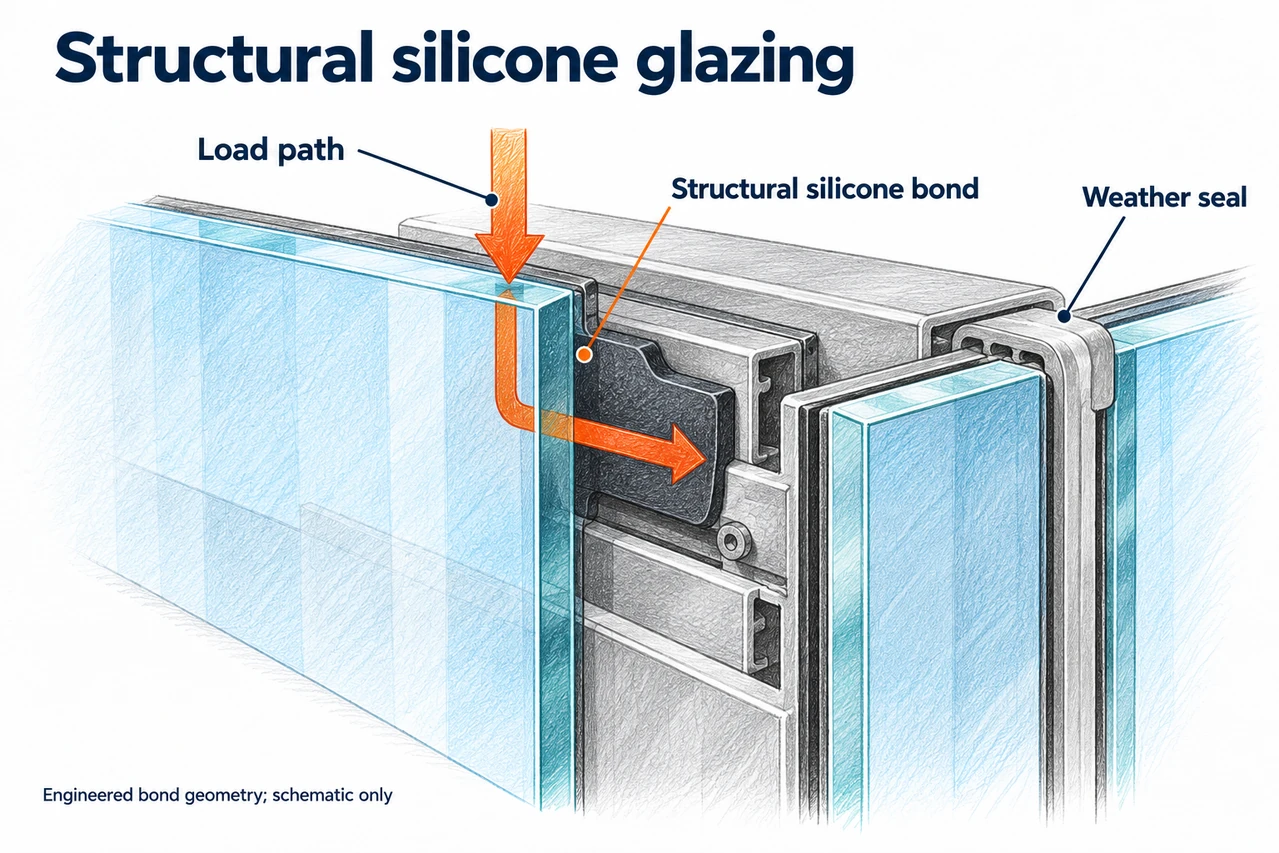
Structural silicone glazing
A glazing method in which a qualified structural silicone sealant transfers specified loads between glass or panels and supporting framing.
Glazing systems and specialty applications
Suction-cup ring
A Category 1 surface contaminant that appears as a circular or partial-ring mark where a suction cup contacted the glass during lifting, handling, transport, or installation.
Damage categories and surface conditions
Surface blemish
A visible surface condition that departs from the specified appearance of glass or a coating under a defined inspection method.
Damage categories and surface conditions
Surface compression
A compressive stress state at or near a glass surface, intentionally increased by heat strengthening or tempering.
Glass foundations
Surface contamination
Unwanted material present on a glass or coating surface that is not part of the intended glass construction.
Deposits and contamination
Surface film
A thin, broadly distributed layer of foreign material that changes the appearance, wetting, or feel of a glass surface.
Deposits and contamination
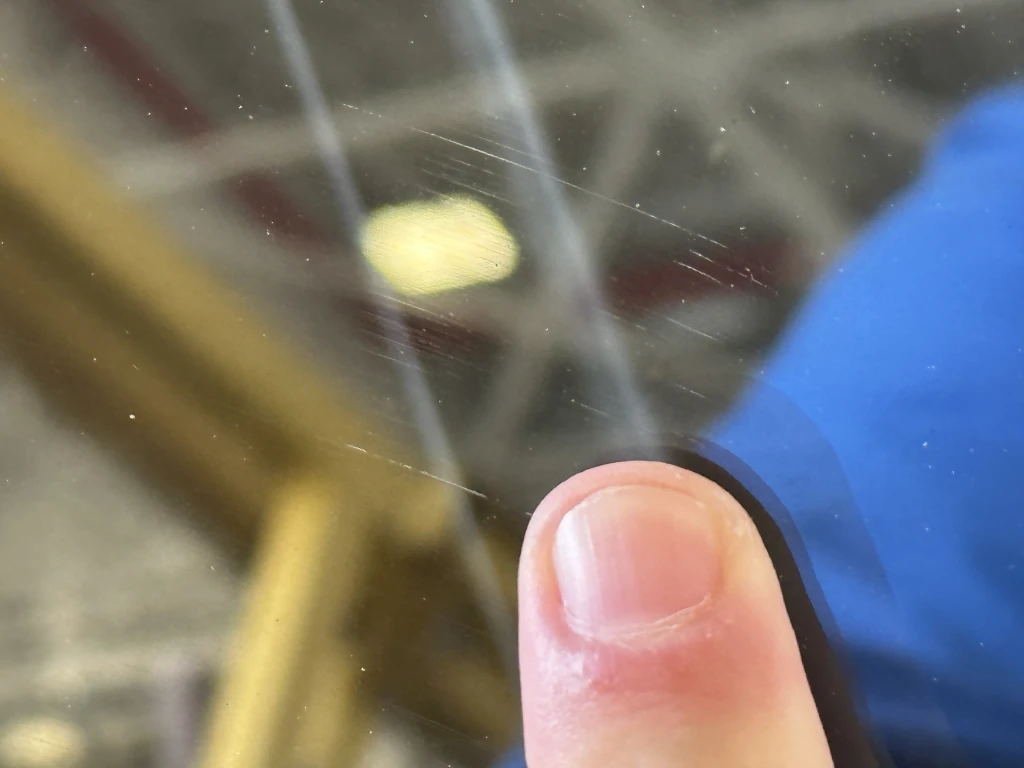
Surface flaw
A localized discontinuity or damaged region at a glass surface that can concentrate stress and reduce practical strength.
Glass foundations
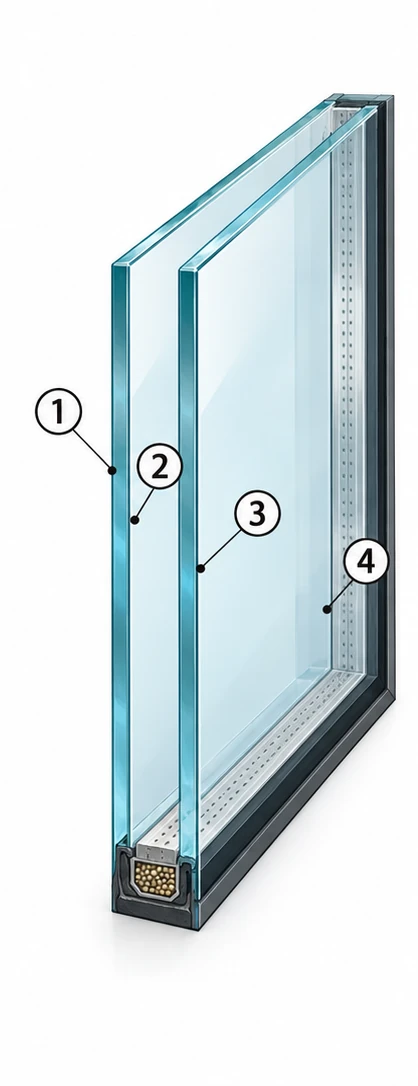
Surface identification
Determination of which physical glass face is exposed and whether it carries a coating, film, frit, paint, treatment, residue, or other layer.
Inspection and repair decisions
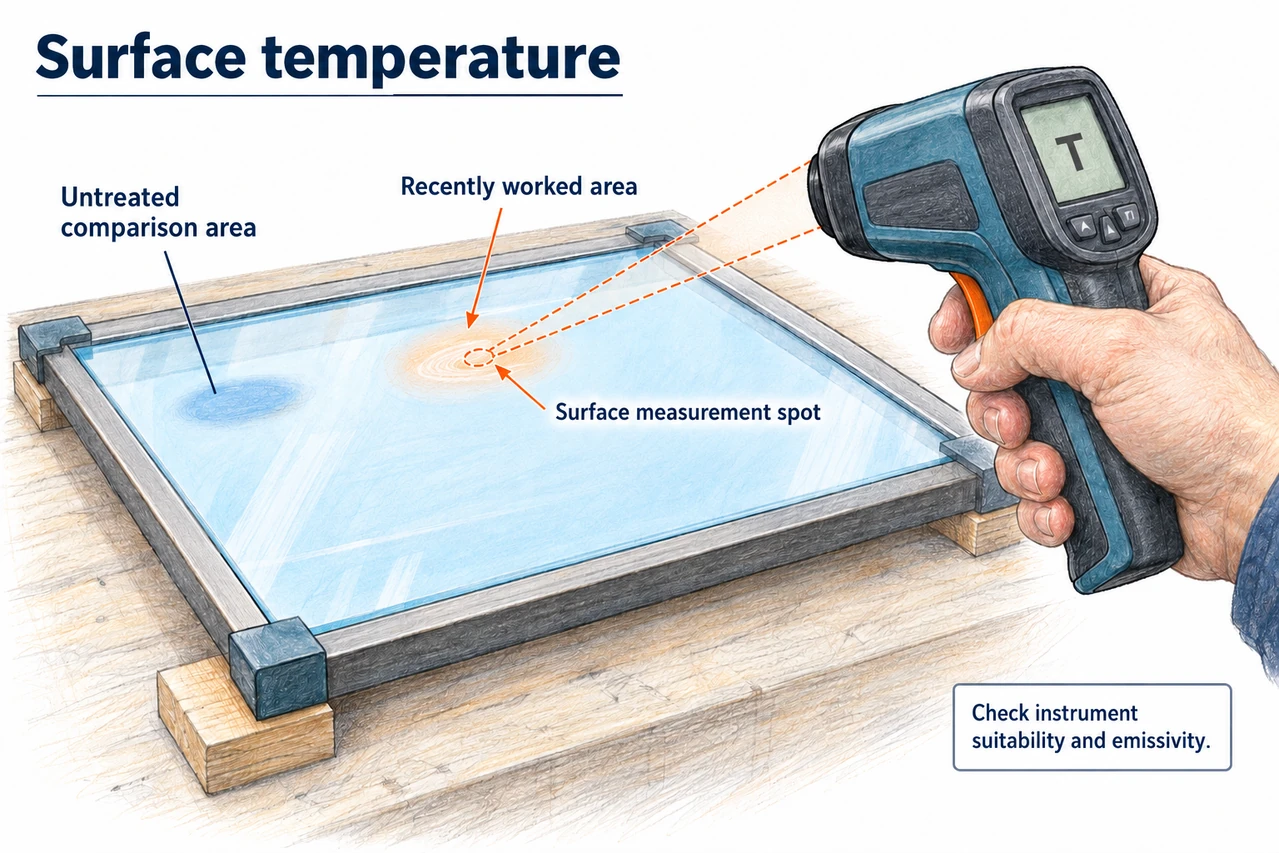
Surface temperature
The temperature measured at a specified glass-surface location, time, area, and instrument configuration.
Restoration processes and safety
Surface-number verification
Confirmation of the conventional surface number for the face being inspected or treated within a monolithic, laminated, or insulating glass construction.
Inspection and repair decisions
T
Test patch
A small, documented trial of a proposed cleaning or restoration method performed before broader treatment.
Inspection and repair decisions
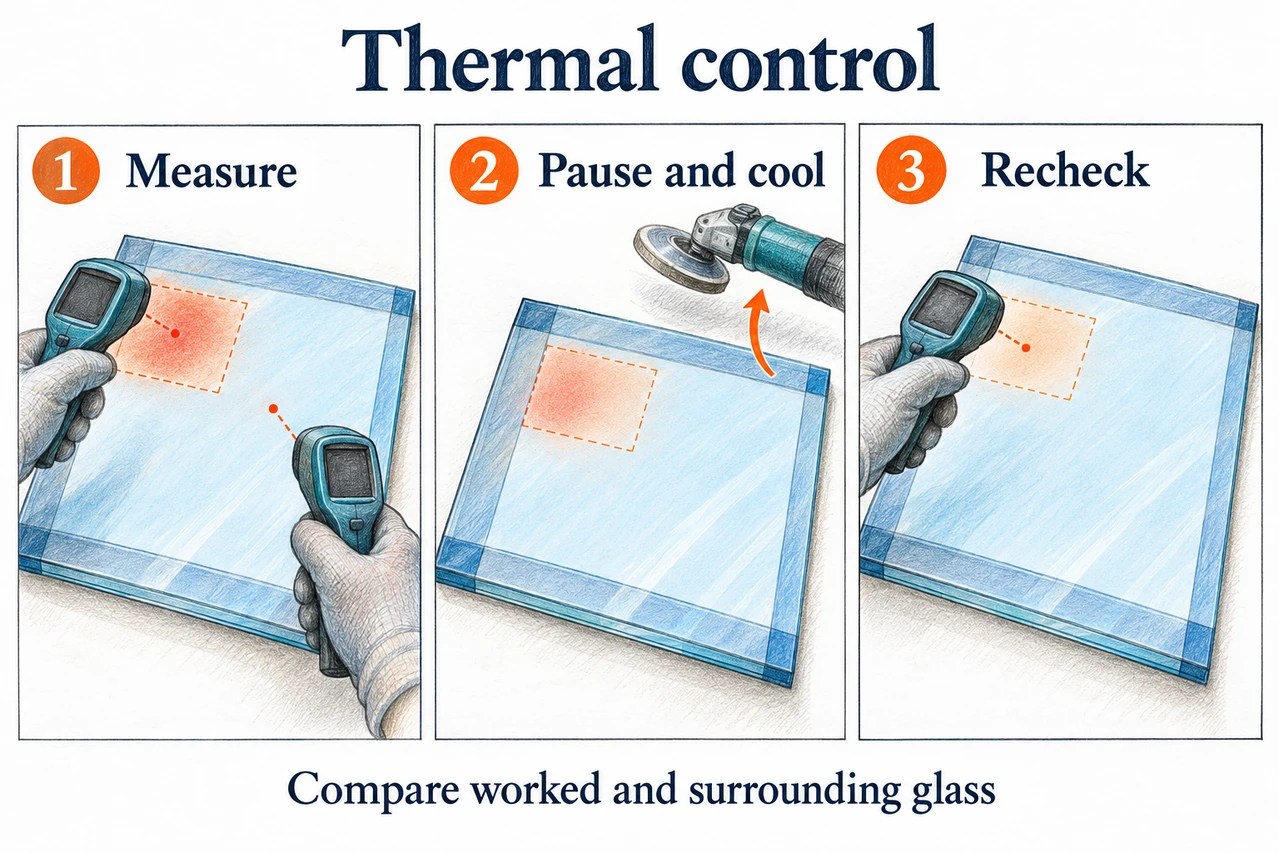
Thermal control
The planned monitoring and adjustment of process variables to keep glass, interlayers, coatings, tools, and surrounding materials within validated temperature and gradient limits.
Restoration processes and safety
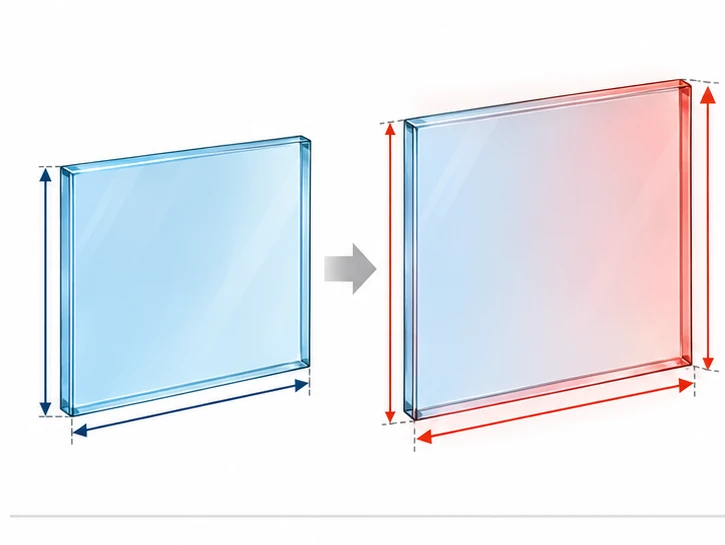
Thermal expansion
The dimensional change a material undergoes as its temperature changes.
Glass foundations
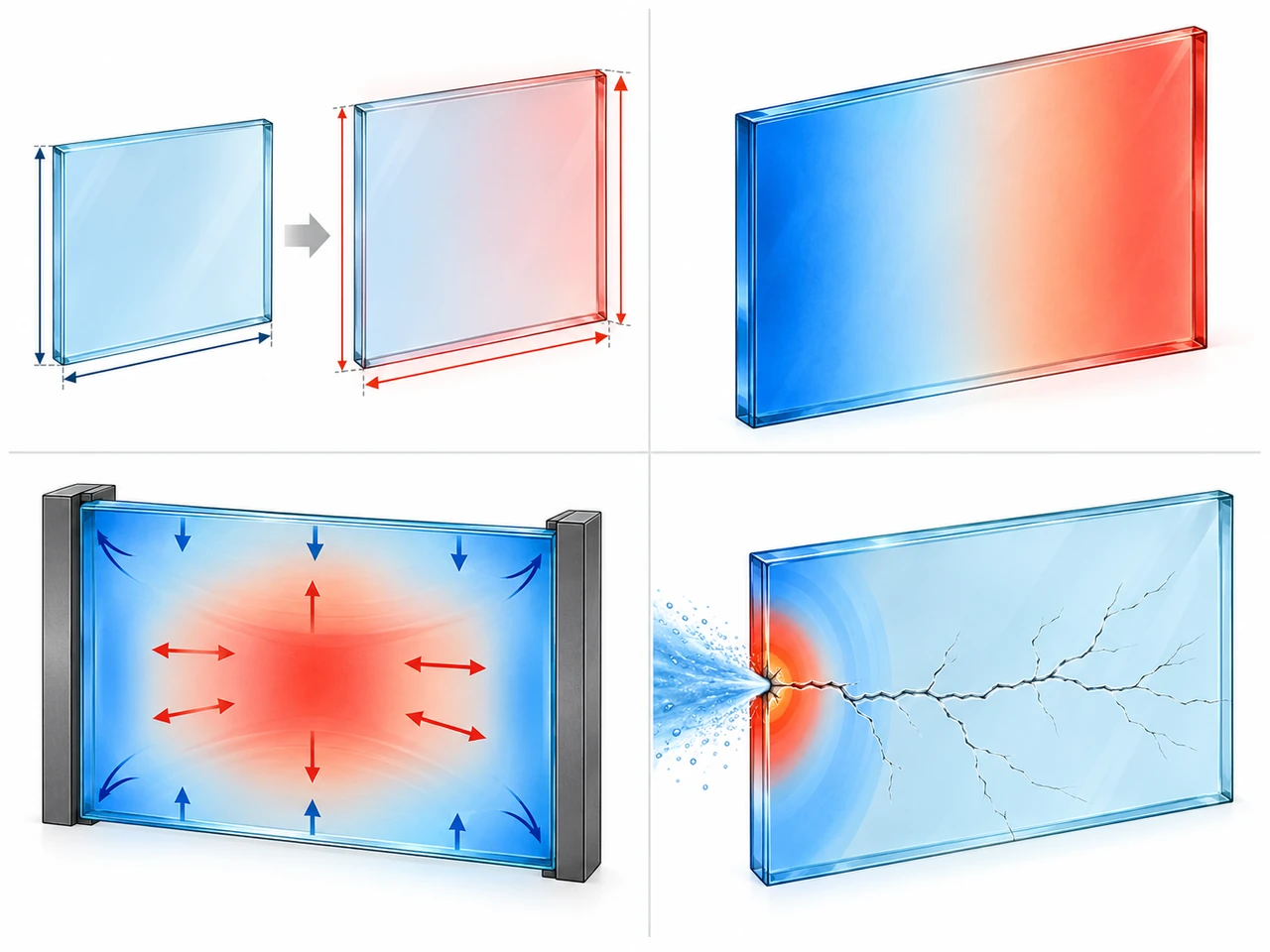
Thermal gradient
A difference in temperature between locations within the same glass lite or assembly.
Glass foundations
Thermal shock
A rapid temperature change or severe temperature difference that creates enough stress to crack or break glass.
Glass foundations
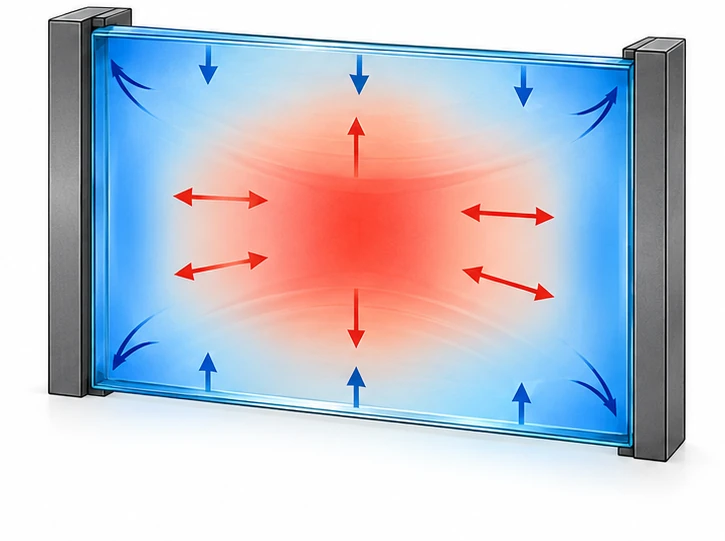
Thermal stress
Mechanical stress produced when parts of a glass lite expand or contract by different amounts because of temperature differences or restraint.
Glass foundations
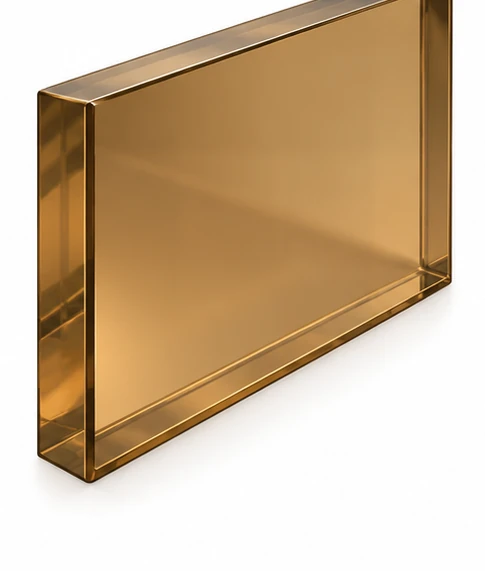
Through-body tinted glass
Glass colored by ingredients added to the glass composition so the tint extends through the thickness of the lite.
Glass foundations
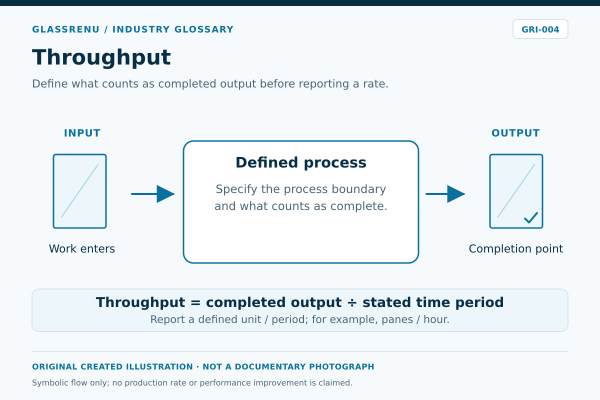
Throughput
The quantity of completed output delivered by a defined process during a stated period, expressed with clear units and counting rules.
Industry operations and project delivery
Transmitted distortion
Alteration of an image seen through glass rather than in reflection from its surface.
Damage categories and surface conditions
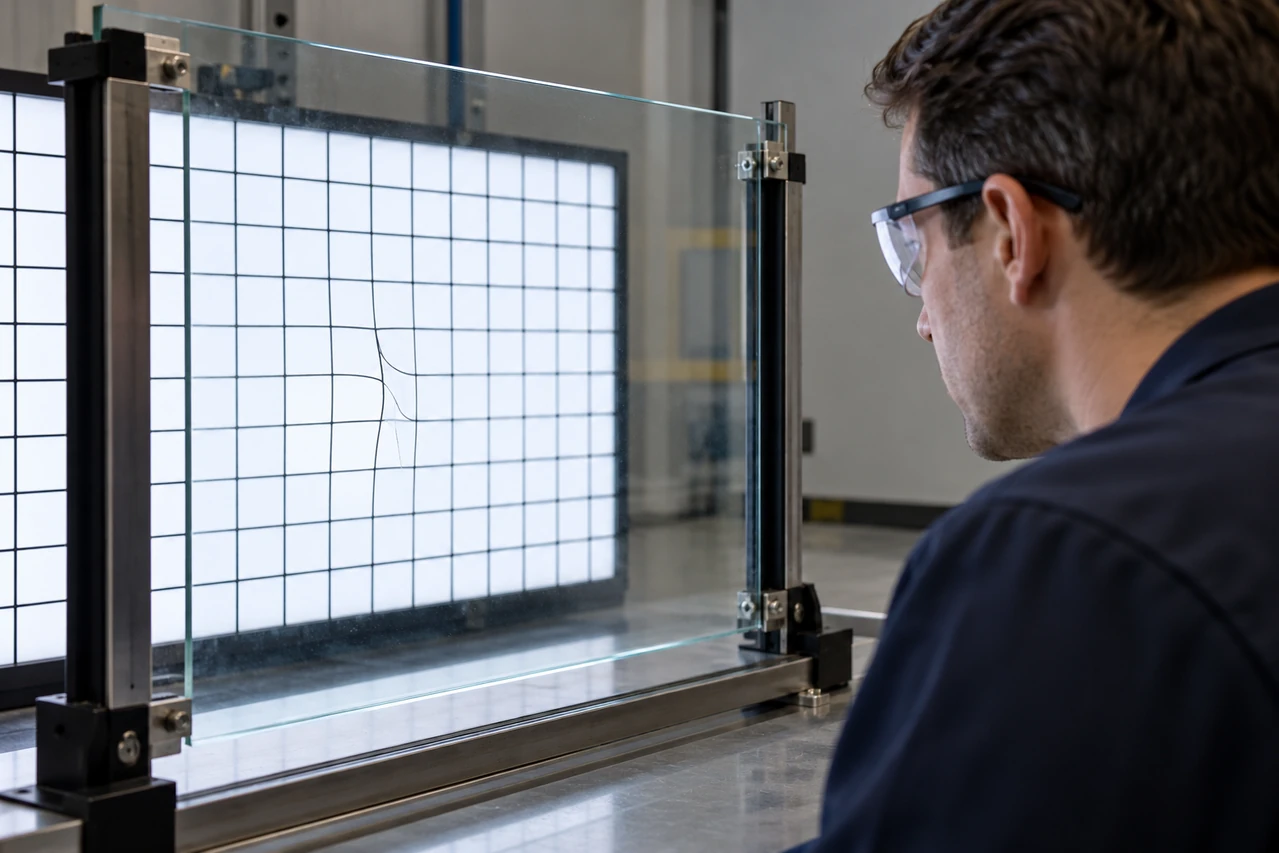
Transmitted-light inspection
Evaluation of glass by observing light, a scene, or a target through the glazing.
Inspection and repair decisions
V

Vacuum-deposition coating (MSVD)
A thin-film coating deposited onto glass in a vacuum, commonly by magnetron sputtering after the glass ribbon has formed.
Glass foundations
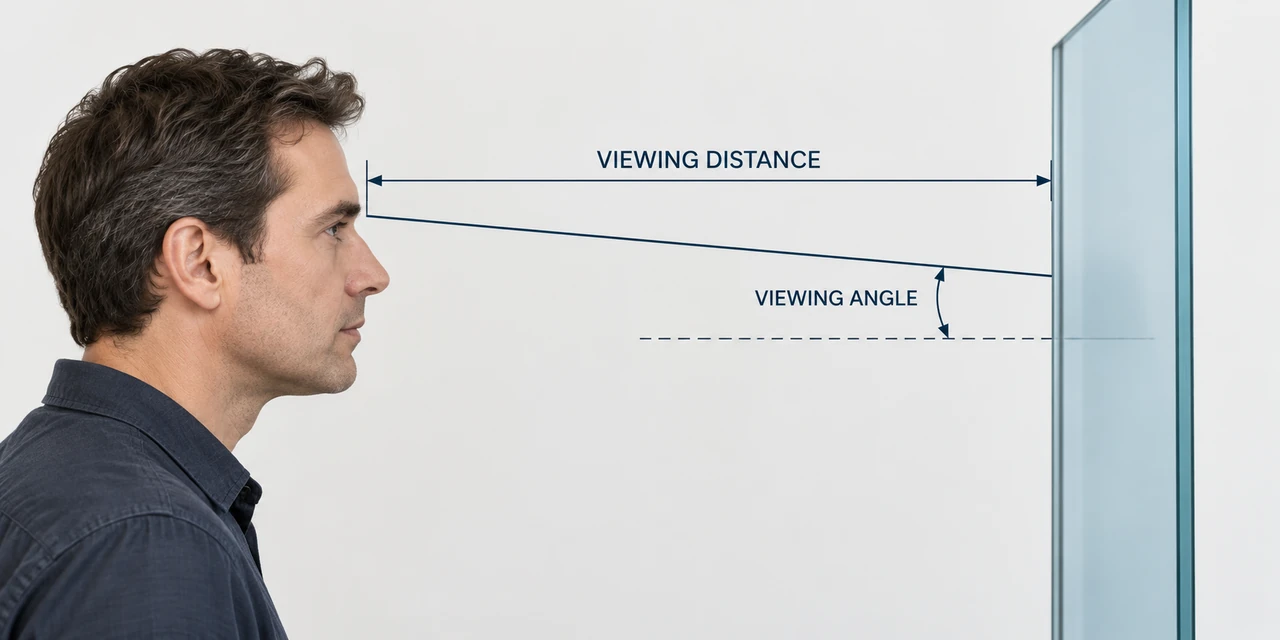
Viewing angle
The observer's or camera's orientation relative to the glass surface and the incident or reflected light during inspection.
Inspection and repair decisions
Viewing distance
The measured separation between the observer or camera and the glass during a stated inspection.
Inspection and repair decisions
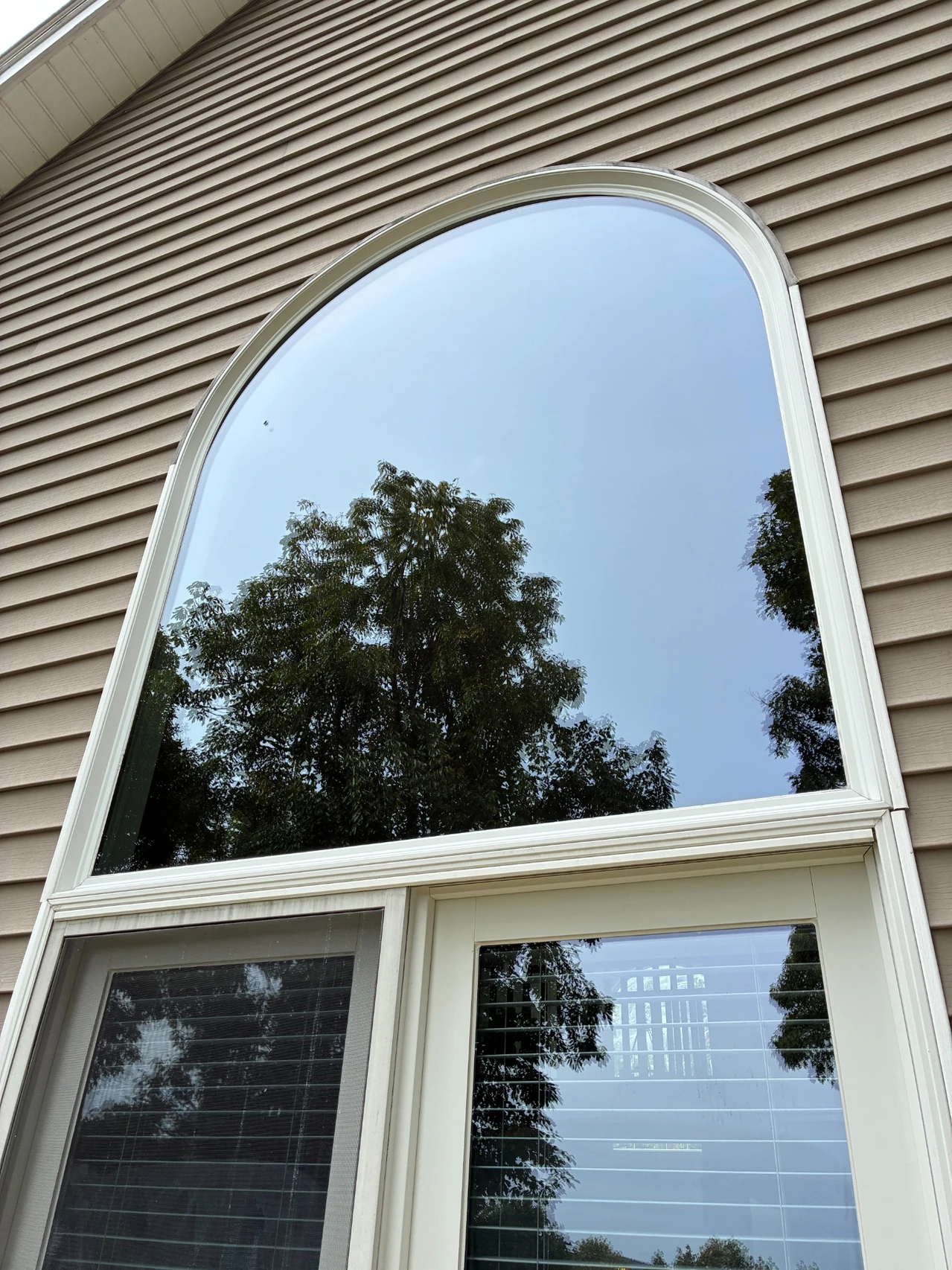
Vision glazing
Glazing intended to provide view or visible-light transmission through an occupied building opening.
Glazing systems and specialty applications
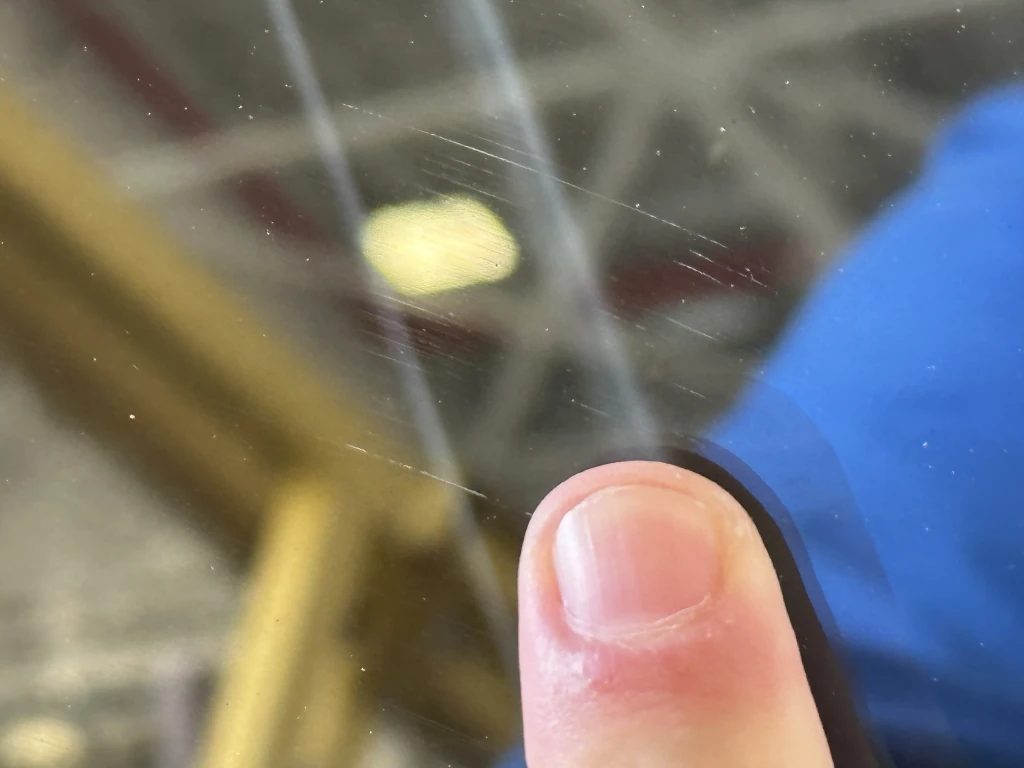
Visual inspection
Systematic observation of glass and its surrounding system under stated viewing conditions to detect and describe visible features.
Inspection and repair decisions
W
Water hardness
The concentration of dissolved multivalent minerals in water, principally calcium and magnesium, commonly expressed as an equivalent amount of calcium carbonate.
Deposits and contamination
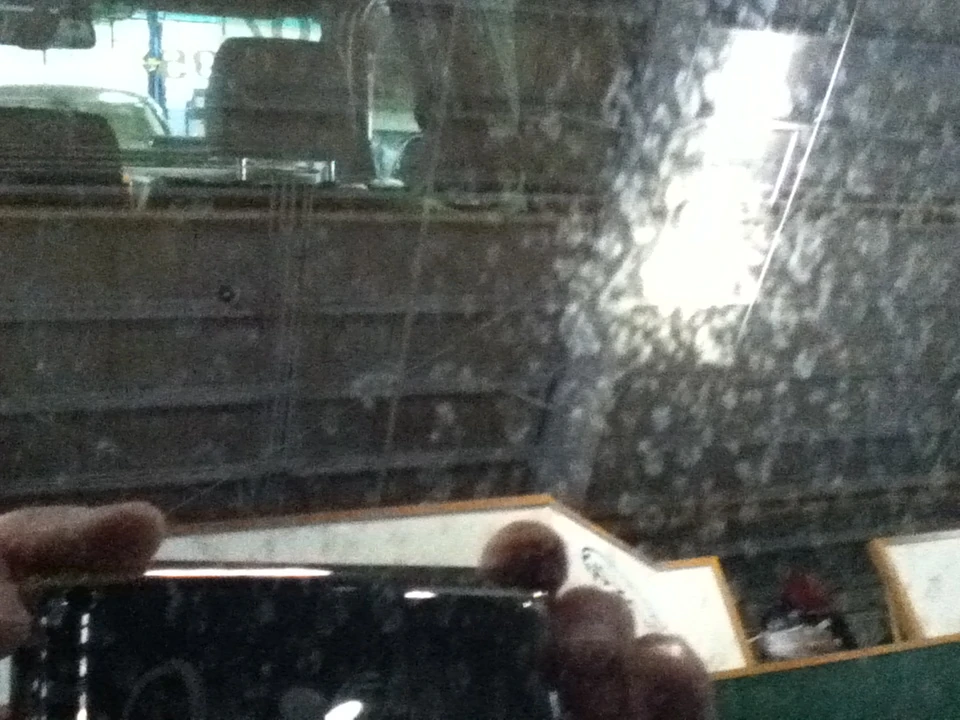
Water spot
A localized mark left where a water droplet or small wet area dried and concentrated dissolved or suspended material.
Deposits and contamination
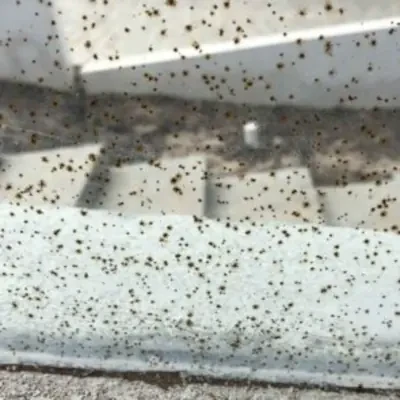
Weld spatter
Small droplets of molten or hot metal expelled during welding that strike and bond to, pit, or thermally damage glass.
Deposits and contamination
Welding slag
Nonmetallic flux residue that forms on certain welds and is normally removed from the weld bead after solidification.
Damage categories and surface conditions
Wet process
A restoration or finishing operation performed with deliberately applied liquid at the tool-surface interface.
Restoration processes and safety
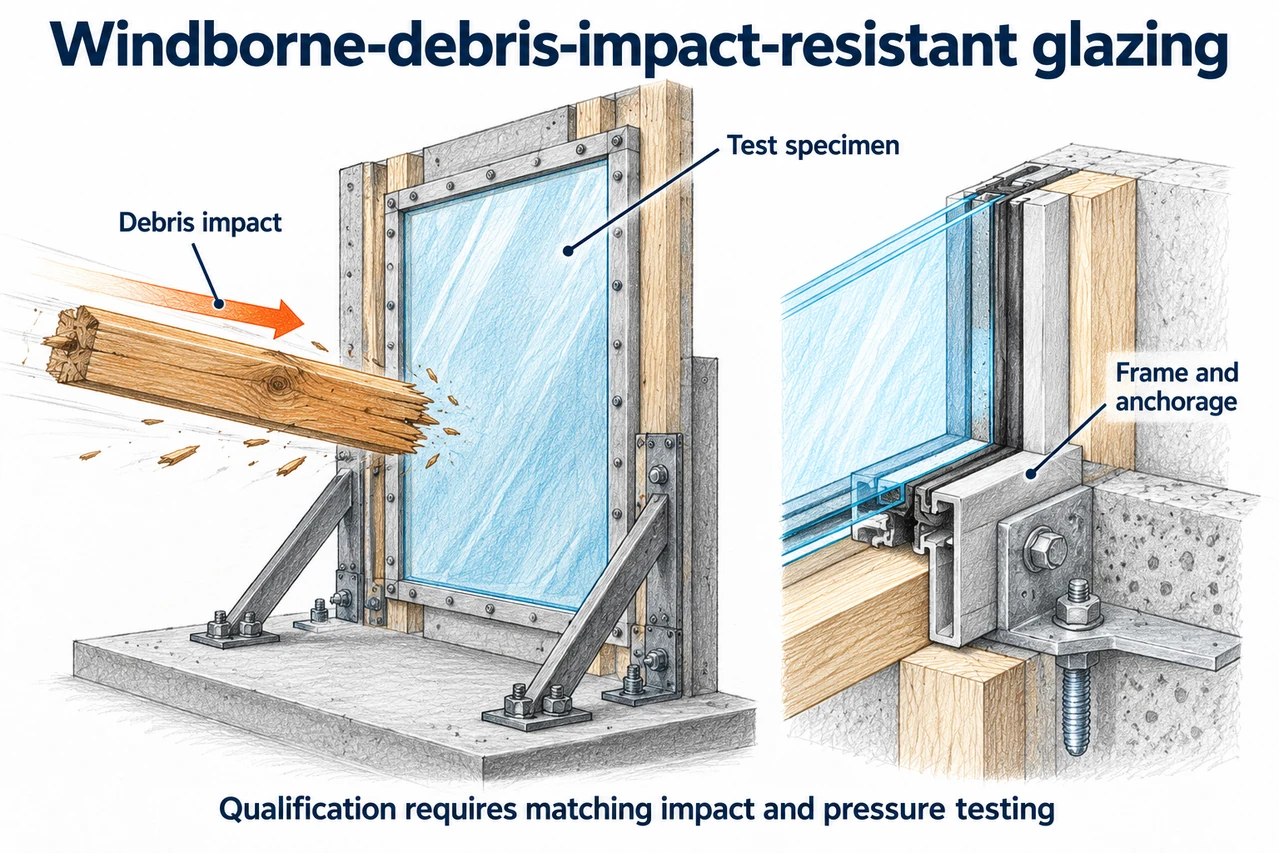
Windborne-debris-impact-resistant glazing
A complete exterior fenestration or impact-protection assembly qualified for specified missile impact and cyclic pressure conditions associated with hurricanes or similar windstorms.
Glazing systems and specialty applications
Work area
The defined glass surface over which a particular restoration stage is performed.
Restoration processes and safety
No matching term. Try another phrase or choose all topics.