
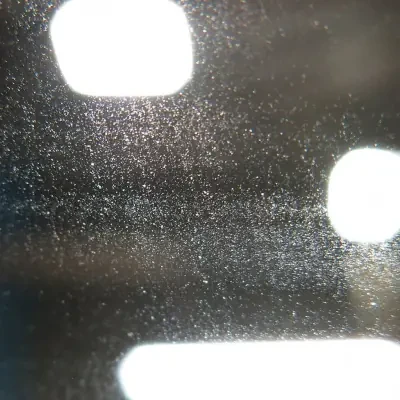
Heat haze
A GlassRenu Category 1 surface contaminant that presents as a faint cloudy or whitish haze on the exposed glass surface.
A GlassRenu Category 1 surface contaminant that presents as a faint cloudy or whitish haze on the exposed glass surface.
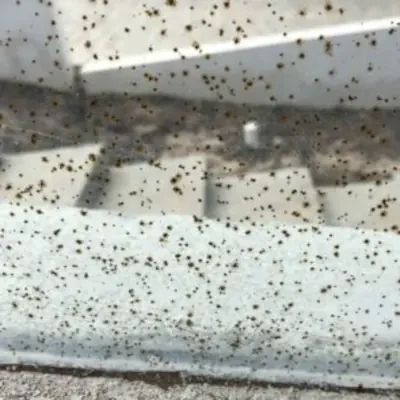
Nonmetallic flux residue that forms on certain welds and is normally removed from the weld bead after solidification.
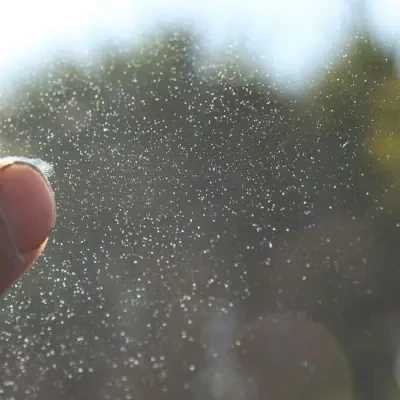
A distributed field of pits, roughness, or frosting produced when abrasive particles propelled by air, water, or another carrier strike glass.
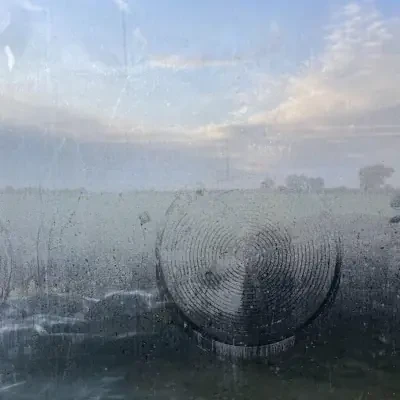
A Category 1 surface contaminant that appears as a circular or partial-ring mark where a suction cup contacted the glass during lifting, handling, transport, or installation.
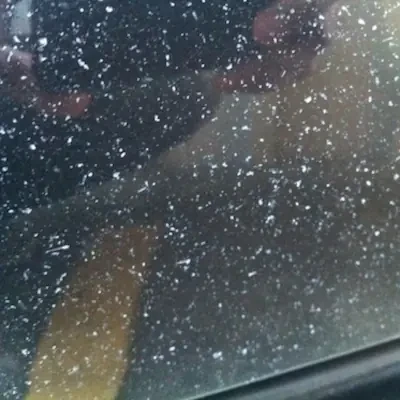
Pits, embedded particles, discoloration, or cracks produced when hot metal fragments from grinding or cutting strike glass.
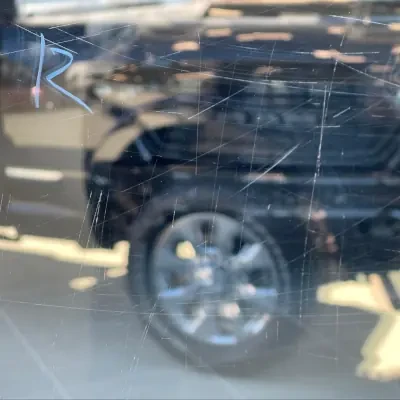
A proposed GlassRenu term for a pronounced scratch requiring substantial controlled material removal relative to the approved restoration process.
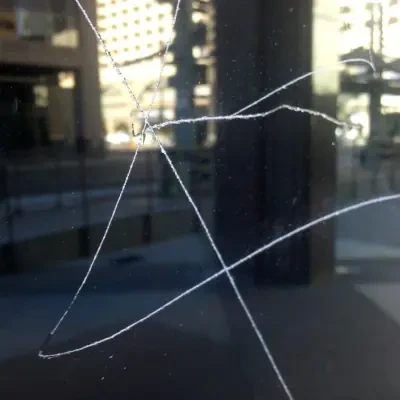
A proposed GlassRenu class for deliberate scratched vandalism whose measured morphology or affected area exceeds the approved light-graffiti route.
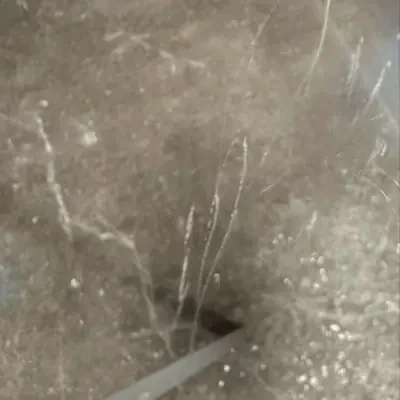
A chip, pit, scratch, or clustered surface flaw caused by rock, aggregate, mortar, masonry fragments, or similar hard debris striking or dragging across glass.
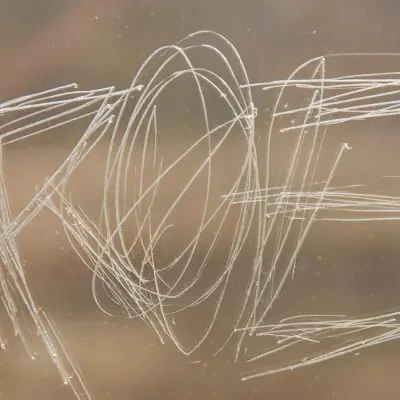
A proposed GlassRenu class for deliberate scratched vandalism that falls within the approved lower-intensity graffiti restoration route.
A linear mark associated with a blade or scraper moving directly on glass or dragging trapped particles across it.