
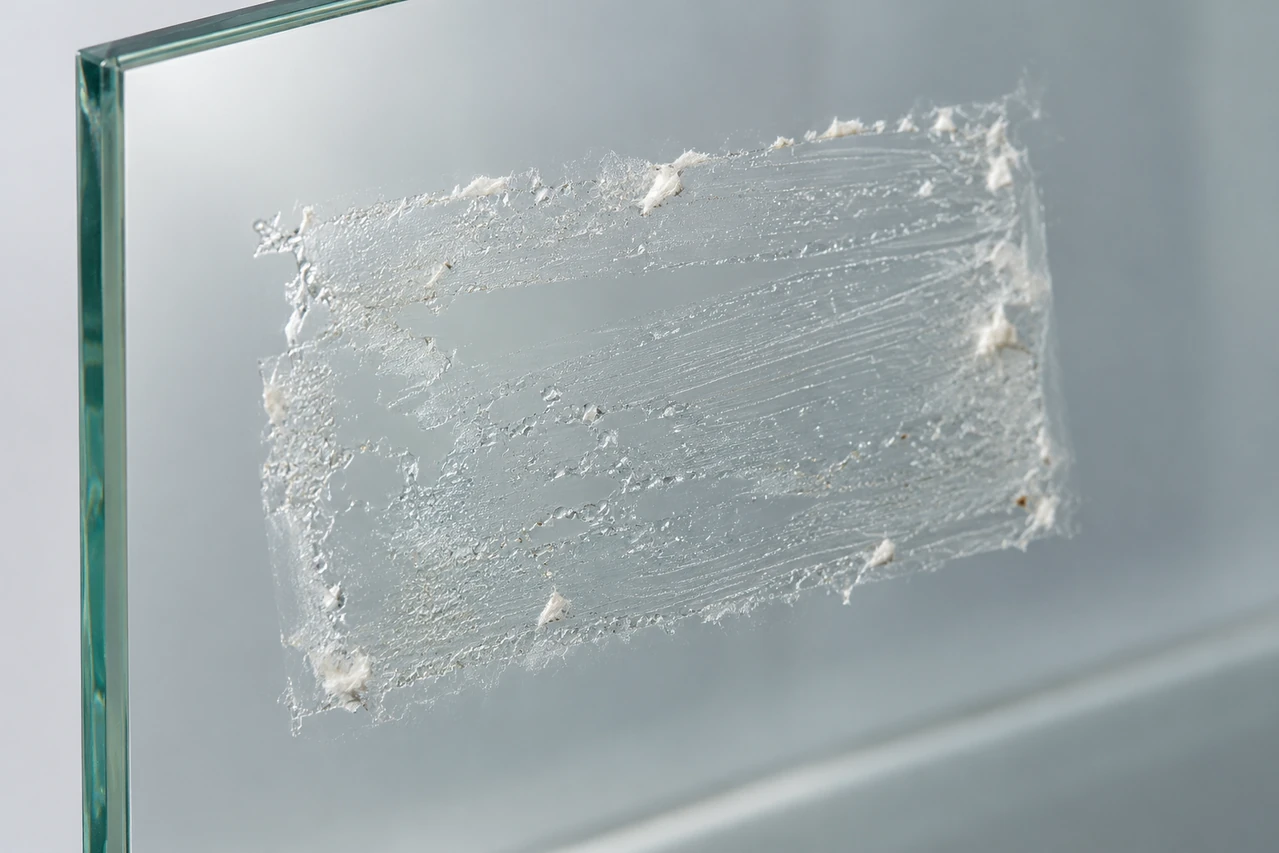
Adhesive residue
Material left on glass after tape, labels, films, mastics, glues, or other adhesive products are removed or age in place.
Material left on glass after tape, labels, films, mastics, glues, or other adhesive products are removed or age in place.
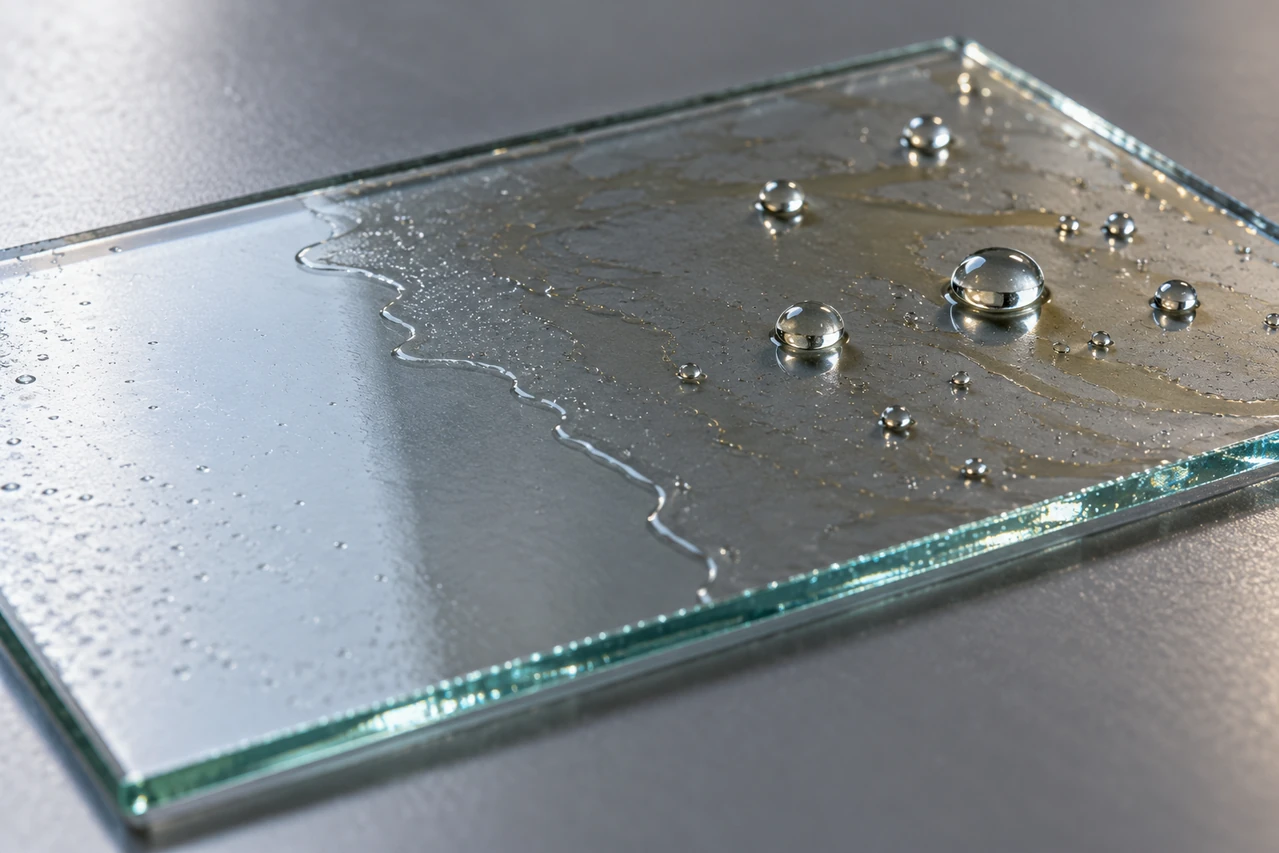
A thin contaminating layer that reduces how readily water spreads across a glass surface, often causing beading or uneven wetting.

Dirt and deposited pollutants accumulated from the surrounding air, including dust, soot, aerosols, salts, and other airborne material.
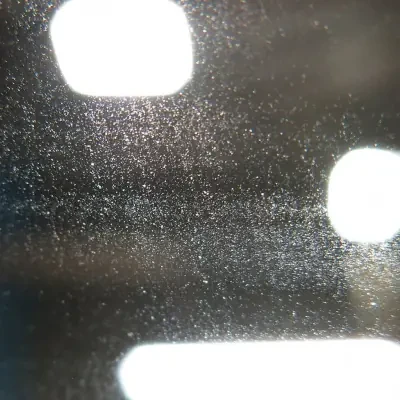
Surface contamination made of carbon-containing material such as oils, greases, adhesives, sealant components, biological material, smoke residue, or fingerprints.

A persistent film, veil, or discoloration associated with mineral-bearing water that remains after a controlled reveal while the truly clean glass substrate remains non-relief (SC-0).
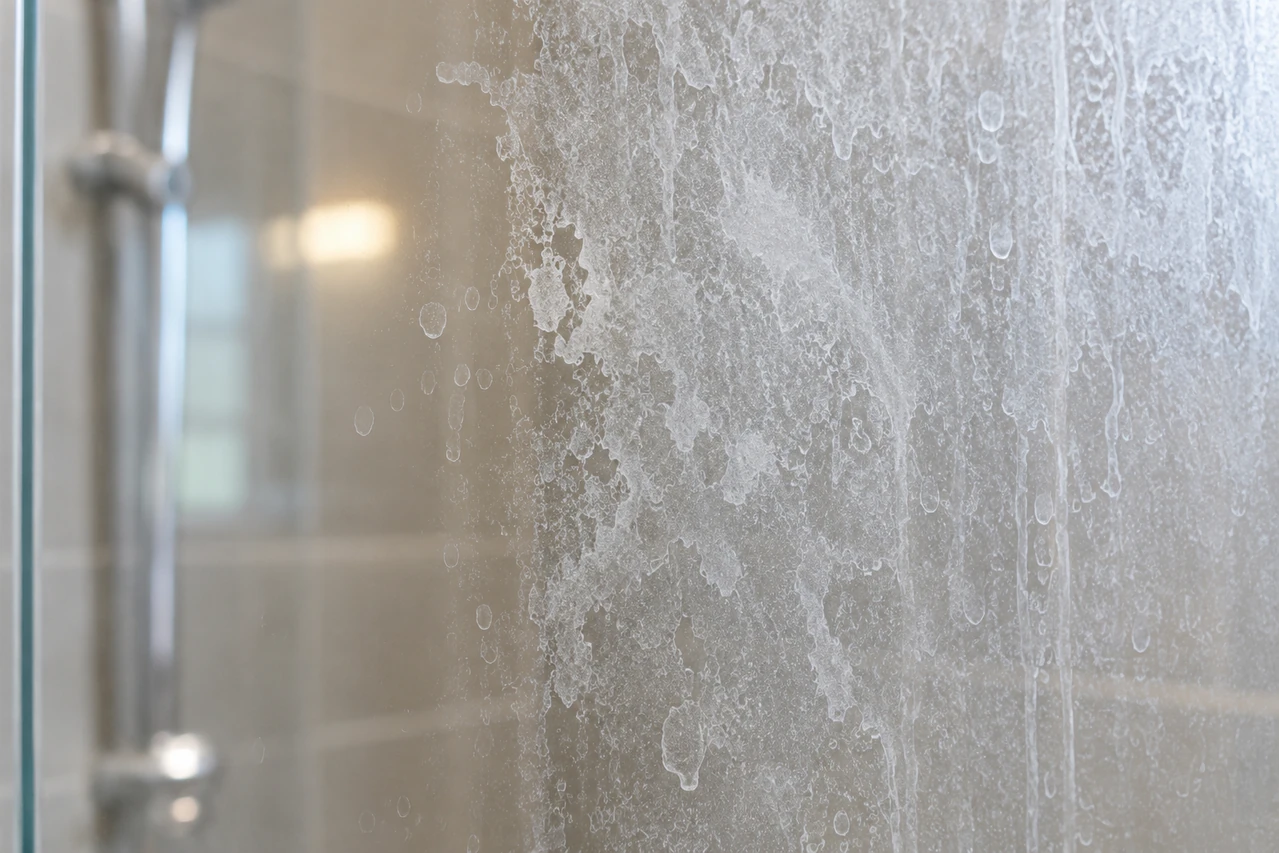
An insoluble or poorly soluble residue formed when soap reacts with hardness minerals and mixes with oils, soil, or other material.

A pattern of discrete drying marks associated with mineral-bearing water droplets on glass.

A mineral scale containing calcium carbonate that can form as hard water changes chemistry, is heated, or evaporates.

A deposit containing silicate material carried in solution or suspension and left on glass after runoff dries.
A solid mineral accumulation formed when dissolved constituents precipitate from water or become concentrated during heating or evaporation.